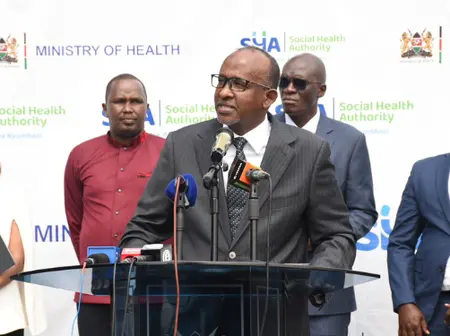
FCPA Hesbon Omollo has welcomed improvements in cancer treatment coverage under the Social Health Authority (SHA), saying the increase in benefits is an important step towards easing the financial burden on patients and their families.
Speaking on Citizen TV’s Daybreak, Omollo noted that the annual cancer treatment package had increased from KSh500,000 to KSh800,000, giving patients access to more financial support during treatment.
The enhanced package was officially raised from KSh550,000 to KSh800,000, effective December 2025.
It covers services including oncology consultations, chemotherapy, radiotherapy and specialised diagnostic procedures.
“SHA is a good programme, with improvements such as the increase in cancer cover from KSh500,000 to KSh800,000,” Omollo remarked.
He, however, warned that the long-term sustainability of Taifa Care would depend on expanding contributions, particularly from workers in the informal sector.
Omollo observed that about 83 per cent of Kenya’s economy is informal, leaving many workers without regular payslips and making it difficult to collect contributions consistently.
He argued that the government should consider using tax revenues through the national budget to bridge funding gaps and strengthen healthcare financing.
“Healthcare is a right, and the government must consider using tax resources through the national budget to bridge the funding gap and support SHA,” he stated.
Omollo also highlighted the need to invest in primary healthcare, noting that it serves some of the most vulnerable Kenyans who need affordable services.
He compared the former National Health Insurance Fund (NHIF) with SHA, noting that NHIF’s highest annual hospital reimbursements stood at about KSh25 billion, while SHA had paid KSh178 billion by August 2026 since its launch in October 2024.
The latest Treasury health sector report placed cumulative SHA payments at KSh197.7 billion by September 30, 2026, with more than 33 million Kenyans registered.
At the same time, political analyst Fred Okang’o also called for sustainable financing, noting that the government had taken responsibility for premiums for about 2.3 million vulnerable Kenyans.
He urged authorities to address concerns over deductions among salaried workers and focus on the number of active contributors, rather than registration figures alone.
Leave a Reply