Uasin Gishu County has stepped up efforts to address new HIV infections, gender-based violence and teenage pregnancies through a multi-sectoral approach bringing together health officials, community leaders and national government representatives.
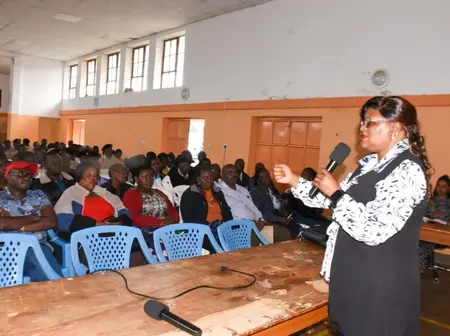
The county government, in partnership with the National Syndemic Diseases Control Council (NSDCC), convened a forum on Friday to review the county's HIV and tuberculosis situation, assess emerging challenges and strengthen community-led interventions targeting vulnerable groups, particularly adolescents and young women.
Officials at the meeting called for coordinated and sustained action, warning that progress against HIV and related health challenges would remain limited without the involvement of communities and different government departments.
County Executive Committee Member for Health Services Janet Kurgat challenged men to speak out against GBV and seek assistance when they experience abuse.
“Men must speak out and seek help when they experience abuse, silence only allows the cycle of violence to continue,” she said.
Kurgat also highlighted investments in healthcare under Governor Jonathan Bii's administration, saying four theatres had been established to improve access to surgical services.
She urged residents to enrol in the Social Health Authority (SHA) scheme, saying it would ease the financial burden of healthcare and improve access to essential services.
Representing County Commissioner Dr Eddyson Nyale, Senior Deputy County Commissioner Dr Diana Wekesa called on national government officers to lead by example in addressing the three challenges.
“Know your HIV status, reject stigma and discrimination, and actively engage communities on these triple threats,” she said.
Wekesa also emphasised the need to protect the confidentiality and rights of people seeking HIV and TB services.
Promotive and Preventive Health Chief Officer Dr Billy Lubanga identified alcohol and drug abuse as among the factors contributing to the overlapping challenges of new HIV infections, adolescent pregnancies and GBV.
“We must intensify prevention and awareness efforts, especially during the festive season when risky behaviours tend to rise,” he said.
Lubanga reminded residents that GBV survivors could access services free of charge and encouraged the uptake of safe male circumcision as an HIV prevention measure.
“Our goal is to prevent avoidable deaths and complications,” he added.
Participants reviewed findings from the 2026 HIV Estimates Dashboard alongside sub-county trends in GBV and teenage pregnancies, examining how the challenges intersect with HIV transmission.
The discussions also focused on stigma, discrimination and human rights barriers that continue to prevent some people from accessing healthcare and support services.
Voluntary medical male circumcision featured prominently, with stakeholders urged to intensify community mobilisation, address misconceptions and promote informed decision-making among adolescent boys.
Chiefs, Community Health Promoters and other local leaders were asked to encourage safe uptake while ensuring procedures are undertaken with informed consent and through referrals to certified health facilities.
The forum ended with a commitment to strengthen collaboration among government departments, healthcare providers and community structures.
The three challenges, commonly referred to as the triple threat, remain interconnected. Sexual violence and coercion can increase exposure to HIV through unprotected sex, while teenage pregnancies can disrupt girls' education, deepen poverty and expose them to further vulnerability.
Stigma and discrimination also discourage people from seeking HIV testing, treatment and other support services, reinforcing the need for accessible and coordinated interventions.
Leave a Reply