Kenya has outlined strict environmental and quality safeguards governing the importation of used electric vehicles as it seeks to accelerate the transition to clean transport without exposing the country to new environmental risks.
National Environment Management Authority (Nema) Director General Mamo Mamo said Kenya welcomes used EV imports as part of efforts to reduce transport-related emissions, but warned that the vehicles must meet stringent quality standards and have clear end-of-life battery management plans.
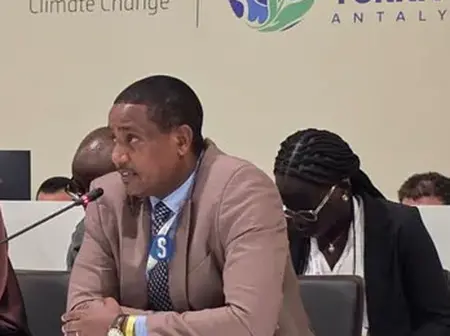
Speaking during a high-level side event organised by the United Nations Environment Programme (UNEP) and Naspers-Prosus at the ongoing United Nations Climate Change Conference (COP31) in Antalya, Türkiye, Mamo said the transition to electric mobility must be accompanied by robust environmental safeguards.
He noted that electric vehicles can reduce lifecycle emissions by up to 70 per cent compared with conventional petrol-powered vehicles, making them an important technology in efforts to decarbonise the transport sector.
However, he emphasised that imported vehicles must undergo verified quality checks at the border and meet clear requirements for the safe management of batteries once they reach the end of their useful life.
A key part of Kenya's regulatory framework is the Sustainable Waste Management (Extended Producer Responsibility) Regulations, 2024, which place legal responsibility on producers and importers for managing waste generated by products they introduce into the market.
“Under these regulations, there is mandatory registration. All producers and importers of batteries must register with Nema,” Mamo said.
He added that importers must also belong to an approved Extended Producer Responsibility (EPR) scheme.
“Any entity introducing a battery onto the Kenyan market bears full responsibility for its end-of-life management,” he said.
The framework is intended to ensure that battery waste is properly collected, transported, reused or recycled rather than becoming an environmental and public health hazard.
Despite the regulatory framework, Nema acknowledged that Kenya faces practical challenges in managing the growing electric mobility sector.
The country has a shortage of specialised facilities capable of safely collecting, transporting, reusing and recycling large volumes of lithium-ion batteries.
Other challenges include the uneven distribution of charging infrastructure and limited access to reliable local data on battery health, vehicle mileage and vehicle history.
The safeguards come as Kenya seeks to reduce emissions from a transport sector heavily dependent on fossil fuels.
The country's economic expansion, driven by agriculture, services, construction and manufacturing, has increased demand for motorised transport, contributing to rising greenhouse gas emissions.
More economic activity also means increased movement of people and goods, further driving demand for petrol and diesel-powered vehicles.
The transport sector consumes about 72 per cent of the petroleum products imported into Kenya, highlighting its dependence on fossil fuels.
In 2015, transport accounted for 13 per cent of the country's greenhouse gas emissions, a figure projected to rise to 17 per cent by 2030, largely due to population growth and industrialisation.
To address this challenge, the government has developed an e-mobility policy that identifies electric vehicles as a key decarbonisation technology in its ambition to achieve net-zero carbon emissions by 2050.
Electric mobility refers to the use of electric power for transportation and covers a range of vehicles, including cars, buses, two-wheelers and three-wheelers.
The wider e-mobility category also encompasses trains, trucks, ships, ferries and off-road vehicles.
Through stricter import controls, producer accountability and improved battery waste management, Kenya aims to develop a circular electric mobility ecosystem that supports emissions reduction while protecting public health and the environment.
Leave a Reply