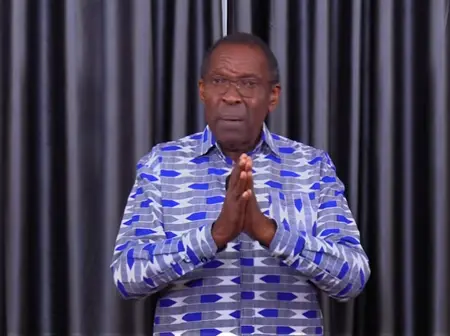

Political analyst Herman Manyora has warned President William Ruto against assuming that he can secure Western Kenya’s votes in the 2027 General Election because the Luhya community is politically divided, arguing that Nairobi Senator Edwin Sifuna could attract overwhelming support in the region.
Speaking during an interview with a local station on Thursday, November 12, 2026, Manyora dismissed the argument that divisions within the Luhya community would give Ruto an advantage, predicting that Sifuna could command particularly strong support in Vihiga and Busia counties.
Manyora argued that political loyalties in Western Kenya are more complex than the divisions between different Luhya subgroups, warning Ruto’s allies against relying on the assumption that Sifuna’s community background would automatically weaken his appeal.
“I want to tell those people who think Ruto will penetrate the West merely because Sifuna is a Bukusu; they are wrong,” Manyora said.
He maintained that Vihiga could deliver Sifuna his strongest percentage of votes from the Mulembe community if the senator contests the presidency in 2027.
Manyora predicted that Vihiga would give Sifuna the highest percentage of votes among Luhya voters, followed by Busia.
“In terms of percentages, not in terms of absolute numbers, in terms of percentages, the highest percentage of votes from the Mulembe nation that Edwin Sifuna will get, will come from Vihiga, followed by Busia” he said.
He added: “Almost to a man, the Vihiga people will vote for Sifuna.”

The analyst attributed his prediction to the region’s political and cultural dynamics, arguing that differences in language and dialect do not necessarily translate into the voting patterns some politicians expect.
He cautioned Ruto’s camp against treating divisions within the Luhya community as a guaranteed route to winning Western Kenya.
Manyora said Bungoma’s political situation was different, citing the influence of leaders such as National Assembly Speaker Moses Wetang’ula and the presence of other communities in the county.
He described Wetang’ula as “a master chess player” and warned against writing off established political figures and local leaders.
Manyora also questioned the influence of Prime Cabinet Secretary Musalia Mudavadi, arguing that he was not sufficiently active on the ground.
He said the political composition of Bungoma made it difficult to assume that all voters would support a particular candidate based on ethnic identity alone.
“Anybody on the Ruto side building on getting Western because of this Bukusu narrative, I want to advise them. Please look for another thing,” he said.
Manyora’s latest remarks follow his earlier warning that Ruto’s public attacks on Sifuna could increase the senator’s popularity rather than weaken it.
In an earlier political analysis in October, Manyora argued that Sifuna’s supporters were not particularly concerned by allegations that the senator was being sponsored by retired President Uhuru Kenyatta.
“The more you attack Sifuna, the more popular he becomes,” Manyora said.

The exchanges between Ruto and Sifuna have also touched on government policies, affordable housing and the senator’s political ambitions.
Ruto has previously challenged Sifuna to make his agenda public, while Sifuna has criticised aspects of the government’s housing programme.
Manyora’s latest assessment suggests that the contest for Western Kenya could depend on more than political alliances and divisions within the Luhya community.
However, his predictions remain political analysis, and the actual distribution of votes will depend on the candidates, alliances and issues shaping the 2027 election.
Leave a Reply