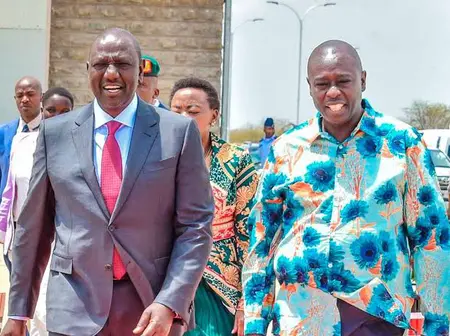
The escalation follows a series of bare-knuckled exchanges where President Ruto publicly accused his former principal assistant of acting like the biblical Herod by frustrating and intimidating emerging young leaders, urging him to leave rising politicians alone.
In a blistering counter-attack, Gachagua fired back by directly questioning the President's stance on youth leadership, drawing reference to the casualties from the 2024 Gen Z protests and subsequent demonstrations to challenge the administration's human rights record.
The toxic exchange has rapidly deteriorated into intense personal jibes, accusations of political sabotage, and historical cross-examinations, setting an aggressive tone as both camps position themselves for the 2027 polls.
In response to the spiraling hostility, religious leaders and interfaith councils have voiced deep concern, cautioning that unchecked political rhetoric risks fracturing the country along ethnic and regional fault lines.
The clergy have strongly condemned the use of derogatory language, body shaming, and threats of political exclusion, calling upon political actors to exercise restraint and prioritize national unity over personal ambitions.
As civic watchdogs echo these appeals for peace, the growing friction underscores the volatile nature of contemporary Kenyan politics, where high-stakes realignments continue to push the boundaries of public discourse.
Observers note that this growing animosity between the country's former top executives signals an increasingly polarized electoral environment, where personal vendettas frequently eclipse substantive policy debates.
Faith organizations and civil society groups have consequently intensified calls for immediate moral accountability among political elites to prevent the degeneration of public discourse into widespread civil unrest.
https://x.com/KTNNewsKE/status/2120713246264971276?a=fOXZnfEI9YUVFiyvsIw&s=20
Leave a Reply