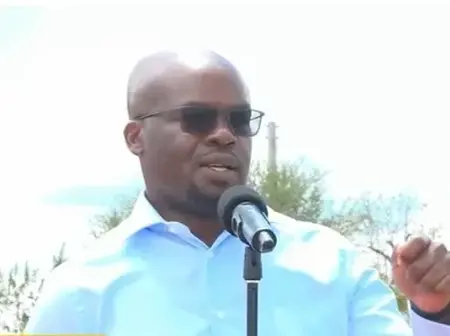
A confrontation involving Narok Senator Ledama Olekina and auctioneers may have faded from public attention, but the questions it raised about parliamentary employment, public funding and personal responsibility remain relevant.
The employment dispute involves a former staff member attached to Olekina’s office, as the senator disputes claims that his personal vehicle was being auctioned, maintaining that the incident involved a delivery truck belonging to a private company in which he holds shares.
In explaining his position, Olekina questioned why an individual elected to public office should personally bear obligations arising from the operations of a parliamentary institution.
“The Senate of the Republic of Kenya is a constitutional institution, not Ledama Olekina’s private estate.”
His argument brought attention to a wider question about how parliamentary offices are managed and where responsibility lies when employment relationships become contentious.
One of the less explored aspects of the controversy is the relationship between members of Parliament and the Parliamentary Service Commission (PSC), the institution responsible for facilitating parliamentary operations.
Kenya’s Parliamentary Service (Constituency Offices) Regulations provide for members to employ constituency office managers and other staff within salary limits approved by the Commission.
The regulations also provide that members initiate recruitment and determine employment terms and salary scales. Employment contracts are required, with copies submitted to the Clerk.
This distinction is important. Although the Commission provides funding for constituency office operations, the regulatory framework also assigns members specific responsibilities in staff recruitment and employment arrangements.
It would, however, be important to establish the precise employment framework applicable to the former employee attached to Olekina’s Senate office rather than assume that constituency office provisions automatically settle the question.
The distinction between providing funds and managing employment relationships is therefore central to understanding the broader debate.
Olekina’s controversy also highlights an issue that receives relatively little public attention: the working conditions of employees serving in parliamentary offices.
A National Assembly committee report on inspections of constituency offices in Nakuru County, discussed in Parliament in November 2026, identified concerns over staff remuneration, professional training, medical cover and delays in salary disbursement.
The report recommended improvements in staff welfare and training, pointing to the need for stronger administrative support across constituency offices.
The issue also featured in parliamentary debate, with Yatta MP Robert Basil raising concerns about delayed salary payments.
“My staff have not received salaries,” Basil told the National Assembly on November 11, 2026, while discussing challenges facing constituency offices.
He said employees had financial obligations that continued despite delays in receiving their wages.
These concerns demonstrate why employment arrangements in parliamentary offices deserve closer public scrutiny. Staff members provide services to constituents and support elected representatives, yet their employment conditions can be affected by administrative and funding arrangements.
Another important aspect of the Olekina controversy concerns the distinction between personal assets and property belonging to a privately owned company.
The senator maintained that the delivery truck involved in the incident belonged to a company in which he was a shareholder.
That explanation raises a broader corporate governance question.
A shareholder’s interest in a company does not automatically make the company’s vehicles, equipment or other assets personal property. A company operates as a separate legal entity, with its own assets and obligations.
Consequently, establishing who owns a particular asset is important when questions arise over business property and individual financial responsibilities.
The broader lesson is that public office, personal financial affairs and private commercial interests should be clearly distinguished, particularly when disputes attract public attention.
The accountability question Parliament cannot ignore. Beyond the individual controversy, the incident provides an opportunity to examine whether the arrangements governing parliamentary offices adequately protect employees, employers and public resources.
The Parliamentary Service Commission has an important role in ensuring that parliamentary offices receive the support required to operate effectively. At the same time, elected representatives who recruit and manage staff must understand their responsibilities under the applicable employment arrangements.
Greater clarity about recruitment, contracts, supervision, salary funding and employee benefits would help prevent misunderstandings and strengthen accountability.
The former employee’s perspective, the applicable employment arrangements and the Commission’s explanation of its responsibilities are essential to completing the picture.
Ultimately, the issue is bigger than one politician or one confrontation.
When public funds support parliamentary offices, employees and taxpayers alike have a legitimate interest in knowing who makes employment decisions, who safeguards workers’ rights and who is accountable when obligations arise.
That is the question raised by the Ledama Olekina controversy, and one that deserves an answer beyond the headlines.