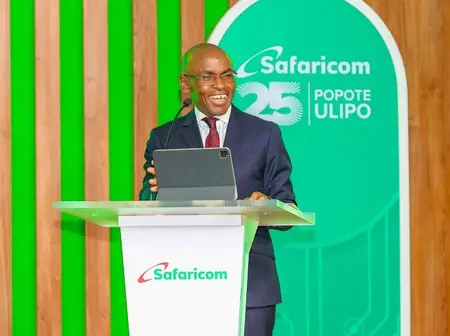
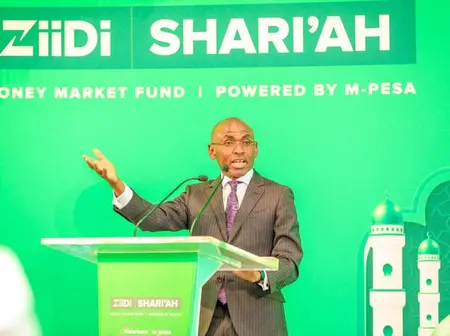
Michael Joseph was appointed Safaricom's founding CEO in July 2000. When he took over, the company had a relatively small subscriber base and was still establishing itself in Kenya's telecommunications market. During his decade-long leadership, he expanded the company's customer base and strengthened its position as a market leader.
One of his biggest achievements was overseeing the launch of M-PESA in March 2007. The mobile money service revolutionised financial transactions in Kenya, allowing millions of people to send, receive and store money using their mobile phones. Safaricom was also listed on the Nairobi Securities Exchange in 2008 under his leadership.
Bob Collymore succeeded Michael Joseph in November 2010. He focused on expanding Safaricom's services beyond traditional telecommunications. During his tenure, the company introduced and expanded products such as M-Shwari, Lipa na M-PESA and Fuliza, strengthening its position in Kenya's financial technology sector.
Collymore also championed corporate social responsibility and community development initiatives. He remained CEO until his death on July 1, 2019.
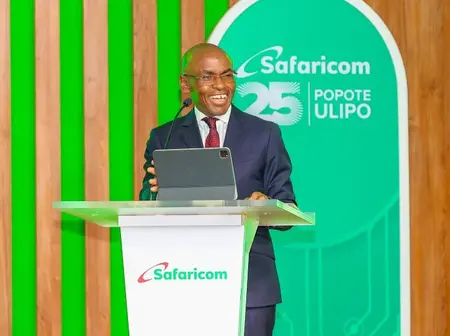
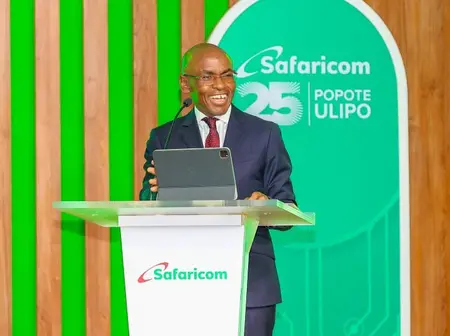
Peter Ndegwa took over on April 1, 2020, becoming the first Kenyan to lead Safaricom. Previously associated with multinational beverage company Diageo, he assumed leadership during the COVID-19 pandemic.
His administration has focused on digital transformation, financial services, business diversification and regional expansion. A major milestone has been Safaricom's entry into Ethiopia, marking an important step towards establishing the company as a major telecommunications player across Africa.
Together, the three executives represent different chapters of Safaricom's journey: Joseph built the foundation, Collymore expanded innovation, while Ndegwa is pursuing regional growth and digital transformation.
Safaricom has explained how customers can reverse airtime purchased accidentally through M-Pesa, offering relief to subscribers who mistakenly buy airtime when they intended to make a different transaction.
In a response to a customer inquiry, the telecommunications company confirmed that airtime purchased through M-Pesa is reversible, provided the customer follows the required procedure.
The clarification came after a customer sought to establish whether money used to purchase airtime by mistake could be recovered in cash.
Responding to the inquiry, Safaricom asked the customer to share the M-Pesa transaction number to facilitate assistance with the reversal.
“Hello, Mabonga James 3, Airtime purchased via M-Pesa is reversible. If the purchase was done via M-Pesa, please share the M-Pesa transaction number for us to assist,” the company stated.
Safaricom also outlined a condition customers must meet before requesting the reversal.
According to the company, subscribers should ensure that their remaining airtime balance is equal to or greater than the amount of airtime they purchased.
This means customers who accidentally buy airtime should avoid using the balance before initiating the reversal process.
The requirement is important because the company needs the purchased airtime to remain available when processing the request.
Customers are therefore advised to check their airtime balance and retain the full amount purchased before contacting Safaricom for assistance.
Besides sharing the M-Pesa transaction number with customer care, Safaricom has provided another option for customers seeking to reverse airtime purchased through the mobile money platform.
The company advised subscribers to forward the M-Pesa confirmation message to 456 for reversal.
“You can also forward the M-Pesa confirmation message to 456 for reversal,” Safaricom added in its response.
The option allows customers to initiate the reversal process using the confirmation message received after completing the M-Pesa transaction.
The clarification provides two procedures for customers who mistakenly purchase airtime through M-Pesa: sharing the transaction number with Safaricom customer care or forwarding the confirmation message to 456.
However, customers must ensure their airtime balance is equal to or greater than the amount purchased before seeking assistance.
Safaricom’s response confirms that airtime purchased through M-Pesa can be reversed. However, the communication does not explicitly state that the reversal will result in a cash refund rather than a reversal of the airtime transaction.
Customers seeking assistance should therefore follow the company’s instructions and confirm the outcome of their reversal request with Safaricom.
Safaricom has outlined how Kenyans can save Ksh60 weekly and access insurance benefits of up to Ksh100,000 for funeral expenses if they or a covered family member dies, through its Tuunza Mapato insurance product.
The service, available through Safaricom’s M-PESA platform, is designed to provide financial protection to individuals and families against unexpected expenses arising from hospitalisation or death.
Under the Msingi package, an individual pays Ksh60 every week to access funeral cover worth Ksh100,000, payable to the nominated next of kin in the event of the insured person’s death.
Customers who opt for the higher Bora package pay Ksh100 weekly and qualify for funeral cover worth Ksh200,000.
The product also provides hospital cash benefits to help customers cushion themselves against income losses and other expenses when admitted to hospital.
Safaricom offers two packages under Tuunza Mapato, allowing customers to select coverage depending on their financial capacity.
Under the Msingi package, an individual pays Ksh60 weekly and receives Ksh1,000 for every night spent in hospital, up to a maximum of Ksh30,000 annually.
The Bora package costs Ksh100 weekly and provides Ksh2,000 for every night spent in hospital, with an annual limit of Ksh60,000.
For families of up to five members, including the principal member and four dependants, the Msingi package costs Ksh240 weekly, while Bora costs Ksh400 weekly.
The funeral benefit is designed to provide financial assistance to families following the death of a covered member.
Under Msingi, the insurer pays Ksh100,000 per covered person, while Bora provides Ksh200,000 per covered person.
The hospital cash benefit is paid for eligible admissions at Ministry of Health-registered Level 3 to Level 5 hospitals.
However, the product does not directly settle hospital bills. Instead, it provides cash compensation for eligible hospital admissions, helping households manage expenses and potential income disruptions.
Customers can access Tuunza Mapato through Safaricom’s available registration channels.
They can dial *334# and navigate to the insurance services menu or use the Safaricom OneApp to select the insurance option and register for their preferred package.
The weekly premiums are automatically deducted through M-PESA after customers authorise the payment arrangement.
New customers also qualify for a two-week free coverage period, subject to the product’s terms and conditions.
Tuunza Mapato is provided through Safaricom Insurance Agency Limited and underwritten by Turaco Microinsurance Limited.
Safaricom facilitates access to the service through its technology platforms, while the insurer is responsible for processing and paying eligible claims.
Customers are required to provide supporting documentation when submitting claims, including identification documents and relevant hospital or death records, depending on the nature of the claim.
The product also has waiting periods, exclusions and other conditions that customers should review before enrolling.
More details are available on Safaricom’s official https://www.safaricom.co.ke/media-center-landing/frequently-asked-questions/tuunza-mapato Tuunza Mapato Frequently Asked Questions page.
Safaricom has launched its Family Share packages in Mombasa, introducing a home internet subscription that allows households to share mobile data or voice minutes among up to five family members.
The entry-level package costs Ksh3,749 per month, Ksh750 more than the company’s standalone 40Mbps Home Fibre plan. Subscribers can choose between 14GB of mobile data or 750 voice minutes, which can be shared among the five users.
The service was officially launched at Zawadi Estate in Bamburi on November 23, 2026, following earlier rollouts in Nairobi and Kisumu. Developed in partnership with Huawei, the offering targets households looking to combine home broadband and mobile connectivity under one subscription.
Both new and existing Safaricom Home Fibre customers can subscribe to the packages, with the selected mobile allowance included in a single monthly bill.
Safaricom has introduced four Family Share options, with monthly subscriptions starting at Ksh3,749 and going up to Ksh13,999.
The packages are priced at Ksh3,749, Ksh5,100, Ksh7,799 and Ksh13,999, offering progressively faster home internet speeds alongside a shared mobile allowance.
The entry-level option provides 14GB of mobile data or 750 voice minutes. Divided equally among five users, the data allowance translates to 2.8GB per person over 30 days, while the voice option provides 150 minutes per user.
The launch comes as Kenya’s fixed internet market continues to expand, with subscriptions increasing by 32.4 per cent year on year to 2.84 million by June 2026, according to the Communications Authority of Kenya.
Safaricom controlled 36.1 per cent of the market, followed by Jamii Telecommunications at 19.1 per cent and Wananchi Group at 10.4 per cent.
Competition has also intensified, with providers offering lower-priced home internet packages. Zuku advertises its 40Mbps fibre package at Ksh2,999, while Faiba offers 35Mbps at approximately Ksh3,000.
Unlike these standalone packages, Safaricom’s Family Share adds a mobile connectivity allowance to its home internet subscription. However, the underlying fibre speeds are not increased compared with the company’s corresponding standalone plans.
Safaricom has also announced faster speeds across its Home Fibre range, saying customers can enjoy up to 2.5 times their previous speeds on selected packages.
Through its My OneApp platform, the company is also promoting a 40Mbps connection bundled with either 350 voice minutes or 2GB of shareable mobile data for up to five users at Ksh3,349.
The Family Share offering comes as more households adopt fixed broadband connections and telecommunications companies compete through bundled services.
For customers who regularly purchase separate mobile data and airtime bundles, combining the allowances with home internet provides an alternative to maintaining separate subscriptions.
The packages are available to both new and existing Safaricom Home Fibre customers.
Safaricom has highlighted how automatic application updates and background data consumption could leave mobile phone users without internet bundles within minutes, even when they have purchased data for their daily activities.
In a message shared through its Safaricom Care platform, the telecommunications company drew attention to the frustration experienced by customers who purchase data bundles only to discover that they have been depleted before completing their online activities.
The company used an example of a customer who purchases a 1GB bundle but loses it while trying to navigate using directions.
“Hako kafeeling ukinunua 1GB, alafu saa ile tu unatumia directions, before uclick send, data zinaisha. Sasa mtu wa wenyewe anakaa stage mpaka anajam,” Safaricom Care stated.
The message highlighted automatic application updates as one of the factors that could contribute to unexpected data consumption.
According to Safaricom, applications installed on smartphones can independently download updates, consuming a customer’s available internet bundles without their immediate knowledge.
“Simu iko na ma-updates kibao!! Kila app inajiwekea data yake ya update…” the company explained.
Safaricom encouraged customers to regularly check their internet consumption to understand how their bundles are being used.
The telecommunications company directed users to its MySafaricom account portal, where they can monitor their data usage.
“Check on your data usage on https://myaccount.safaricom.co.ke/account/usage,” the message stated.
Monitoring data consumption can help customers identify applications using large amounts of internet bundles and take appropriate steps to manage their usage.
Smartphone applications frequently use internet connectivity to download updates and refresh information in the background.
This means customers may continue consuming data even when they are not actively browsing, watching videos or using social media.
Navigation applications, social media platforms and other internet-based services can also consume bundles depending on their settings and usage.
Customers can manage their data consumption by reviewing application settings, restricting background data usage and configuring automatic updates to take place only when connected to Wi-Fi.
Safaricom’s message comes amid growing reliance on mobile internet for communication, navigation, entertainment and accessing digital services.
For customers who depend on limited daily bundles, monitoring data usage and controlling automatic updates can help prevent unexpected depletion.
Visa has appointed Esther Waititu, former Chief Financial Services Officer at Safaricom, as Senior Vice-President and Group Country Manager for Southern and Eastern Africa.
Waititu will be based in Johannesburg and will lead Visa’s business across 24 markets in the region. She will work with clients, partners, governments and Visa teams to grow digital payments.
She has more than two decades of experience in African financial services and payments, covering mobile money, corporate banking and retail banking.
At Safaricom, Waititu led M-PESA’s business across payments, credit, savings, investments and insurance. Before that, she was Director of Corporate Banking at KCB Group. She also spent a decade in senior roles at Standard Bank Group, Standard Chartered and Commercial Bank of Africa, now part of NCBA.
“Southern and Eastern Africa is home to some of the world’s most dynamic and rapidly growing payments markets, and the opportunities ahead are significant,” said Tareq Muhmood, Regional President for Central and Eastern Europe, Middle East and Africa (CEMEA) at Visa.
“Esther brings deep industry expertise, a strong understanding of the region and a proven ability to build businesses and partnerships at scale.”
Waititu said she was joining Visa at an important moment for digital commerce in Africa.
“Southern and Eastern Africa is an incredibly diverse region, with enormous potential to expand access, enable businesses and create new ways for consumers and communities to participate in the digital economy,” she said.
Waititu’s appointment comes four months after she left Safaricom. Safaricom CEO Peter Ndegwa announced her departure in an internal memo in July, saying she was leaving to pursue other opportunities. Her last day was 31 July, after about three years in the role. She had joined from KCB in 2023.
During her tenure, Safaricom completed Fintech 2.0, the biggest overhaul of M-PESA’s core infrastructure since the platform was brought in-house in 2015. The cloud-native system, finished in September 2025, can process 6,000 transactions per second, up from a previous limit of 4,500.
Boniface Mungania, who had served as interim Chief Financial Services Officer since August, was confirmed in the role from 1 November.
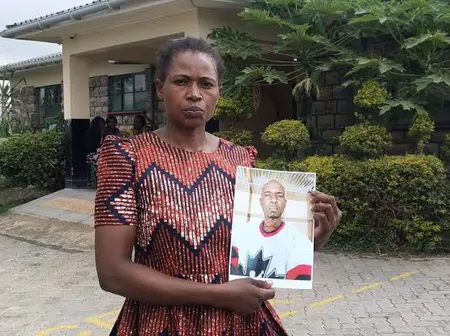
Instead, government pathologist Dr. Peter Ndegwa discovered severe inflammation and erosion along the stomach lining of the deceased, Morris Otieno Sade, raising urgent suspicions of possible chemical poisoning.
The unexpected medical findings were unveiled on Tuesday morning, November 17, 2026, following a tense autopsy conducted at the Kitengela Sub-County Hospital mortuary.
The examination took place in the presence of Otieno's widow, Caroline Awino, his daughter, extended relatives, and an investigating officer from the Directorate of Criminal Investigations (DCI).
The tragedy began on Friday morning, November 13, 2026, inside Noonkopir Estate in Kitengela, Kajiado County, after a heated confrontation broke out over Ksh 1,500 in outstanding October rent arrears.
Neighbours and witnesses initially told police that the house caretaker, identified as Shadrack Sankan Saita, had confronted Otieno inside his room and struck him on the head with a hammer during a scuffle.
According to those initial accounts, Otieno collapsed shortly after the altercation and died, sparking outrage among local residents and leading to Saita's immediate arrest by police officers.
However, when Dr. Ndegwa examined the body on Tuesday, he found no external wounds, skull fractures, or blunt-force trauma consistent with a hammer blow.
Rather than signs of a physical beating, the pathologist observed that Otieno's stomach lining was heavily reddened and inflamed with distinct erosions, a medical pattern strongly associated with exposure to a toxic chemical substance.
The autopsy also noted underlying chronic kidney disease, although Otieno's widow and daughter insisted outside the hospital mortuary that he had been in good health prior to the Friday morning dispute.
To determine what caused the severe internal inflammation, medical experts collected stomach contents and organ tissue samples for comprehensive toxicological analysis at the Government Chemist.
Detectives attached to the DCI in Kitengela said the pending laboratory results will be critical in establishing whether a poisonous substance was ingested or administered before the tenant collapsed.
Police confirmed that the caretaker suspect remains in lawful custody as investigators await the Government Chemist report to guide the direction of charges before the Kajiado Law Courts.
For Otieno's grieving family and shocked Noonkopir residents, the surprising autopsy twist has deepened the mystery surrounding how a minor Ksh 1,500 rent disagreement ended in a sudden loss of life.
Safaricom has responded to concerns from Kenyans over unsolicited political messages sent by politicians as the country approaches the 2027 General Election.
The telecommunications company addressed the issue after a customer questioned how politicians obtain phone numbers belonging to Kenyans and use them to send campaign messages urging them to support their bids for elective positions.
In a comment on Safaricom’s social media page, a customer identified as Tsom questioned the source of the phone numbers used by politicians to reach voters through promotional messages.
“The issue of politicians sending us messages as the electioneering period approaches, urging us to vote for them and reminding us to go and vote on polling day. Where do they get our phone numbers when we don’t give them out?” the customer posed.
Responding to the concern, Safaricom said it does not share customers’ personal information with third parties.
“Hello Tsom. Thank you for reaching out. We do not share customer information with third parties,” the company stated.
The telecommunications provider further advised customers who do not wish to receive promotional messages to use its available channels to block them.
“In the meantime dial 4569*5# OK or use our link https://bit.ly/3r2jdVe and follow prompts to block all promo messages,” Safaricom advised.
The company also directed customers to block promotional messages by following the instructions provided through its customer service channels.
“Alternatively, open the message that you do not wish to get, tap on more, then Details, Block and report spam,” Safaricom advised.
Safaricom’s response comes amid growing concerns over how political parties and campaign teams obtain personal telephone numbers as they intensify mobilisation ahead of the 2027 General Election.
Under guidelines issued by the Communications Authority of Kenya, providers of political messaging services are required to ensure that recipients have expressly opted in before receiving political messages.
The guidelines further require service providers to maintain evidence of consent and provide clear procedures for customers who wish to stop receiving such messages.
The regulations also prohibit the unauthorised use, sharing or sale of existing customer databases for political messaging, polling and lobbying activities.
The issue of political messaging has increasingly attracted public attention as politicians use mobile phones and digital platforms to reach potential voters ahead of the next general election.
For Kenyans receiving unsolicited campaign messages, questions remain over the source of their telephone numbers and whether their personal information is being used with their consent.
Safaricom’s response maintains that the company does not share customer information with third parties, while directing those who wish to stop promotional messages to its available opt-out channels.
Safaricom has explained why some customers receive higher borrowing limits on Okoa Jahazi than on Fuliza, clarifying the factors used to determine how much subscribers can access through the two services.
The telecommunications company issued the clarification after an M-PESA customer questioned why Safaricom had allocated him an Okoa Jahazi limit of Ksh1,000 but restricted his Fuliza overdraft to just Ksh200.
The customer, identified on X as @AFCNdiwa, asked why the two limits differed despite being offered on the same mobile number.
“Why give me okoa jahazi of 1,000 and fuliza of 200?” the customer posed.
In response, Safaricom explained that Fuliza limits are determined using several factors, including customers’ usage of its services, repayment history and credit standing.
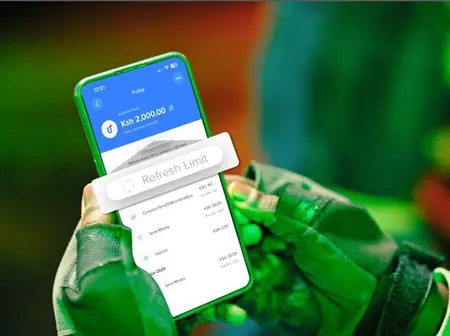
“Hello @AFCNdiwa, kindly dial *334# to refresh your Fuliza limit. This is allowed once in 30 days,” the company stated.
Safaricom encouraged the customer to save frequently, conduct more M-PESA transactions and continue using other services such as calls, data and SMS.
The company also revealed that it considers how customers repay other credit facilities, including Okoa Jahazi, as well as their credit scores with Credit Reference Bureaus (CRBs).
“We also check on your loan repayment history including Okoa Jahazi and the credit score with the Credit Reference Bureau. You will be notified via SMS once your limit is reviewed,” Safaricom added.
Although both services allow customers to access credit when they do not have sufficient funds, Okoa Jahazi and Fuliza operate differently.
Okoa Jahazi is an airtime advance service that allows eligible Safaricom subscribers to borrow airtime or bundles and repay the amount through subsequent top-ups.
According to Safaricom’s published Okoa Jahazi terms and conditions, the maximum amount a customer can request is based on their historical airtime spending on the network.
The service provides advance airtime in denominations of up to Ksh1,000, subject to individual eligibility.
Safaricom charges a 10 per cent service fee on each Okoa Jahazi request, subject to a minimum fee of Ksh0.50.
Fuliza, on the other hand, is an M-PESA overdraft facility that enables eligible customers to complete transactions when their wallet balances are insufficient.
Unlike Okoa Jahazi, which is linked to airtime consumption, Fuliza involves a credit assessment that considers a wider range of a customer’s financial behaviour.
This means a subscriber who regularly purchases airtime and qualifies for a Ksh1,000 Okoa Jahazi advance may still receive a much lower Fuliza limit if their credit assessment does not support a higher overdraft.
Safaricom’s response highlights several factors that influence how much customers can borrow through Fuliza.
The company encourages customers to transact more frequently through M-PESA as part of efforts to build their usage history.
However, regular transactions alone do not guarantee an increase in the overdraft limit.
In October 2026, Safaricom explained that customers who frequently transact through M-PESA may still retain low Fuliza limits because the lending assessment considers other factors beyond transaction volumes.
Safaricom also considers how customers settle their borrowing obligations.
This includes repayment of Okoa Jahazi advances and other credit facilities associated with their identification details.
Customers who consistently delay repayment may have a weaker borrowing profile when the system reviews their eligibility for a higher Fuliza limit.
The company encourages subscribers to continue using its other services, including airtime, voice calls, data and SMS.
Safaricom considers these activities when assessing customers’ overall usage patterns.
The company has previously explained that its credit assessment is not based exclusively on the amount of money moving through M-PESA.
Another important consideration is a customer’s credit standing with Credit Reference Bureaus.
In a November 12, 2026 response to another customer, Safaricom said Fuliza limits are adjusted at the lending bank’s discretion and depend partly on the customer’s credit listing status.
The company advised the customer to dial *433# to check their CRB status.
A customer’s credit history can therefore affect their eligibility for a higher overdraft even when they regularly use M-PESA and other Safaricom services.
Safaricom has given customers a specific USSD option for requesting a review of their Fuliza limits.
According to the company’s latest guidance, the process can be completed once every 30 days.
Customers should:
Safaricom says customers will receive an SMS notification once their limits have been reviewed.
However, refreshing a limit does not guarantee an increase. The review is conducted through the lending assessment process, and the final decision rests with the participating bank.
Safaricom has responded to a customer who claimed to have lost money while attempting to purchase internet bundles through the Bundles Mwitu programme.
The customer, identified as Boychild 001 on X, raised the complaint in a post directed at Safaricom Care, asking the telecommunications company to intervene over an M-PESA till number he alleged was being used to defraud customers.
In the post, the customer claimed that the till was receiving payments without providing the data bundles customers had paid for.
“This till is being used to con people while not offering any data,” he wrote while tagging Safaricom and seeking assistance.
Responding to the complaint, Safaricom apologised for the experience and asked the customer to submit details privately to facilitate investigations.
The company requested his phone number, registered name and the M-PESA transaction details in question through its direct message channel.
“Good evening, Boyychild001. Sorry about that. Please DM bit.ly/2LNte your phone number, registered name and M-PESA transaction in question for investigation,” Safaricom Care responded.
In a subsequent response, the company told the customer that its team would investigate the matter and provide feedback within seven days.
“Kelvin, allow us to look into it and get back within seven days,” the company stated.
Safaricom’s response indicates that the complaint had been referred for investigation, although the company had not publicly confirmed whether the alleged fraudulent activity had taken place.
The incident highlights the importance of verifying payment details before sending money when purchasing internet bundles through third-party platforms.
Customers who encounter suspected fraudulent transactions can contact Safaricom through its official customer care channels and provide the relevant M-PESA transaction details for investigation.
This also comes days after Safaricom has, on Saturday, October 31, 2026, warned Kenyans against purchasing unauthorised internet packages popularly known as ‘Bundles Mwitu’, amid reports that some subscribers are using the offers to access mobile data without first clearing their outstanding Okoa Jahazi debts.
Under Safaricom’s conventional data purchase system, customers with outstanding Okoa Jahazi advances may be required to settle their debts before purchasing regular data bundles.
However, some subscribers are turning to Bundles Mwitu as an alternative, allowing them to purchase internet packages while leaving their outstanding Okoa Jahazi balances unpaid.