
Listen to articleAmong those who were expected to appear before the Urban and Planning Committee to explain their roles are the governor's Chief of Staff, David Njoroge, and adviser Osman Khalif Abdi, whose names emerged during Monday's inquiry.Nairobi Governor Johnson Sakaja's advisers and senior county officials have come under scrutiny after failing to honour summons to appear before a Nairobi County Assembly committee probing the collapse of an 18-storey building in Eastleigh.
Tag: Johnson Sakaja
-

Nairobi Publishes List of 364 Approved Inspectors as Sakaja Warns Traders Against Extortion
According to a report published by Pulse Kenya on November 12, 2026, the officers have been vetted, trained and approved to conduct inspections across Nairobi's sub-counties.
The move comes amid complaints from traders and business operators over individuals allegedly impersonating county enforcement officers to demand money or intimidate businesses.
Sakaja has directed that all authorised inspectors must carry official identification badges and present them before conducting inspections.
The governor also warned that anyone claiming to be a county inspection officer but whose name does not appear on the authorised list or cannot produce a valid identification badge should be treated as an impostor and reported to the relevant authorities.
How Nairobi Traders Can Identify Genuine Inspectors
The new arrangement is intended to make county inspections more transparent and accountable.
Business owners are expected to confirm the identity of officers visiting their premises before allowing them to carry out inspection exercises.
The county's initiative also seeks to improve the coordination of business licence inspections and permit verification across the capital.
According to reports, the authorised officers have been distributed across the city's administrative areas to strengthen enforcement and decentralise revenue collection.
Sakaja Introduces Changes to County Inspections
The publication of the inspectors' list follows a meeting between Sakaja and representatives of Nairobi's liquor and entertainment industry at City Hall on November 11.
During the meeting, the governor announced changes intended to address complaints about disruptive enforcement operations.
He directed officers to stop night raids targeting entertainment establishments, DJs and revellers over noise complaints.
Instead, complaints involving noise pollution and public nuisance should be documented, with appropriate enforcement action directed at the establishment's owner through established procedures.
The county also announced a 14-day consultation period with industry stakeholders over entertainment and event taxes introduced under the Nairobi City County Finance Act, 2026.
The changes are part of efforts to improve relations between the county administration and business operators.
For Nairobi traders, the publication of the authorised officers' list provides an additional way to establish whether individuals conducting inspections are genuinely working for the county government.
Business owners are therefore encouraged to demand official identification and verify the officers' details before cooperating with inspection teams.
Have you ever experienced harassment or intimidation during a county inspection in Nairobi? Share your experience in the comments.
-

Sakaja orders end to night raids on Nairobi entertainment spots, announces 14-day tax review
Nairobi Governor Johnson Sakaja has ordered an end to unnecessary night raids on entertainment establishments, warning county enforcement officers against harassment, intimidation and extortion of business owners.Sakaja said the county government had agreed on a raft of reforms aimed at addressing longstanding challenges facing the liquor and entertainment industry following a stakeholders’ meeting held at Charter Hall, City Hall.
-

Sakaja Sends Strong Message to Nairobi Business Owners as New Cleanliness Initiative Gains Attention
The governor wants traders, shopkeepers and other entrepreneurs to understand that maintaining a clean environment should not be left to county workers alone. He believes every person operating a business has a responsibility to ensure that the area around their premises remains neat and safe.
Sakaja has particularly called on business owners to stop illegal dumping of waste and careless littering, which have contributed to growing cleanliness concerns in different parts of Nairobi.
As part of the efforts to improve the city's appearance, the governor is encouraging businesses to embrace the 10-metre cleaning initiative. Under this approach, business owners are expected to take responsibility for cleaning the immediate surroundings of their premises rather than waiting for county officials to intervene.
The initiative is intended to encourage personal responsibility and make cleanliness a shared duty among residents, traders and other stakeholders.
Nairobi, being Kenya's capital and a major commercial centre, attracts thousands of people daily. Its streets, markets and business areas experience heavy human activity, making proper waste management an important issue.
A cleaner city would not only improve its appearance but also create a healthier environment for people who live, work and conduct business there.
The governor's appeal comes as efforts to improve sanitation and restore order in Nairobi continue to attract public attention.
Sakaja is now looking towards greater cooperation from the business community, hoping that small daily actions will help transform the city into a cleaner and more welcoming place for everyone.
https://www.facebook.com/100064776546036/posts/1620085586827311/?app=fbl
-
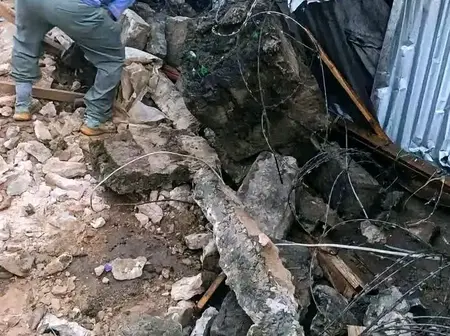
Karatina Traders Count Losses After Wall Suddenly Collapses,Leaving Several Injured
Several people have been injured after a wall suddenly collapsed in a busy trading area in Karatina,Nyeri County leaving traders counting losses and raising fresh concerns about the safety of buildings in commercial centres.
The incident happened on Tuesday evening, November 10,near Big Klub in Karatina town, Mathira Constituency.The collapse caught people in the area off guard with some reportedly trapped beneath the fallen debris.
Following the incident,the Nyeri County emergency department dispatched rescue teams to the scene to help those trapped under the rubble.The injured victims were subsequently rushed to hospital for medical attention.
However,the exact number of people who sustained injuries and the seriousness of their conditions had not been established by Wednesday morning.
The incident also affected traders operating near the collapsed wall with several businesses reportedly sustaining damage.
Business owners were left assessing the destruction and counting their losses after parts of the structure came down in the busy market area.
The circumstances that led to the wall collapsing remain unclear.Authorities had also not established the full extent of the damage or whether other structures surrounding the affected premises could pose similar risks.
Meanwhile,the County Government of Nyeri was yet to issue a detailed statement explaining what happened or announce whether inspections would be conducted on nearby buildings.
The incident has renewed concerns about the safety of structures in busy commercial areas where traders,customers and pedestrians interact daily.
It also comes just weeks after a deadly building collapse in Nairobi's Eastleigh area,where an 18 storey building under construction came down along 9th Street on October 23.
The Eastleigh disaster triggered a 15 day rescue and recovery operation involving several emergency response agencies including the Kenya Red Cross,Kenya Defence Forces and police.
Four people were rescued alive,while eight bodies were recovered before the operation was called off on November 6.Three people who had initially been reported missing remained unaccounted for.
Nairobi Governor Johnson Sakaja also stated that the collapsed building lacked the required construction approval.
The latest incident in Karatina has once again drawn attention to the importance of structural safety with traders and residents awaiting further information about the cause of the collapse and measures to prevent similar incidents.
Link:https://www.facebook.com/100064288795404/posts/1578059547680323/?app=fbl
-

Sakaja receives Luo elders’ blessing in Kisumu, given a cultural name—Ochieng Ondugi Randa – TV47 Digital
Nairobi Governor Sakaja Johnson has received the blessing of Luo cultural leader Ker, who has formally welcomed him as an adopted son of the Luo community during a meeting with the Luo Council of Elders in Kisumu.The elders bestowed upon Sakaja the cultural name Ochieng Ondugi Randa, formally welcoming him into the community and offering their blessings as he seeks a second term as Nairobi Governor ahead of the 2027 General Election.
-

Senate launches probe into Nairobi building collapses as over 300 are flagged for violations
The Senate has launched an investigation into recurring building collapses in Nairobi, with lawmakers targeting construction projects suspected of violating safety standards and more than 300 files forwarded to the Office of the Director of Public Prosecutions (ODPP) for possible enforcement action.
The Senate Standing Committee on Roads, Transportation and Housing will investigate breaches of approved building plans, poor construction standards, weaknesses in regulatory enforcement and possible professional negligence.
Committee Chairperson Hamida Kibwana announced the planned inquiry in a statement on the floor of the Senate on Wednesday, November 4, 2026, warning that continued building failures were exposing residents, traders and members of the public to danger.
The investigation follows a series of building collapses reported in Nairobi this year, including the October 23 incident along 9th Street in Eastleigh, where a multi-storey building under construction came crashing down.
The building had businesses operating on its ground and basement floors, raising concerns about the risks posed when construction activities take place alongside occupied commercial premises.
The Eastleigh tragedy has attracted national attention, with rescue operations recovering five bodies and leaving 16 people reported missing in the latest update. Four people were rescued alive.
Kibwana said the Committee would examine whether developers complied with approved construction plans and whether regulatory agencies fulfilled their responsibilities in ensuring buildings were safe for occupation.
“These incidents raise concerns regarding compliance, structural safety and accountability,” she said.
Among the incidents the Committee intends to examine is the January collapse of Manzil Towers in South C, where construction went beyond the approved 12 storeys by an additional four floors.
The National Construction Authority (NCA) had previously confirmed that the South C development was registered and approved for a 12-storey structure. Following the collapse on January 2, 2026, the Authority announced that investigations would establish the circumstances behind the incident and determine liability.
The Committee will also investigate the partial collapse of a 22-storey building under construction along School Lane in Westlands and the collapse of a building in Blue Estate, Shauri Moyo, during a demolition exercise linked to the Nairobi River Regeneration Project.
The latest incidents have renewed questions about whether developers are following approved designs and whether county and national agencies are conducting adequate inspections before and during construction.
The Senate investigation will also examine the status of more than 300 files involving developments suspected of violating construction regulations.
According to Kibwana, Nairobi Governor Johnson Sakaja informed the Committee during a meeting on October 13 that the county government had forwarded more than 300 files to the ODPP for further action.
The Committee plans to engage the prosecution office to establish how many of the files have resulted in charges, prosecutions or other enforcement measures.
It will also seek explanations for any delays in processing the cases.
The development follows a site visit by the Senate Committee to parts of Eastleigh on September 29, during which lawmakers assessed concerns surrounding unregulated developments, encroachment on public spaces and obstruction of roads and drainage systems.
The Committee subsequently met Sakaja to discuss the challenges facing the county in enforcing development regulations.
The ODPP had separately announced on October 26 that it had directed the Directorate of Criminal Investigations (DCI) to investigate the Eastleigh building collapse, including the conduct of county officials, the developer, contractors and professionals involved in the project.
The prosecution office said it had not received an inquiry file specifically relating to the construction of the collapsed Eastleigh building at the time of its statement.
Kibwana cited findings from the National Building Inspectorate’s 2025 audit, which assessed 396 developments across the country.
The audit found that 87 per cent of the developments either failed to meet building standards or lacked the necessary approvals.
It also resulted in the emergency demolition of two buildings because of serious structural defects and documented six major building collapses in Nairobi, Mombasa and Kisii during 2025, including two incidents in Parklands, Nairobi.
The findings were highlighted in the Architectural Association of Kenya’s Status of the Built Environment Report 2025, which raised concerns about persistent weaknesses in construction oversight.
The report also showed that the number of buildings audited by the National Building Inspectorate fell sharply from 20,649 in 2024 to just 396 in 2025, raising questions about the capacity of regulators to monitor construction activity.
A separate government assessment covering July 1, 2025, to April 2, 2026, found that 12,018 out of 21,282 buildings inspected across the country were non-compliant.
In Nairobi, 3,908 developments were assessed, with 2,261 found to be compliant.
The findings point to a wider challenge in enforcing construction regulations, particularly as demand for housing and commercial buildings continues to grow.
-

Ndegwa Njiru reveals question that could make or break Nairobi governor candidates
Lawyer Ndegwa Njiru has raised a question that could shape the 2027 Nairobi gubernatorial race, arguing that voters’ decisions may depend on which candidate can protect their livelihoods and which one threatens them with demolitions.
Njiru said in a statement shared on x account on thursday, November 5, 2026 the contest would ultimately come down to a concern familiar to thousands of Nairobi traders operating small kiosks and informal businesses: whether their sources of income would be protected or destroyed.
“The Nairobi gubernatorial election will be decided by one simple question: Who will protect my kiosk and who will demolish it?” Njiru said.
His remarks come amid growing political competition for Nairobi’s top county seat, with leaders positioning themselves ahead of the 2027 General Election following Governor Johnson Sakaja’s move to the Orange Democratic Movement (ODM).
Njiru’s remarks highlight the tension between urban redevelopment and the livelihoods of residents who depend on informal businesses to survive.
A September 2026 survey by Haki Data Lab, the Legal Empowerment Hub and Mathare Social Justice Centre documented the economic impact of demolitions on 123 households in Mathare 3A.
The assessment found that 78.9 per cent of respondents experienced livelihood disruptions following demolitions along the Mathare River corridor.
The destruction of workplaces was the most frequently reported impact, while other residents lost customers, business equipment and income-generating opportunities.
The proportion of surveyed households earning less than Ksh5,000 monthly rose from 33.3 per cent before the demolitions to 54.5 per cent afterwards.
The findings underscore the challenges facing informal traders who rely on kiosks and roadside businesses to support their families.
The survey also found that 5.7 per cent of households reported having no income after the demolitions, compared with 0.8 per cent before the exercise.
Researchers warned that repeated displacement could make it harder for affected families to rebuild their livelihoods and recover financially.
For many traders, the threat of losing business premises goes beyond property destruction, potentially cutting off the daily income they depend on for food, rent and school fees.
Njiru’s remarks introduce a livelihood-focused question into the emerging gubernatorial contest, where candidates are expected to address housing, urban planning, infrastructure and the management of informal settlements.
The debate also comes as Public Service Cabinet Secretary Geoffrey Ruku has hinted at a possible Nairobi gubernatorial bid following Sakaja’s move to ODM and other Nairobi Governorship hopefuls.
As political alignments take shape ahead of the 2027 polls, the protection of traders’ livelihoods could become a significant issue for candidates seeking support from Nairobi’s informal economy.
The Mathare survey cautioned that its findings were specific to the households studied and should not automatically be generalised to all demolition exercises across the city.
-

Scramble for ODM ticket: Sakaja ditches UDA as MP Karauri set to join ahead of 2027 battle
Nairobi Governor Johnson Sakaja has officially joined the Orange Democratic Movement (ODM) party for his re-election bid.Governor Sakaja, who was elected in 2022 on the ruling United Democratic Alliance (UDA) party of President William Ruto, said he is ready to campaign for Ruto’s second term while in ODM party.
-

Johnson Sakaja Meets Oburu Oginga After Joining ODM, Pledges to Uphold Raila’s Legacy
Nairobi Governor Johnson Sakaja has held his first meeting with Orange Democratic Movement (ODM) Party Leader Oburu Oginga following his decision to ditch the United Democratic Alliance (UDA) and join the opposition-turned-government party.The meeting took place at Oburu’s residence on Monday evening, November 2, where the ODM leader officially welcomed Sakaja into the party and its political family.