Tag: David Ndii

  • David Ndii Shares Archival Supermarket Price List In Heated Online Debate Over Cost Of Living

    David Ndii Shares Archival Supermarket Price List In Heated Online Debate Over Cost Of Living

    Ndii pulls out old supermarket price list after Kenyan asks what happened to prices of essential goods

    The exchange, which unfolded on the social media platform X on Monday, November 23, 2026, quickly gained widespread traction across Kenyan digital spaces and thrust the long-term trajectory of retail pricing, wage growth, and everyday affordability back into the centre of national economic discourse.

    By posting the archival retail advertisement, Ndii sought to contextualize contemporary shelf prices against historical benchmarks, prompting citizens, analysts, and commentators to weigh how nominal price shifts compare with changes in disposable income over decades.

    While supporters of the economist’s framing argued that long-run price movements reflect broader structural transformations and global monetary cycles, critics contended that historical comparisons do little to ease immediate cash-flow pressures confronting ordinary families at the supermarket till.

    The online exchange comes against the backdrop of sustained household budget strain across Kenya, following Ndii's recent remarks attributing retail milk stockouts to rising demand from affordable housing workers.

    According to the latest Kenya National Bureau of Statistics (KNBS) consumer price data, inflation has climbed steadily throughout the year—driven primarily by rising expenses in food, transport, and household energy, which together account for over 57 per cent of typical household expenditure.

    With staples such as fresh milk, wheat flour, beef, cooking oil, and petrol registering noticeable price increases, the debate highlights the widening gap between official macroeconomic stabilization narratives and the daily reality of stretching stagnant earnings to cover basic needs.

    https://peopledaily.digital/news/ndii-pulls-out-old-supermarket-price-list-after-kenyan-asks-what-happened-to-prices-of-essential-goods

  • Ndii pulls out old supermarket price list after Kenyan asks what happened to prices of essential goods

    Ndii pulls out old supermarket price list after Kenyan asks what happened to prices of essential goods

    Ndii pulls out old supermarket price list after Kenyan asks what happened to prices of essential goods

    Economist David Ndii has drawn attention to Kenya’s changing cost of living after sharing a vintage supermarket advertisement in response to a Kenyan who challenged him to explain how prices of essential goods have changed over the years.

    In a post shared on X on Monday, November 23, 2026, the user asked Ndii to explain the historical price comparisons in simple language while also questioning the government’s development record.

    “How do you guys explain this in layman’s language? I want to learn,” the user wrote, before asking how many kilometres of roads had been completed.

    Ndii responded by sharing an old advertisement from Ebrahim’s and Sunbeam supermarkets listing items at discounted prices. The advert featured household products, including butter, rice, sugar, soap and cooking-related goods, with prices displayed in the old shilling notation.

    The exchange has brought the cost of everyday goods into focus, with food, transport and household expenses continuing to shape public debate about purchasing power.

    The vintage advertisement offers a glimpse into how supermarkets once marketed everyday products, although the image alone does not establish the year it was published or allow a direct comparison with current prices.

    The discussion comes as Kenyans continue to grapple with the affordability of basic necessities, prompting questions about how far household incomes can stretch amid changing economic conditions.

    Recent data from the Kenya National Bureau of Statistics (KNBS) highlights the pressure facing households, particularly those with limited incomes.

    According to the bureau’s September 2026 figures, inflation among Nairobi’s lower-income households reached 7.94 per cent, compared with 6.20 per cent among middle-income households and 6.61 per cent among upper-income households.

    Nairobi residents calculate soaring household budgets amid surging inflation and high cost-of-living pressures

    National annual inflation stood at 6.76 per cent, with food, transport and housing-related expenses among the main contributors to rising prices.

    Food and non-alcoholic beverages recorded annual price increases of 9.5 per cent, while transport costs rose by 15.6 per cent.

    The figures underline the unequal impact of rising prices, particularly on families that spend a large share of their earnings on food, transport and other essentials.

    Although the old supermarket advertisement does not independently establish how prices have changed over a specific period, Ndii’s response has revived a broader discussion about purchasing power and the economic pressures facing ordinary households.

    For many families, the central concern remains whether their earnings can keep pace with the cost of meeting basic needs.

  • Ndii Breaks Down Nairobi Expressway’s Ksh5.1 Billion Financial Loss

    Ndii Breaks Down Nairobi Expressway’s Ksh5.1 Billion Financial Loss

    Head of the Presidential Council of Economic Advisors David Ndii has attributed the Ksh5.1 billion loss, reported by the Nairobi Expressway operator to the high cost of financing major infrastructure projects.

    In a statement on Saturday, November 21, Ndii explained that revenue collected through toll charges during the early years of such projects is largely used to repay loans taken to finance construction.

    His remarks followed the release of financial figures showing that Moja Expressway Company recorded a net loss of Ksh5.1 billion for the year ended December 2025, despite generating Ksh9.63 billion in revenue.

    According to the National Treasury's Fifth Annual Report on the State of Public-Private Partnerships, the company incurred direct costs amounting to Ksh14.73 billion during the period.

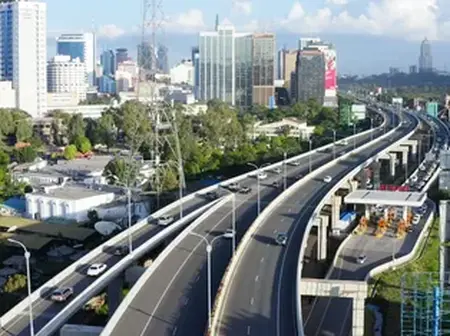
    The figures attracted public attention, with questions emerging over how operating a 27-kilometre road could result in such a high annual expenditure.

    NTV journalist Eric Latiff was among those who questioned the costs, taking to his X account to ask how activities such as sweeping the road, maintaining street lighting and operating toll booths could account for the reported amount.

    Responding to the concerns, Ndii said infrastructure projects are usually financed through a combination of equity and debt.

    He explained that investors and project developers borrow money to fund construction, with the loans attracting interest that must be repaid over time.

    As a result, a significant portion of the revenue collected during the initial years goes towards meeting financing obligations rather than being treated as profit.

    The explanation suggests that the company's reported loss cannot be understood by looking at routine road maintenance expenses alone.

    The Nairobi Expressway was developed under a public-private partnership arrangement, with the private operator responsible for financing, constructing and operating the road before recovering its investment through toll charges.

    Such arrangements are designed to allow major infrastructure projects to proceed without the government meeting the full construction cost upfront.

    However, the reported Ksh5.1 billion loss has renewed public interest in the financial structure of the project, and how toll revenue is distributed between operating expenses, debt repayment and other obligations.

    LINK: https://www.kenyans.co.ke/news/129573-ndii-explains-why-nairobi-expressway-lost-ksh51-billion?utm_source=Facebook&utm_medium=KI&fbclid=IwZXh0bgNhZW0CMTEAcGRvZgRzcnRjBmFwcF9pZA80MDk5NjI2MjMwODU2MDkAAR-V2MkKelubGEWV5PTwFM2TBk6L04U2H3ZvWfoSLl5Wdfjk2U95qfNeo3keIg_aem_bePH6zCXSUXhWi0uh2B3pQ

  • David Ndii Explains Why Nairobi Expressway Lost KSh5.1 Billion Despite Collecting KSh9.63 Billion

    David Ndii Explains Why Nairobi Expressway Lost KSh5.1 Billion Despite Collecting KSh9.63 Billion

    Ndii said toll revenue from such projects is often used to repay loans during the early years of operation, leaving investors to wait longer before receiving returns.

    His remarks came after Moja Expressway Company reported a net loss of KSh5.1 billion for the year ending December 2025, according to figures contained in the National Treasury's Fifth Annual Report on the State of Public-Private Partnerships (PPPs).

    The company generated KSh9.63 billion in revenue during the period but incurred direct costs of KSh14.73 billion, contributing to the reported loss.

    The figures raised questions among Kenyans about the cost of running the 27-kilometre expressway, with some wondering how toll collections could fall short of expenses despite the road being operational.

    NTV journalist Eric Latiff questioned the expenditure, pointing to routine activities such as road cleaning, lighting and toll booth operations and asking how they could account for such high costs.

    Responding to the concerns, Ndii explained that large infrastructure projects are financed through a combination of borrowed money and investors' capital, with each source carrying a different cost.

    He said debt financing is generally cheaper, with interest rates ranging between 5% and 10%, while equity capital can cost between 15% and 20% annually because investors expect higher returns for the money they commit.

    Ndii noted that infrastructure projects commonly use a financing structure consisting of approximately 30% equity and 70% debt. Increasing the proportion of borrowing, where financially sustainable, can lower the overall cost of financing.

    He explained that projects such as the Nairobi Expressway may spend their first 10 to 15 years generating cash to meet loan repayments and other financial obligations before investors begin receiving substantial returns.

    Ndii said this is why infrastructure projects require patient investors, including pension funds, which can commit capital for long periods without expecting immediate returns.

    The Nairobi Expressway, which connects Mlolongo to James Gichuru Road in Nairobi, was developed under a 30-year public-private partnership between the Kenya National Highways Authority (KeNHA) and Moja Expressway Company Limited.

    The reported loss has renewed questions about the financial structure of the project, the cost of servicing its loans and how long it may take before the investment generates returns for shareholders.

    Source

  • Why Ndii Says Nairobi Expressway Is Losing Billions

    Why Ndii Says Nairobi Expressway Is Losing Billions

    Moja Expressway Company has reported a net loss of Ksh5.1 billion. This happened even though the firm earned Ksh9.63 billion in revenue for the year ended December 2025. The figures appear in the National Treasury's Fifth Annual Report on the State of Public-Private Partnerships.

    According to the report, the company spent Ksh14.73 billion in direct costs. That is far more than the money it collected from motorists. The numbers quickly sparked public debate.

    Many Kenyans wondered how running a newly built 27-kilometre road could cost so much in one year. NTV journalist Eric Latiff asked the question on his X account. He wanted to know how sweeping the road, keeping the lights on and running toll booths could add up to such a huge bill.

    The Head of the Presidential Council of Economic Advisors David Ndii responded on Saturday, November 21. He said the real burden comes from the cost of financing the project. Big infrastructure projects are built using a mix of debt and investor money.

    Ndii explained that loans are cheaper because they cost between 5 and 10 per cent every year. Money from investors costs far more at between 15 and 20 per cent. He said a typical project carries 30 per cent equity and 70 per cent debt. The more debt a project can handle, the lower its cost of capital becomes.

    He added that such projects usually generate cash in their first 10 to 15 years. Most of that money goes towards repaying loans before investors see any returns. This is why patient capital such as pension funds is needed. These investors can wait 15 years or more for their payout.

    The Nairobi Expressway runs for 27 kilometres under a 30-year partnership between the Kenya National Highways Authority and Moja Expressway Company Limited. It opened in 2022. Motorists pay tolls based on where they enter and exit. At the end of the concession the road will be handed over to the government.

    https://x.com/kenyans/status/2124119568704483408?a=AJXkB794-gRhtKoFxPE&s=46

  • David Ndii Responds After Kenyan Asks Why Affordable Houses Cost More Than Private Apartments

    David Ndii Responds After Kenyan Asks Why Affordable Houses Cost More Than Private Apartments

    President William Ruto’s economic adviser David Ndii has sparked fresh debate over the pricing of government-built homes after responding to a Kenyan who questioned why affordable housing units cost more than comparable apartments in the private market.

    The exchange took place on Thursday, November 19, on X, where a user identified as @Kamugenius questioned the price of a two-bedroom unit under the Affordable Housing Programme.

    The user compared the government unit, priced at KSh3.6 million, with a reportedly similar apartment at Greatwall Apartments in Mlolongo, which they said costs KSh3 million.

    They argued that government housing should be cheaper because the projects are developed on public land and supported by taxpayers’ money.

    Ndii responded with just three words: “Location, location, location.”

    He did not provide a detailed breakdown of the two projects or explain how location accounted for the reported KSh600,000 price difference. The Greatwall Apartments price comparison was made by the X user and has not been independently verified.

    The KSh3.6 million figure follows a recent adjustment to housing prices. The State Department for Housing announced that, effective October 1, 2026, prices for affordable housing units would increase by 20 per cent, while market-rate units would rise by 10 per cent.

    Under the revised rates, a two-bedroom affordable unit increased from KSh3 million to KSh3.6 million. Applicants who registered before the stated deadline were allowed to retain the earlier prices, while new applicants became subject to the revised rates.

    The government has previously defended the pricing structure. Affordable Housing Board acting Chief Executive Sheila Waweru has said projects are developed on national or county government land treated as zero-rated, while construction costs per square metre are standardised across different sites.

    She has also pointed to bulk procurement arrangements with cement and steel manufacturers as measures intended to reduce building costs. However, she acknowledged that the final price of a housing unit is influenced by more than the cost of construction materials.

    The definition of affordable housing is also central to the debate. The Affordable Housing Act, 2024, links affordability to housing costs that do not exceed 30 per cent of a household's monthly income. The programme categorises homes into social, affordable and market-rate housing, with prices varying according to the category, project and size of the unit.

    Government listings on the Boma Yangu platform have also shown two-bedroom affordable units priced at KSh2.4 million, illustrating the differences in pricing across projects and categories.

    https://www.facebook.com/share/1AEokkit19/

  • Why Developers Prioritise Habitable Units Over Final Touches: Inside Nairobi’s Real Estate Cost

    Why Developers Prioritise Habitable Units Over Final Touches: Inside Nairobi’s Real Estate Cost

    David Ndii explains why most Nairobi landlords do not finish their buildings

    His remarks come amid heightened public debate over urban housing quality, construction compliance, and safety standards in Nairobi following recurring scrutiny of building practices and structural oversight across the capital.

    In Kenya's rapidly expanding rental market, where a large share of urban residents rely on rented accommodation rather than owner-occupied homes, private developers frequently weigh upfront capital outlay against immediate rental cash flow.

    Completing a multi-storey building—including fine plastering, painting, exterior facades, fittings, and final finishing—requires substantial additional capital on top of land acquisition, structural framing, and regulatory approvals.

    For many small and mid-sized landlords operating without deep institutional financing, once units reach a livable state and can attract paying tenants, spending heavily on non-essential finishes may offer lower immediate returns than deploying funds elsewhere or servicing debt.

    At the same time, Nairobi's high demand for affordable and mid-market rental housing has historically allowed landlords in many neighbourhoods to lease units even when surrounding walls, facades, or communal finishes remain incomplete.

    Urban planners and construction observers note that while this incremental approach helps developers stretch limited budgets in a high-cost environment, it also raises questions about enforcement of building codes, aesthetic standards, and occupant safety if structural or regulatory checks are lax.

    The broader conversation around incomplete buildings intersects directly with the government's affordable housing agenda and ongoing regulatory reforms under the National Building Code.

    What are your thoughts about this article? Share your reactions in the comment section and don't forget to share and follow for more updates.

    https://peopledaily.digital/news/david-ndii-explains-why-most-nairobi-landlords-do-not-finish-their-buildings

  • Kenya’s business costs have a regulatory problem that David Ndii wants addressed

    Kenya’s business costs have a regulatory problem that David Ndii wants addressed

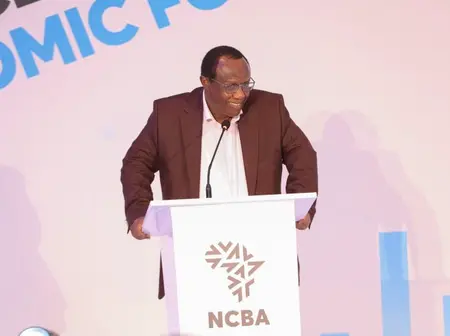
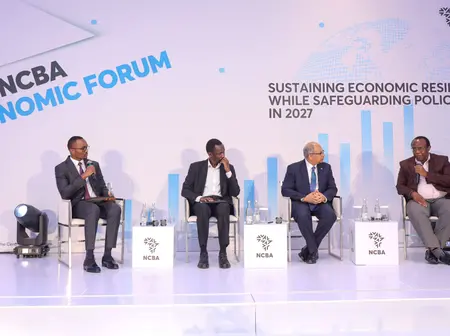
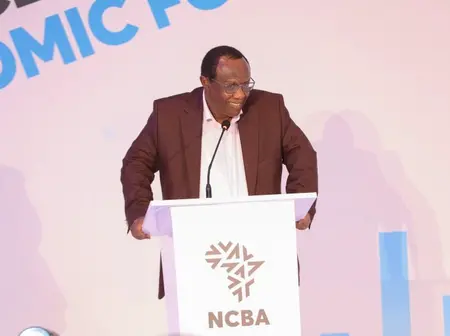
    David Ndii, Chairperson of the President’s Council of Economic Advisors, speaking on a panel alongside Dr Bimal Kantaria at the NCBA Economic Forum 2026 regarding the cost of doing business in Kenya.

    Kenya’s cost of doing business is back in focus after David Ndii proposed a dedicated function to oversee regulatory requirements and the charges imposed on businesses. Speaking at the NCBA Economic Forum 2026, Ndii argued for a more coordinated approach to monitoring regulations, with attention to the fees, licences and administrative obligations that affect companies.

    The proposal addresses a concern raised during the forum about the accumulation of charges across government agencies. Businesses must navigate different regulatory requirements while managing the financial and administrative costs associated with operating in Kenya.

    Ndii’s proposal centres on giving regulatory oversight a clearly defined institutional responsibility. A dedicated function would monitor the rules affecting businesses and examine how new requirements add to existing compliance obligations.

    The issue is particularly relevant to smaller enterprises, which often have fewer resources to manage multiple licences, inspections and administrative processes. Companies operating across different sectors can also face requirements from several agencies, adding to the complexity of compliance.

    Dr Bimal Kantaria raised concerns about the number of fees and levies affecting exporters. He referred to 47 charges and five additional levies, arguing that regulatory costs contribute to the difficulties facing Kenyan businesses competing in international markets.

    His comments also connected regulatory costs with logistical challenges affecting horticultural exports. Charges imposed at different stages of production, transportation and export can add to the cost of getting Kenyan goods to overseas buyers.

    For businesses operating on tight margins, these expenses affect pricing and competitiveness. Smaller exporters and producers must also account for the administrative time involved in meeting different requirements.

    The debate highlighted the relationship between regulation and the ability of businesses to invest and expand. Predictable rules allow companies to plan their operations, while multiple and fragmented requirements can complicate investment decisions.

    Gossip’s closing remarks at the forum also emphasised lower business costs, accountability and economic diversification as priorities for Kenya’s private sector.

    A dedicated regulatory oversight function would place greater attention on the cumulative cost of government requirements. The broader policy question concerns how Kenya can maintain effective regulation while ensuring that businesses are not burdened by unnecessary administrative expenses.

    For SMEs, exporters and larger companies, the cost of compliance forms part of the wider operating environment. Ndii’s proposal puts responsibility for examining that burden at the centre of the business policy discussion.

  • David Ndii: Kericho has overtaken Kiambu in coffee production

    David Ndii: Kericho has overtaken Kiambu in coffee production

    David Ndii: Kericho has overtaken Kiambu in coffee production

    Economist David Ndii has praised the strides being made in Kenya’s coffee sector, highlighting Kericho County’s rise to become the country’s leading coffee producer after overtaking Kiambu.

    Ndii, while speaking during the launch of the NCBA 2026 economic outlook on Tuesday, October 3, 2026, acknowledged the changing dynamics in the coffee industry, pointing to the latest production figures showing Kericho taking the top position among coffee-producing counties.

    “Kericho has overtaken Kiambu as the highest producer of coffee,” David Ndii stated.

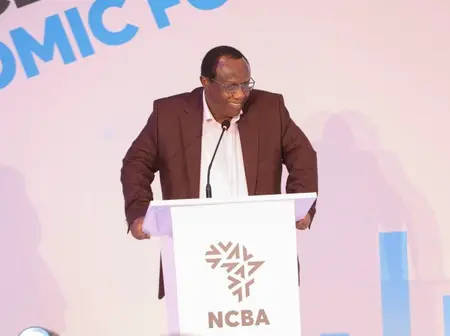
    David Ndii speaks during the launch of the NCBA 2026 Economic Outlook on Tuesday, October 2, 2026. PHOTO//@NCBABankKenya/X

    According to the figures shared on the County Government of Kericho’s website, Kericho produced approximately 6.01 million kilograms of clean coffee, valued at about Ksh5.29 billion.

    Murang’a followed with approximately 4.96 million kilograms, while Nyeri ranked third with about 4.63 million kilograms.

    Kiambu, which has traditionally been among Kenya’s leading coffee-producing counties, ranked fifth with approximately 4.18 million kilograms, behind Kirinyaga, which occupied fourth position.

    The figures place Kericho ahead of several established coffee-growing counties, marking a significant shift in the country’s coffee production landscape.

    Ndii further expressed optimism about the sector’s future, projecting that coffee could eventually surpass tea in export earnings if the current momentum is sustained.

    Tea has maintained a leading position among Kenya’s major agricultural exports for decades, contributing significantly to foreign exchange earnings and supporting millions of livelihoods across the country.

    However, renewed attention to coffee production, improved returns to farmers and increased investment in the value chain could strengthen the crop’s contribution to the economy.

    A statement from the County Government of Kericho. PHOTO//https://www.kericho.go.ke/index

    Kericho’s emergence at the top of the production rankings also highlights the county’s growing significance in Kenya’s agricultural economy.

    The development comes amid renewed efforts to revitalise the coffee industry, improve farmers’ earnings and strengthen Kenya’s position in the international coffee market.

    Further details contained in the county government’s coffee production data show that Kericho produced 6,000,516 kilograms of clean coffee, valued at approximately Ksh5.29 billion, equivalent to USD41 million.

    Murang’a followed with 4,959,789 kilogrammes valued at Ksh4.33 billion, while Nyeri recorded 4,627,312 kilogrammes worth approximately Ksh4.18 billion. Kirinyaga came fourth with 4,606,788 kilogrammes valued at Ksh4.31 billion, while Kiambu completed the top five with 4,175,636 kilogrammes worth Ksh3.46 billion.

    The comparison figures in the county’s document also highlight changes in production among the leading coffee-growing counties. Kericho’s clean coffee output increased from 3,027,701 kilograms in the comparison column to 6,000,516 kilograms, while Nyeri’s production figures moved from 5,461,591 to 4,627,312 kilograms. Kirinyaga also recorded a decline from 6,787,583 to 4,606,788 kilograms.

    Other counties featuring prominently in the rankings include Nandi, which produced 2,222,087 kilograms, and Bungoma, which recorded 1,838,273 kilograms, placing them sixth and seventh, respectively. The figures underline the growing contribution of counties outside the traditional Central Kenya coffee belt to Kenya’s coffee production.