
Stella Mwangi emerged as the overall winner of the inaugural KCB Group CEO Golf Series held at Nyeri Golf Club, after carding 40 Stableford points in a tournament that attracted 178 golfers.The handicap 8 golfer edged out handicap 7 Daniel Weru on countback to claim the top honours.
Category: Sports
-
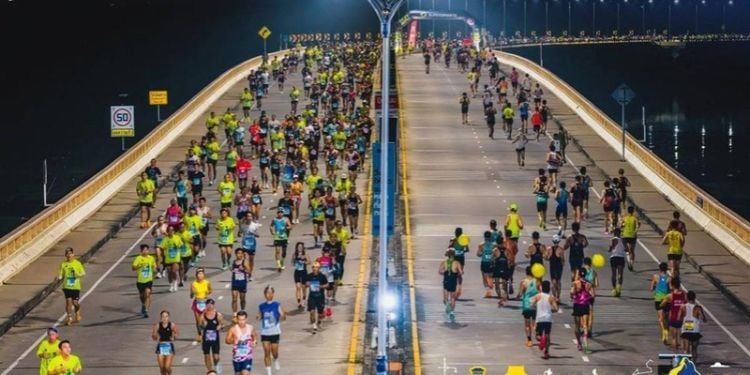
Kenyans Pocket KSh 4 Million After Dominating Thailand Marathon
Kenyan athletes have dominated the Bangsaen42-2026 Marathon in Chonburi, Thailand, on Sunday, November 15, winning both elite titles.Kenya also placed nine athletes among the top eight finishers across the men’s and women’s races.Abigael Jepkemboi led the women’s field while Muhia Alexander Njai won the men’s contest.
-

KCB FC shift focus to 3K FC after Homeboyz draw
KCB FC has set its sights on its next Premier League assignment against 3K FC after playing out a goalless draw with Kakamega Homeboyz at Bukhungu Stadium in Kakamega on Sunday.The Bankers will be looking to return to winning ways as they seek to consolidate their position at the top of the league standings.
-

From Samburu to Summit: Lopaga and Gor Mahia’s Akonnor Sweep SportPesa League October Awards
In SummaryMurang’a Seal striker Josephat Lopaga claimed October honors after recording six goals and one assist across four matches, walking away with KSh 50,000 and a custom trophy.Gor Mahia tactician Charles Akonnor secured his second consecutive October coaching award—and KSh 75,000—after guiding the champions to an unbeaten four-win start.
-
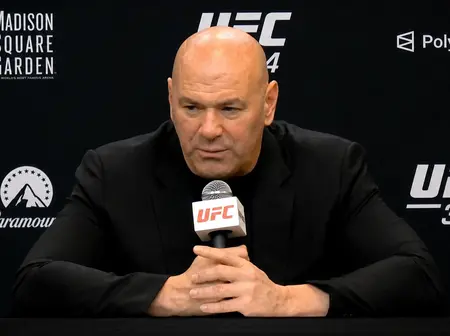
Dana White rants about ‘insane’ judges’ scorecards after UFC 334 event
Dana White was left stunned by the judges' scorecards for a bout on the UFC 334 card in New York City, branding the result "insane".
UFC's latest big event took place at Madison Square Garden as part of their 13th trip to New York City.
A total of 13 bouts were put on in the Big Apple but it was the encounter between Uros Medic and Kevin Holland which caused an almighty stir amongst the fanbase – as well as UFC chief White.
The three round bout went the distance, with Bruce Buffer initially announcing a majority decision victory.
However, the UFC broadcast was quick to correct that it was actually a majority draw, with the actual scorecards 29-27 28-28, 28-28.
Many thought that Holland won the fight, with UFC Hall of Famer Daniel Cormier immediately commenting that a "draw doesn't make sense", as he asked, "How do we get to a draw here?".
Similarly, Joe Rogan was perplexed by the outcome as he pointed out that Medic also had a point taken off him for multiple low blows.
And speaking in his press conference, White was nearly left speechless over how the judges came to that decision and claimed Holland was the clear victor.
He said: “That decision is absolutely insane to me. Insane. I don’t even know how. I'm embarrassed to tell you what happened to me tonight.
“Clearly, Kevin Holland won the fight.”
A majority draw in combat sports occurs when two of the judges score the fight a draw – which goes down on both Medic and Holland's record after the welterweight encounter.
White appeared to indicate that the confusion stemmed from one of the judges making an error regarding the point deduction.
Those scorecards were then released and showed that judge David Bruce had actually scored the fight 30-27 in favour of Medic – but it became 29-27 because of the point deduction.
Chris Lee had scored it 29-28 for Medic, who admitted afterwards to suffering with a knee injury in the bout.
But the point removal was what made it a draw – the exact same happening with Mike Bell.
On the scorecards, two judges gave Holland the opening round but that was the only one they felt he won.
Without the point deductions, he would have lost the fight according to the judges.
The 34-year-old reacted on Instagram by simply sharing the scorecards posted by Verdict MMA, failing to add a caption.
But in a post-match interview with Full Send MMA, Holland struggled with the fact that he missed out on a major bonus.
“I’m missing some racks, it hurts. The decision makes no sense to me I thought I was up 2 rounds. I agree with everyone, I’m not good at math but I know I’m missing money so this s**t sucks”.
-
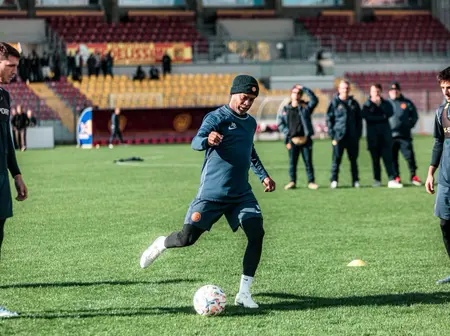
They are going to say it is AI: Ronaldinho reacts to his Ravenna debut
Brazilian football legend Ronaldinho Gaucho has reacted to his much anticipated return to professional football. The 46-year-old is expected to feature for Italian Serie C outfit Ravenna FC when they take on Forli FC on Sunday, November 15, 2026.Taking to his social media pages on Saturday, November 14, 2026, Gaucho said that people will not ‘believe it’ that he is making a return to the pitch after posting a short clip of him training.
-
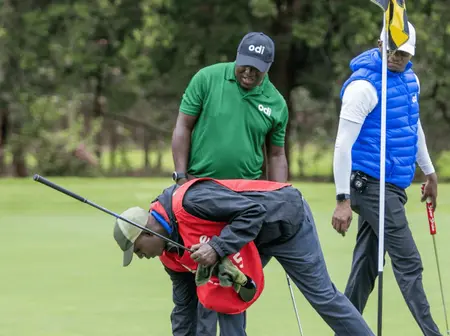
Over 288 Golfers Tee Off as Odibets Powers 2026 Muthaiga Lady Captain’s Prize
In SummaryMore than 288 golfers competed daily across men’s, ladies’, juniors’, and guest categories during the two-day tournament at Muthaiga Golf Club on November 6–7, 2026.The 2026 edition celebrated the impactful tenure of outgoing Lady Captain Beatrice Soy, who championed women’s participation and junior golf development.
-

KCB target breathing space at the summit as AFC Leopards chase Gor Mahia in Sunday’s FKF Premier League fixtures
Listen to articleFour matches are lined up, with Kenya Police FC hosting Posta Rangers, Murang’a Seal welcoming Mathare United and AFC Leopards taking on Mombasa United at Wang’uru Stadium.KCB FC have an opportunity to move three points clear at the top of the FKF Premier League when they visit Kakamega Homeboyz on Sunday, while AFC Leopards will be aiming to keep their title ambitions on track with a victory over bottom-placed Mombasa United as Matchweek 7 comes to a close.
-
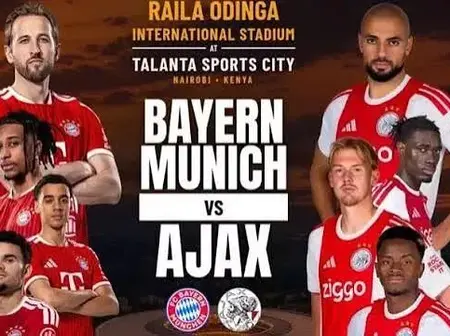
Bayern-Ajax football match can promote Kenyan football economy
In May 2018, members of the Dutch parliament questioned their aid minister over an apparent contradiction. Rwanda, a major recipient of Dutch development assistance, had just signed an estimated $40 million deal to place Visit Rwanda on the sleeves of every Arsenal jersey. This deal was nearly equivalent to an entire year’s worth of direct bilateral aid from the Netherlands.
The legislators asked how a country that receives so much aid could justify such an expense. That year, Rwanda received $1.2 billion in total net official development assistance from all development partners combined. Rwanda’s tourism chief replied that marketing is a fundamental cost of doing business, arguing that critics who balked at the deal on the grounds that Rwanda is poor, either wanted the country to stay poor or fundamentally misunderstood how economic growth works.
Today, the ledger is fully open. Rwanda’s tourism revenue was roughly $404 million when the Arsenal deal was announced in 2018, then rose to $647 million in 2024, and reached $685 million last year. No honest economist would have credited a shirt sleeve with a rise of nearly 70 per cent. The aviation, hospitality and MICE infrastructure all did the heavy lifting.
Far from treating the deal as a vanity project, Kigali banked the returns and pivoted in July to an even larger principal partner deal with Aston Villa, proving that strategic destination branding is not what waste looks like. This extended its visibility beyond tourism to investment, trade and professional development.
Now the question has travelled from the Dutch parliament to Nairobi.
On January 5 next year, Bayern Munich and Ajax are scheduled to inaugurate the Raila Odinga International Stadium at Talanta Sports City. President William Ruto presented the fixture as a milestone in Kenya’s preparations to co-host Afcon.
The announcement has generated both excitement and litigation. Six petitioners have moved to the High Court seeking to block the use of public funds for the fixture and compel disclosure of the underlying contracts, even as the Sports Principal Secretary Elijah Mwangi maintains that a private corporate model is funding the event, although private sponsors or corporate entities have not been named.
Meanwhile, the Kenyan public delivered its own verdict at the box office. Tickets in the Sh2,500, Sh3,500 and Sh5,000 tiers sold out a few hours after sales opened.
Whatever one’s position on the event, there is evidently a substantial market for watching elite European football live in Nairobi. The argument, therefore, is not whether football has an audience. It is whether Kenya can convert that audience into an industry.
Yet the sharper form of the question from the critics has little to do with Nairobi at all. It is aimed at the stadia rising across counties from Wajir to Vihiga, where critics of shiny things ask why the state is pouring money into arenas where football is presumed not be a sport.
Wajir provides a particularly revealing answer in the Ahmed Khalif Wajir Stadium.
Ahead of the this year’s Madaraka Day celebrations on June 1, the government handed over the 10,000-seat facility complete with a standard football pitch and an eight-lane athletics track, the first in Northeastern built to international standards. For a region long disadvantaged in access to quality sporting infrastructure, the investment represented more than a new venue for national ceremonies.
A local player told reporters that before it existed, teams had to sprinkle water onto bare dust just to keep it down before kick-off. Yet on that very dust, Wajir’s youth side reached the 2024 Kenya Youth Inter-County Sports Association football final after toppling defending champions Homa Bay. The Wajir All Stars, meanwhile, clinched the Safaricom Chapa Dimba Northeastern regional title, part of a streak in which local teams repeatedly advance to inter-county finals.
A desk survey conducted in a Nairobi office would have recorded that football is not a Wajir sport. The tournament records tell a different story. The talent existed before the infrastructure. What was missing was a dependable system for developing and displaying it.
By Madaraka Day, shopkeepers, hoteliers, boda boda riders and food vendors were already trading briskly on the crowds. One resident described the ground as a rare space where people from different clans and backgrounds converge. Those are dividends that no gate receipt will ever record.
The skeptics do not surprise economists. You see, demand is not a quantity waiting on a table. It is revealed by action, and action needs an option. Nobody knows how many boys and girls in Wajir will play on a makeshift pitch until there is a good pitch, and a survey measures what people do in the absence of the thing, which is a poor guide to what they will do in its presence.
A proper pitch enables organised fixtures which in turn attract coaches, spectators and scouts. Regular competition creates opportunities for vendors, transport operators and accommodation providers. An athletics track alongside the pitch offers a second route for talent discovery if running proves more promising than football. Ultimately, the stadium creates possibilities that did not previously exist.
In economic-speak, this is called the problem of dispersed knowledge. In 1945, the Austrian economist Friedrich Hayek argued that economically useful information is dispersed among individuals and embedded in particular circumstances of time and place. No senator or social media critic possesses all the knowledge necessary to determine every productive opportunity. They cannot possibly know which 14-year-old in Wajir has a left foot worth a career, for the plain reason that the fact does not yet exist in any file. It exists on a dusty ground, in the legs of a child and surfaces only when someone who knows what to look for is standing at the touchline.
A stadium does not find talent. But it is the place where someone can be standing when talent shows up. A pathway turns that into a system from the ground, the local coach, the registered fixture and the data that travels upward. In this sense, infrastructure does more than facilitate activity. It creates the conditions under which such knowledge becomes discoverable.
Hosting the Bayern vs Ajax friendly match presents Kenya with a different opportunity. It is where sports and creative diplomacy earn their keep in expanding our international economic relationships. Sports diplomacy builds relationships through the extraordinary emotional reach of competition. Creative diplomacy uses music, performance, design, film, fashion and cultural expression to make a country visible and memorable.
Neither Bayern nor Ajax is a government nor an official diplomatic mission. Yet each possesses international visibility and emotional influence that conventional diplomacy would struggle to replicate. Their presence in Nairobi opens possibilities for relationships extending into coaching education, sports science, technology, institutional management, tourism and commercial investment. This is the practical value of sports diplomacy.
Begs the question. What is Kenya buying beyond the 90 minutes?
Lets imagine the possibilities.
Kenyan musicians and performers could introduce global audiences to the country’s creative industries. Local designers, hotels, transport companies and restaurants could integrate the match into an identifiable sports-tourism offering.
More importantly, Kenya could use the occasion to establish relationships involving coaching exchanges, academy development, sports medicine, performance analytics and stadium management.
I submit that the real ambition of this initiative will not be measured by the calibre of these two teams. It will be by the place Kenya eventually occupies in the international football economy.
For too long, Kenya has been an enthusiastic consumer of European football. Every weekend, millions of Kenyans follow European clubs, purchase merchandise, subscribe to broadcasting services and generate enormous digital engagement. Local conversations, rivalries and even social identities are increasingly organised around clubs thousands of kilometres away.
This enthusiasm has commercial value, but much of that value is captured elsewhere. European clubs monetise African loyalty through broadcasting rights, sponsorships, merchandise and expanding international audiences. African supporters contribute to this economy without necessarily participating in the institutions that control its production.
Hosting Bayern Munich and Ajax thus offers an opportunity to begin altering that relationship. For once, the football product comes to Kenya. So this encounter should be treated as the beginning of an institutional business model rather than the culmination of a construction project.
Six months after the Bayern-Ajax match, Kenya, Uganda and Tanzania are scheduled to co-host Afcon. Transport systems, ticketing infrastructure, security arrangements, hospitality services, immigration facilitation, broadcasting facilities and crowd management will all influence the experience of visiting teams, spectators and international organisers.
The January fixture therefore offers an unusually valuable opportunity to test several of these systems under real conditions. Every operational weakness identified in January will become an opportunity for improvement before June. This matters because international reputation is not built by the announcement of a major event. It is built through consistent delivery. And the confidence of international sporting organisations and investors depends on practical evidence that a destination can organise complex events efficiently and professionally.
In this sense, Bayern and Ajax are not merely inaugural guests. They will function as a substantial operational rehearsal for Kenya’s wider sporting ambitions.
Finally, my unsolicited advice is to Ruto’s government. Do not allow Bayern and Ajax to leave Kenya having delivered only a football match. Negotiate a legacy package before the teams arrive. Secure coaching clinics, talent-identification engagements, technical exchanges and commercially viable collaborations with Kenyan institutions and individuals. Give local creative enterprises meaningful participation in the event rather than decorative appearances at the opening ceremony. Then connect the international exposure so that a gifted teenager in Wajir or Turkana has a better route into professional sport.
The Dutch legislators were right to demand an answer from their aid minister. Rwanda was equally entitled to invest in its economic future. The two positions were never mutually exclusive. The more useful question was whether the sponsorship formed part of a credible strategy capable of generating returns beyond its immediate publicity. And the mistake would be to confuse the cost of creating an opportunity with proof that the opportunity has no value. An equally serious mistake would be to assume that creating the opportunity guarantees its value.
The final score will be decided in 90 minutes. The economic result will be felt beyond those 90 minutes.
The difficulty lies, not in the new ideas, but in escaping from the old ones – John Maynard Keynes
-
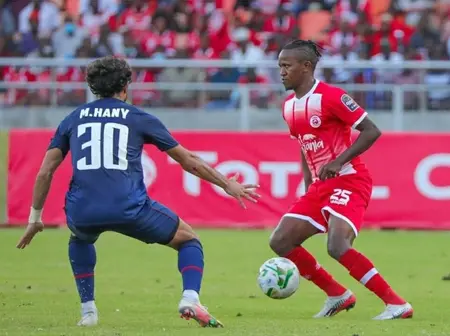
Francis Kahata: Tanzanian Football is miles ahead of Kenyan football
Francis Kahata’s assertion that Tanzanian football is now miles ahead of Kenyan football may sound provocative, but a comparison of the two countries’ football systems suggests the former Harambee Stars midfielder has a strong case.Kahata is also speaking from experience as Kenya, Tanzania, and Uganda are preparing to stage the 2027 Africa Cup of Nations.