Nottingham Forest have stood out from the crowd and backed Manchester City in a major Premier League decision, but why?
It's been nearly two months since the Premier League published the independent commission’s decision confirming Manchester City had been found guilty of almost all of the 115 charges brought against the club for serious financial breaches.
While we wait for the decision of City's ongoing appeal, the Premier League have been preparing for many different outcomes and potential fallouts following whatever decision is reached.
One such scenario is Manchester City's sponsors launching a legal case to sue the Premier League's five board directors, leading club to meet in London on Thursday, the first time since City were found guilty, to discuss the issue.
In a vote considering covering legal expenses for the organisation's five board directors should a legal battle with City's sponsors break out, 18/20 club voted in favour, with Nottingham Forest the only side to join City in voting against the proposal.
Currently, the Premier League's articles of association state that a board director will have their legal costs covered by the league if they win, but not if they lose.
But the new vote means chief executive Richard Masters, chair Alison Brittan and three other non-executive directors will now be given legal indemnity, meaning they will be completely supported by clubs should City's sponsors launch a case, even if costs reach hundreds of millions of pounds.
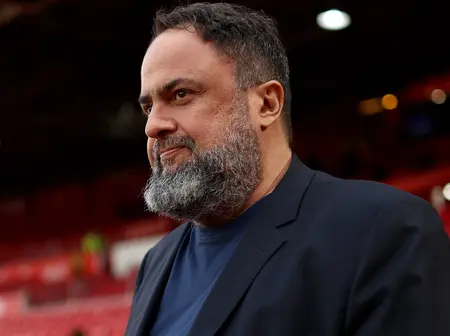
City's vote against the proposal seems self-explanatory, but it's less obvious why Forest would stand up against the other 18 Premier League sides and the board directors in the vote.
Since the vote, Forest have decline to comment when approached by the BBC, but the report claims that the vote was not out of support for City, but rather due to procedural.
It is believed that Forest did not think that sufficient information had been provided to make the vote, nor had Premier League sides been given enough time to consider the potential implications of the amendment, considering the huge costs it could lead to.
In principle, the club felt that a decision of such magnitude needed more time to be considered before the vote took place on Thursday.
The magnitude of such a decision still remains to be seen, as it is not yet known if City's sponsors will actually pursue a legal case, or how much it would actually cost.
In all likelihood, we won't hear anything on this until after we learn the outcome of City's appeal and the punishment they could face if the decision is upheld.
But, it's not at all unlikely that legal cases from City's sponsors could follow after Etihad Airways said in October that it was considering taking action against the Premier League.
Etihad, City's main sponsor since 2009, said in a statement that it "categorically rejects any finding, conclusion or implication that suggests the airline has ever been involved in improper commercial arrangements".
Adding: "The Premier League's public communication of the commission's findings, following a period of selective leaks and reporting, has further created damaging implications for Etihad despite the airline not being named in the redacted published findings."
Meanwhile Emirati telecommunications and digital services group Etisalat suggested it was also considering action after claiming the Premier League's verdict as "entirely false and defamatory".
For now, we must wait for the verdict of the appeal, with a decision expected to come sometime in the next 6-8 weeks.
Football's Laws of the Game have never stood still. For as long as the game has been codified, the bodies that govern its rules have sought to iterate and improve.
Fans, players and referees always have a new rule or implementation to get their heads around. As recently as last season, the idea of a corner being awarded in response to a goalkeeper's time-wasting would have seemed strange.
The Laws of the Game 2026/27 deployed that update and many others. But what are the latest rules covering offside, handball and red cards, and how do they work in practice?
Handball implementation has become irrevocably complicated under the auspices of video assistant refereeing (VAR), but the law at its root is straightforward.
A handball offence is committed if an outfield player deliberately touches the ball with their hand or forearm, or does so as a result of making their body 'unnaturally bigger'.
There are exceptions and complications in the Laws of the Game, including accidental handball being an offence when it leads immediately to a goal, while the Premier League's interpretation as of 2024/25 is clear that handball is not applied when the ball strikes an arm that a player is using to support their body on the ground.
Handball is not committed when a player plays the ball onto their own arm or that of a teammate, and proximity and ball trajectory are both taken into consideration by the referee.
Most memorable decision: In Leeds United's loss at Bournemouth on October 31, 2026, striker Dominic Calvert-Lewin scored from close range. The goal was awarded on the field, but the decision was overturned by VAR. Calvert-Lewin had scored accidentally with his hand, an offence under Law 12 because the ball directly crossed the line.
Being in an offside position is not automatically an offside offence under Law 11, a fact that introduces the possibility that an intervention from an opponent can effectively play them onside.
If a defending player 'deliberately' attempts to pass the ball to a team-mate, gain possession with a touch or clear the ball, the attacker is deemed not to have gained an advantage if they subsequently receive the ball having been in an offside position.
That's still true if the defender's action is unsuccessful, and there are various criteria used to determine whether the defender's play was deliberate.
However, a deflection would be ruled accidental and a 'save' – a stop or attempted stop by any player to prevent the ball going into the goal – would not wave off the offside despite being a deliberate action.
Most memorable decision: In January 2021, Manchester City midfielder Rodri was in a clear offside position when Bernardo Silva headed the ball towards him in a match against Aston Villa. Aware of Rodri's presence, Villa defender Tyrone Mings attempted to control and clear the ball rather than allowing it to run through to the goalkeeper. Rodri, played onside by Mings' deliberate action, stole the ball and teed Silva up to score.
DOGSO – denial of an obvious goalscoring opportunity – is one of the most misunderstood sections of the Laws of the Game.
The popular interpretation for decades has tended towards language around so-called professional fouls or 'last man' defenders, neither of which adequately define the rule.
There are three familiar versions of DOGSO that result in a red card: Denying 'a goal or an obviously goalscoring opportunity' by committing a deliberate handball, a non-deliberate handball outside the penalty area, or by committing a foul punishable by a free kick outside the box.
The fourth way in which a DOGSO incident results in a red card is an exception to the now-established rule that denial of an obvious goalscoring opportunity in the penalty area should be punishable by a penalty and yellow card only. When there is no genuine attempt to win or play the ball, a red card still applies.
Serious foul play remains punishable by a red card regardless.
Most memorable decision: In February 2026, the Premier League match between Liverpool and Manchester City served up the most bizarre DOGSO incident there's ever been.
Man City had the lead late in the game and Reds goalkeeper Alisson went up for a set piece, which was cleared. As Rayan Cherki's shot crawled towards Liverpool's empty net, Dominik Szoboszlai and Erling Haaland chased it down. Szoboszlai pulled Haaland's shirt, Haaland did the same in return, and the ball rolled into the net.
The goal was awarded, but VAR disallowed it on the basis that Haaland had fouled his opponent and prevented him from clearing the ball. But, because of Szoboszlai's initial pull, City were awarded a free kick and the Hungarian was sent off for denying an obvious goalscoring opportunity.
Where once an indirect free kick would have been awarded against a goalkeeper taking longer than six seconds to release the ball from their hands, there is now an eight-second limit and the concession of a corner is the sanction.
This change was implemented via the Laws of the Game 2025/26, when it was introduced into Law 12.
The referee first determines when the goalkeeper has control of the ball, which includes bouncing the ball or throwing it in the air, and then begins an eight-second countdown. The last five seconds are counted down visually and audibly, and a corner is awarded if the goalkeeper runs out of time.
The subsequent corner kick is taken from the side closest to the goalkeeper's position when penalised.
Most memorable decision: The first Premier League goalkeeper to fall foul of the new rule was Burnley's Martin Dubravka, who caught a cross against Tottenham Hotspur in August 2025 and overran the eight-second limit. Referee Michael Oliver, who had followed the process by signalling the last five seconds with hand gestures, gave Spurs a corner.
The Premier League has also adopted the five-second countdown for goal kicks and throw-ins to be taken. Like the goalkeeper possession time limit, the five seconds are counted down visually and audibly by the match referee.
If the player taking the goal kick or throw-in exceeds the count, the decision is reversed and a corner or throw-in is awarded to the opposing team instead.
The exact implementation of this countdown has led to confusion at all levels of the game. The starting point for the countdown is not absolute, nor is it based on the ball being in the hands of a throw-in taker at any given moment. Rather, it is a tool to be deployed by the referee when their interpretation is that the team with possession is 'clearly delaying' the restart.
It is, therefore, entirely at the referee's discretion when the count should start.
Most memorable decision: Perhaps because of the highly visible nature of the countdown and the obvious incentive to dispose of the ball in a timely manner once it begins, the Premier League has yet to produce a noteworthy example of a goal kick or throw-in being reversed due to time-wasting.
It is a relatively frequent occurrence at lower levels, but having a live warning tends to prevent overturns from actually being required.
You might remember there was a fairly recent attempt to tackle time-wasting by having substituted players leave the pitch at the nearest point. The scattergun implementation of that rendered it all but pointless, leaving the problem unresolved for long enough that football had another crack at it.
The new 2026/27 substitution protocol, adopted by the Premier League, is more steadfast. Players have 10 seconds to leave the pitch. If that time limit is exceeded in the eyes of the referee, the player coming on must wait for one minute before coming on at the next stoppage in play. The referee's permission is also required at this point.
There are necessary exceptions outlined in the Laws of the Game, namely "where leaving the field of play within ten seconds is not possible due to safety/security or injury."
Most memorable decision: This update has yet to catch out a Premier League team in a significant way, but Will Lankshear admitted he had no idea about it when becoming the first victim in August.
In the summer of 2025, the rules around penalties were clarified. The change was later incorporated into the Laws of the Game 2026/27, enshrining the decision that an accidental simultaneous or near-simultaneous contact with both feet by a penalty taker who scores should result in a retake.
Previously, an accidental double-touch by way of a slip or for any other reason, would result in an indirect free kick to the opposition regardless of the outcome.
The change in the Laws of the Game now means that the kick will be retaken if successful, while a miss will result in an indirect free kick to the opposition.
In the unlikely event of a deliberate double-touch and a successful penalty, the outcome would be an indirect free kick.
Most memorable decision: The clarification and subsequent law change occurred as a direct result of Julian Alvarez's penalty in a shoot-out between Atletico Madrid and Real Madrid in the Champions League in March 2025.
Alvarez slipped, made a slight and accidental double touch, and scored his penalty. His successful spot kick was disallowed and recorded as a miss, and Real Madrid went on to win the shoot-out. UEFA appealed to FIFA for a review of the law in cases where the illegal second touch is 'clearly unintentional', as it was in this case.
World Cup 2026 was the first competition to bring yellow cards into the remit of VAR in any way, shape or form. The Premier League followed suit in its rule changes for 2026/27.
The review scope of VAR now includes second yellow cards but only one way round. An incorrectly awarded second yellow card can be reviewed and overturned to reprieve players who are given 'clearly wrong' second yellow cards and dismissed.
VAR cannot review or recommend potential second yellow cards that are not awarded by the referee on the pitch.
Most memorable decision: The extended scope of the VAR for second yellow cards has not yet been used in the Premier League, where clear and factual evidence is required to allow an overturned decision. Re-refereeing on a subjective basis is not permitted.
The Premier League and the rest of English football are currently engaged in a trial designed to stamp out the scourge of goalkeepers coincidentally sustaining knocks that don't require them to be substituted at opportune moments that allow their teams to waste time or disrupt the flow of a match.
Goalkeepers are the only players not required to leave the field after treatment, which has led to a trend of so-called tactical timeouts. The trial aims to close that loophole by requiring managers to nominate an outfield player to spend one minute off the pitch when a goalkeeper injury stops play. If no player has been nominated within 10 seconds, the captain leaves the pitch.
Exceptions are in place for treatment immediately after a foul on the goalkeeper or a collision between the goalkeeper and an outfield player, and for when the goalkeeper is bleeding.
Most memorable decision: While the trial is underway in the Premier League, EFL, WSL and National League, there has not yet been an example of significant controversy, indicating that the trial might be working exactly as intended.
Set pieces have never been more important or more nefariously prepared in the Premier League than they are today. Routines are designed to block the goalkeeper and defenders to free up chances on goal or create chaos in the six-yard box, but there has not yet been a direct change to the Laws of the Game in the name of further outlawing the blocking of the goalkeeper.
However, the Premier League has directed officials to place an emphasis on holding and contact on the goalkeeper that doesn't result from any attempt to play the ball.
According to the Premier League Refereeing Points of Emphasis for 2026/27: "Challenges on goalkeepers will be penalised where an attacking player makes a clear action with no intent to play or challenge for the ball which results in contact that impacts the ability of the goalkeeper to play or challenge for the ball."
Most memorable decision: Manchester United and Aston Villa drew 4-4 in November 2026 and United's dramatic late equalising goal was a matter of some controversy. Senne Lammens, the Red Devils goalkeeper, was up for a corner and impeded Zion Suzuki, his opposite number, as United scored. Although the contact was minuscule, Lammens was facing away from the ball and actively seeking to block Suzuki throughout the play.
Football is governed by the Laws of the Game, the official document that guides referees. The details within are commonly referred to by fans as football's 'rules', which tends to be used as an umbrella term that covers the Laws of the Game as well as the interpretations, protocols and guidelines that aid their implementation.
The Laws of the Game consists of 17 numbered laws. Law 11 governs offside. Law 12 details fouls and misconduct. Law 14 outlines everything to do with penalty kicks.
The Laws of the Game are defined by the International Football Association Board (IFAB). The board comprises eight votes, four of which belong to FIFA. The other four votes sit with the four football associations of the United Kingdom: the Football Association, the Scottish Football Association, the Irish Football Association and the Football Association of Wales.
Individual competitions have responsibility for specific implementations and guidance for match officials, and in some cases are permitted to not adopt some provisions of the Laws of the Game.
England will renew rivalries with Norway after being drawn together in the quarter-finals of the UEFA Nations League.The two nations faced off in the last-eight of the FIFA World Cup this past summer when the Three Lions eked out a 2-1 win after extra-time in Miami.World champions Spain will take on France in a blockbuster replay of their World Cup semi-final meeting, Netherlands face Portugal, and Belgium come up against Germany.
Kenya aims to improve on its past outings at the 2027 World Masters Athletics Indoor Championships in Florida, USA.After trials at Kenyatta University grounds on Wednesday, Athletics Kenya Masters named 22 athletes—11 women and 11 men—for the event set for March 18–26 next year in Alachua, north-central Florida.
President William Ruto today laid the foundation stone for the construction of Lunyofu Sports Academy in Budalang’i Constituency, Busia County, marking the start of a project aimed at strengthening sports development and nurturing young talent.
The academy, to be constructed at Lunyofu Sports Ground, is part of the government's broader investment in sports infrastructure and youth development.
The facility is expected to provide a platform for identifying, nurturing and developing sporting talent at the grassroots level, giving young people an opportunity to sharpen their skills and pursue careers in sports.
Ruto's visit to Budalang’i was part of his development tour of the Western region, which entered its second day.
He had earlier presided over the launch and inspection of several projects targeting infrastructure, education and economic development.
Arsenal have emerged as the leading favourites to win the 2026/27 Premier League title, according to Opta’s supercomputer, which has updated its projections ahead of the return of league action following the international break.The Gunners have been given a 76.16 per cent chance of lifting the trophy, putting them well ahead of their closest challengers in the latest title predictions.
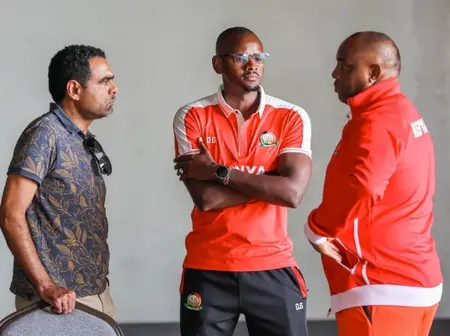
Kenya head coach Benni McCarthy has launched a fresh attack on the Football Kenya Federation (FKF), accusing the governing body of administrative failures that have undermined Harambee Stars’ preparations for the 2027 Africa Cup of Nations (AFCON).
The South African tactician revealed a series of problems, including unpaid salaries, chaotic travel arrangements, poor accommodation and inadequate meals, painting a troubling picture of working conditions within the national team.
In a hard-hitting statement posted on Instagram on Thursday night, McCarthy disclosed that players had threatened to strike over unpaid allowances before FKF eventually settled their dues. His technical bench, he added, had endured several months of salary delays.
“FKF owed the players money, and the situation came close to a strike before they were paid. My technical staff and I have also gone several months without being paid what we are owed, or by the dates we were due to be paid,” he said.
McCarthy also questioned the team’s travel arrangements, revealing that players failed to travel together from Johannesburg to Nairobi after the first leg against South Africa.
He cited substandard accommodation, meals that failed to meet required nutritional standards and an incident in which players were left stranded after training because the team bus had broken down.
The revelations come amid criticism of his conduct during Tuesday’s post-match press conference, where he questioned whether his online critics were eating enough following Kenya’s 2-1 defeat to Bafana Bafana.
However, McCarthy admitted that his response was inappropriate and apologised to supporters, saying they deserved better. “It was a game where emotions ran high, and you deserved a better response from me after the final whistle, where some of the points that I was trying to make came across not exactly as I intended,” he said.
Despite the off-field challenges, the former Bafana Bafana striker defended his players, insisting they had performed creditably against a South African side ranked 67 places above Kenya.
Harambee Stars secured a 2-2 draw in Johannesburg on November 13 before losing 2-1 at home, with McCarthy attributing the defeat to individual defensive mistakes. He maintained that his players gave their best despite the difficult circumstances surrounding the team.
“I raise these issues because part of my job is to speak up for the players. I want them to thrive, not just survive,” he said, urging FKF to provide proper accommodation, nutrition, transport and timely payments.
McCarthy expressed willingness to work with the federation to address the concerns as Kenya prepares for the 2027 AFCON finals.
He also defended his assistant coach, Moeneeb Josephs, following allegations of verbal abuse against a content creator, appearing to back Mohamed Bajaber’s account on the incident.
Kenya have collected just two points from four Group D qualifying matches but are assured of a place at the 2027 finals as co-hosts alongside Uganda and Tanzania.
Kenya's 2027 Africa Cup of Nations (AFCON) Local Organising Committee chairman Nicholas Musonye has dismissed the uproar over CAF's decision to shift the tournament's coordination headquarters from Nairobi to Dar es Salaam, declaring that Kenya has lost nothing.
Musonye called on the three co-hosts to close ranks, eliminate territorial disagreements and focus on staging a memorable tournament, insisting none should claim a bigger stake in the joint assignment.
He cautioned against territorial rivalry, saying the location of CAF's temporary administrative offices should not become a source of friction among the hosts.
“Kenya, Uganda and Tanzania are three equal partners in this undertaking. None of us is more important than the others. We must respect one another and avoid the assumption that one country is superior to its partners,” Musonye said.
The chairman explained that Nairobi's selection as the operational base during the 2024 African Nations Championship (CHAN) was entirely CAF's decision, rather than an arrangement initiated or demanded by Kenya.
He said the continental governing body chose Nairobi because hotels and other facilities were available to support the tournament's operations, adding that Kenya had never received a written guarantee that the same arrangement would apply to AFCON 2027, scheduled for June 19 to July 17.
“As I told you last year, during the CAF operations for the CHAN tournament, the decision was made to have the operational headquarters in Nairobi. We did not request that arrangement. CAF informed us that the operations would be conducted in Nairobi because the hotels and other facilities were available here,” he said.
Musonye argued that Kenya had no grounds to complain about the latest decision, particularly because Tanzania and Uganda had not protested when Nairobi was selected to coordinate CHAN operations. He also pointed out that CAF's permanent headquarters are in Cairo, Egypt, and that the continental body retains the authority to determine where its tournament coordination structures should be based.
“When CAF decided that Nairobi would host the AFCON 2027 opening ceremony, the final and the tournament draw, neither Tanzania nor Uganda raised any objection. We therefore see no reason to complain if CAF decides to establish its operational centre in Dar es Salaam,” he said.
The relocation, expected to be formally marked by the inauguration of the Dar es Salaam offices on November 25, has triggered debate over its implications for the three countries' respective roles in organising the tournament.
However, Musonye insisted that the administrative shift should not be confused with the allocation of hosting rights, maintaining that Kenya's focus remains on delivering its share of the continental assignment rather than contesting the location of CAF's offices.
“If CAF now chooses Dar-es-Salaam for AFCON 2027, Kenya has no problem with that. Our priority is not where the operational headquarters are located. Our concern is to work together and successfully deliver a historic AFCON tournament in East Africa,” he said.
He urged stakeholders in the three countries to abandon territorial arguments and concentrate on the preparations required to stage the 24-team competition. “We must put aside unnecessary territorial arguments and concentrate on preparing for a successful competition that reflects the shared ambitions of all three host nations,” Musonye said.
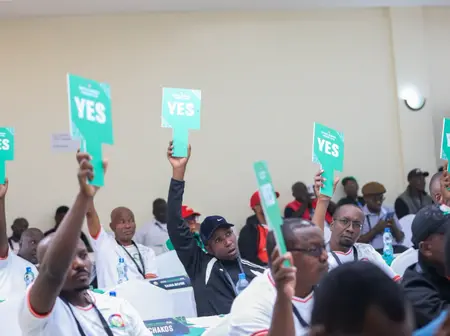
The controversy surrounding the Football Kenya Federation (FKF) Special General Meeting held in Meru has deepened after the Sports Registrar has found that 13 clubs that took part in the disputed gathering are not registered with the Registrar under the Sports Act, 2013.The development could trigger fresh scrutiny of the legality of the Saturday, November 7, 2026 meeting, which ended with the FKF General Assembly voting to remove Vice-President McDonald Mariga and six other National Executive Committee (NEC) members.
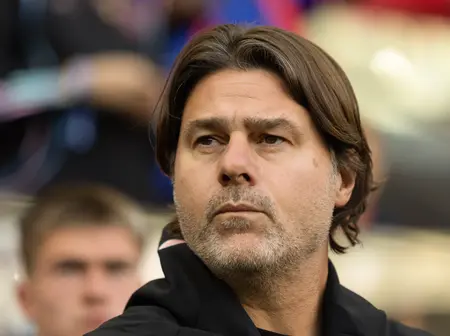
New Manchester United boss Mauricio Pochettino is reportedly keen to hijack Tottenham Hotspur’s pursuit of towering Bundesliga striker Igor Matanovic.
The 6ft 5in Croatian has emerged as a January target for the new Red Devils boss, despite Spurs once leading the race for Matanovic’s signature.
The Freiburg striker has struck four goals in nine Bundesliga matches this term, and is now caught in the crossfire of a United-Spurs transfer battle.
According to The i Paper, and relayed by TEAMtalk, Manchester United are looking to hijack Spurs’ pursuit of Matanovic, who previously led the race for the Croatian’s signature.
With Benjamin Sesko sidelined until 2027, Matanovic is expected to function as both an immediate fill-in and future rival for the Slovenian’s position.
The Red Devils are sat 18th in the Premier League standings, and rank eighth for goals scored in the English top-flight – behind Ipswich Town in both tables.
The club will next play Liverpool upon their Premier League return, which has already threatened to cause Pochettino an early headache during his Old Trafford reign.
Should Pochettino – whose first training session in Manchester was leaked in drone footage on Thursday – plunge into the Old Trafford transfer budget for Matanovic come January, the ex-Spurs boss would likely rival his former club in 2027.
A potential move for the Freiburg man wouldn’t be a fresh pursuit at the Argentine’s request – Manchester United have observed the Croatian and his situation previously in 2026.
However, Spurs also tracked Matanovic throughout the summer, and appeared in pole position to bag the Bundesliga striker, before the recent amplification of Red Devils interest.
The 23-year-old, a towering 6ft 5in Bundesliga striker, recorded 19 goal involvements in 50 appearances for Freiburg last term.
Matanovic is under contract until 2029, meaning that Freiburg are under no immediate pressure to sell and could demand upwards of £50million from Manchester United, per TEAMtalk.
The Croatian has yielded an impressive return of eight goals and three assists in 16 outings this term, across all competitions, and joined Freiburg previously for just £7million in 2025.
Transfer expert Ben Jacobs previously invoked both Spurs and Manchester United as possible destinations for Matanovic, claiming that the former “may look for something short-term.”
For Manchester United fans uncertain of the Croatian’s worth, in light of his £50million valuation, Jacobs explained that a similar situation could emerge at Old Trafford.
“Igor Matanovic is one name, as I exclusively revealed, that Tottenham like. They may look for something a little bit more short-term, like a loan. The same for Manchester United,” Jacobs said.
“If they can’t find the right target, or maybe someone with a bit more experience within the Premier League, then they can reassess in the summer.
“What they won’t want to do is necessarily go all in and panic buy in January for someone on a long-term contract, instead of just biding their time and waiting it out.”
Elsewhere, the Freiburg man himself played down talks of a Premier League move in September, after a strong debut season with the Bundesliga club.
“As for me, I’m currently in Freiburg. There has been absolutely no contact with anyone from my side,” claimed the Croatian.