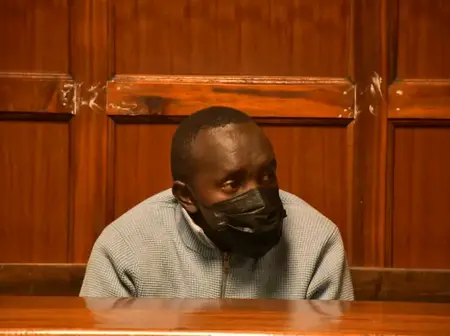
The court ordered that Kiplagat remain in custody as arrangements are made for his transfer to the UK after 15 days. He has been granted the right to challenge the decision through an appeal within that period.
Magistrate Mugo also directed that the arrest warrant issued by the Westminster Magistrates’ Court be endorsed. The investigating officer was further instructed to prepare an inventory of items to be handed over as part of the extradition process.
The court issued additional directions on Kiplagat’s identification documents and access to medical care while in custody.
He is also accused of making unauthorised transfers from her bank accounts into accounts under his control and using her credit card unlawfully.
The documents indicate that the two began dating in January 2024 after meeting on WhatsApp, before Kiplagat reportedly moved into Kilonzi’s home in September that year.
Bestiality is an offence under Section 162(b) of Kenya’s Penal Code. It carries a maximum sentence of 14 years in prison.
Courts have handed down jail terms in such cases. In May 2026, the High Court in Bomet cut a convicted man’s 14-year sentence to five years, The Star reported. The offence took place in Tegat village, Konoin Sub-County, in July 2025.
The man had pleaded guilty in 2025, and was sentenced in Sotik, the report said. He had no lawyer during the trial, which the judge said required caution. The sentence was cut after he had served almost a year in jail, reports indicate.
In an earlier case, a Wundanyi court sentenced a 32-year-old man to 14 years after a veterinary report confirmed the offence, according to reports. Veterinary evidence is often important in such cases, court records show.
Kangundo has recorded similar cases before. In January 2020, police arrested a 35-year-old man in Mbondoni village over alleged bestiality, The Star reported. In that case, police reportedly rescued the suspect from a mob. He was held at Kangundo Police Station before being arraigned the next day.
In 2018, a man was charged in Kangundo with bestiality involving two goats, according to The Star.
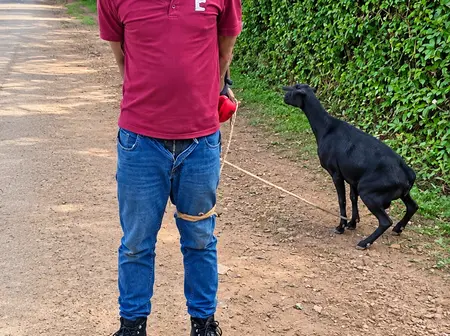
The claims made by the goat’s owner had not been independently verified. Suspects are presumed innocent until proven guilty in court.
Further details are expected as investigations continue.
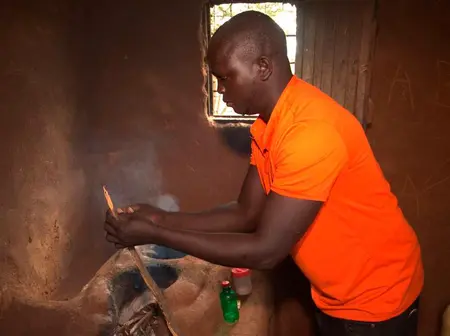
What you need to know:Harrison Kibet washes dishes, fetches water and firewood, and cooks for his family. In Kacheliba, West Pokot County, this has made him the butt of jokes among his fellow men.As the country marks International Men's Day, themed “The Future Is Everyone”, he is one of several men who say standing with women and girls has come at a price.
Listen to articleThe South C Residents Association has alleged that Bridge Port Apartments was approved for only 10 floors and that its structural pillars were damaged after the other building collapsed.South C residents have once again warned that another building in the area is at risk of collapsing, urging relevant authorities to intervene immediately to avert a potential disaster.
A fundraising campaign that attracted millions of shillings to help a vulnerable teenager has now sparked an important warning from the Kenyan government.
Comedian Eric Omondi recently helped raise KSh 10.2 million for 17-year-old Bryson Makokha, a boy from Bungoma County living with a rare skin condition. But days after the campaign attracted widespread attention, the government issued a warning about how vulnerable children are presented on social media.
The warning has raised questions about the balance between helping needy families and protecting children's rights.
Principal Secretary for the State Department for Children Services, Carren Ageng’o, issued the statement on Tuesday, November 17, 2026.
She expressed concern over the growing trend of social media influencers sharing children's photographs, videos and sensitive personal information when appealing for financial assistance.
According to the department, exposing children to the public in this manner could leave them vulnerable to bullying, discrimination, stigmatisation and exploitation.
Ageng’o emphasised that helping a child should never mean putting their privacy and dignity at risk.
"If you want to help children, you must not expose them to bullying, discrimination, stigmatisation and exploitation by highlighting sensitive information about their health. Their identity and their family background," she stated.
The government's warning comes shortly after Bryson's story touched the hearts of many Kenyans.
A video showing the 17-year-old selling bananas along the roadside in Bungoma while struggling with his skin condition circulated widely online.
The story was initially shared by content creator Minister Zydo, attracting sympathy and offers of assistance from members of the public.
Comedian Eric Omondi later stepped in through his Sisi Kwa Sisi initiative, asking Kenyans to contribute towards Bryson's medical expenses and his family's needs.
The campaign reportedly raised an impressive KSh 10.2 million.
For many Kenyans, the fundraising demonstrated the power of social media when people come together to support someone facing difficult circumstances.
However, the government now wants such generosity handled more carefully.
The State Department for Children Services reminded Kenyans that children are protected under the Constitution, the Children Act 2022 and the Data Protection Act 2019.
The department also clarified that parental consent does not automatically give individuals permission to publish a child's photographs, medical records or other sensitive personal information without restrictions.
Instead, influencers, organisations and individuals conducting public fundraisers have been encouraged to use safer methods.
These include blurring children's faces and sharing their stories anonymously to prevent unnecessary exposure.
Interestingly, the government did not specifically mention Eric Omondi by name in its statement, although the warning has attracted attention because of his recent campaign for Bryson.
The department further encouraged Kenyans to report children in need of protection to the nearest Sub-County Children's Office or call Child Helpline 116.
The debate now goes beyond one fundraising campaign. Social media has become a powerful tool for helping struggling families, but should children have their identities and medical conditions displayed publicly to attract donations?
A Kenyan mother has attracted attention online after gifting her daughter a car shortly after she completed her Kenya Certificate of Secondary Education (KCSE) examinations.
The surprise was captured in a video shared by Kenyan Baddies Club, showing the student receiving the gift while still dressed in her school uniform.
In the video, a white SUV is seen parked on a green lawn, with flowers arranged on it. The girl's family members are also present as they prepare to celebrate her completion of secondary school.
The student approaches the vehicle before noticing the bouquet of red and white flowers placed on it. She appears surprised as she picks up the flowers and begins celebrating.
Her mother, who is wearing a pink striped dress, stands beside her as another woman in a light purple dress joins the celebration.
The student is seen smiling, dancing and moving around the vehicle while holding the bouquet. Her excitement is evident as the two women cheer her on.
The family later walks towards the camera, with the white SUV visible behind them.
The video has attracted reactions from social media users, with several people congratulating the student on completing her KCSE examinations. Others have praised the mother for choosing to celebrate her daughter's achievement with such a generous gift.
The gesture has also sparked conversations about parents rewarding their children's efforts after completing important academic milestones.
The student is now among the many candidates who have completed their secondary school examinations, marking the end of an important stage in their education.
Masika, who serves as a communications officer for Governor George Natembeya, was attacked outside his home in Chebarus, Kitale, on Monday night by armed assailants who reportedly ambushed him.
The attackers allegedly slashed him several times with machetes, inflicting serious injuries to his head, hands and legs before setting his vehicle ablaze. He was rushed to hospital for emergency treatment.
The victim remains in critical condition at the Intensive Care Unit of Wamalwa Kijana Teaching and Referral Hospital, where he is receiving treatment following the violent incident.
According to updates from Governor Natembeya's team, preliminary intelligence suggests the attack may have been politically motivated and carefully planned rather than an ordinary criminal incident.
Investigators are reportedly pursuing leads indicating that the alleged plot was hatched in Sikhendu during a sports tournament associated with a local county politician, although the claims remain under investigation.
Detectives are also examining possible betrayal within Masika's close circle, with his bodyguard allegedly suspected of monitoring his movements and sharing information with the attackers before the ambush.
Police have conducted targeted operations in different parts of the region, arresting several suspects in Kiminini and Matunda. Those in custody are being questioned as investigators pursue other individuals linked to the incident.
Governor Natembeya has condemned the attack, describing it as an attempt to intimidate his administration and supporters. Police investigations remain ongoing as detectives seek to identify the masterminds and establish those who financed the operation.
Police identified the suspect as Ja'Shay Jackson. During a preliminary hearing, investigators revealed that Jackson allegedly harmed the helpless infant to spite her ex-boyfriend.
The disturbing incident unfolded during a FaceTime call. Growing deeply alarmed by what was happening, the father quickly used a second phone to record his screen as evidence.
Court documents indicate that the baby’s cries were heard cutting off two or three times. Jackson then reportedly turned her camera toward the child, showing a blanket placed over the infant's face with her hand pressing down.
In another 22-second recording captured inside a car, a voice identified as Jackson's was heard stating she would not feed or change the baby.
To the immense relief of many following the heartbreaking case, the nine-month-old boy survived the ordeal. He has since been placed safely in the care of his paternal grandmother as legal proceedings continue.
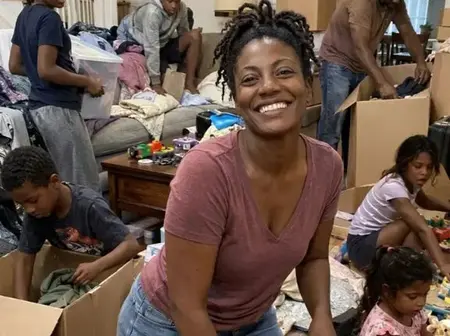
Linda had offered her sister-in-law, Juliet, temporary shelter for two nights after Juliet’s rental house in South B required urgent cockroach fumigation. However, when Linda returned from work the next day, she found Juliet, her husband Gideon, and their five children unpacking clothes and cartons into the guest wardrobes.
Despite her husband James reassuring her that the stay was temporary, the family remained in the house well past the agreed two days.
When Linda asked when they would return to South B on Saturday, Juliet casually declined to leave. "We're not. This suits us better. The kids have more room here," Juliet reportedly told a shocked Linda over morning tea.
Left in disbelief by the unexpected takeover of her home, Linda chose not to argue with her in-laws, quietly deciding to take her own next steps to resolve the situation.
Every year as the festive season approaches, Kenya’s highways turn into a race against time and often against survival. With the National Transport and Safety Authority (NTSA) intensifying its "Msimu Bila Ajali, Usalama Barabarani" campaign, authorities are sounding a stark warning to motorists, riders, and families preparing for end-of-year travel. Yet the central question remains: when the holiday rush hits, will rushing Kenyans actually listen?
NTSA data shows 4,532 people have already died in road crashes between January 1 and November 10, 2026 up from 4,138 over the same period last year, already nearing roughly 90% of the 5,009 annual fatalities recorded in 2025.
Over 80% of crashes stem from human error, including speeding, improper overtaking, overlapping, driver fatigue, and drunk driving. Notably, officials warn that many deadly collisions occur on well-maintained highways where drivers treat smooth tarmac as an invitation to push limits.
To counter the festive surge, NTSA, the National Police Service, and the Judiciary have stepped up day-and-night compliance checks covering speeding, drink-driving, driver documentation, vehicle roadworthiness, and child car seats for children under 12. Offenders face instant fines, arrest, prosecution, and vehicle impoundment.
Whether NTSA’s festive warning cuts through the holiday rush depends on a shift in mindset before the engine starts. Checkpoints can catch offenders, but only drivers, riders, and passengers choosing patience over speed can keep families arriving alive.