Reports indicate they are alleged to be part of a gang of five that clashed with police and Kenya Navy officers. The confrontation left two gang members dead after they were shot, while another suspect is still at large.
The Directorate of Criminal Investigations (DCI) will use the 14 days to complete its investigations. The prosecution had asked for 20 days, but the defence opposed the request and questioned the length of time sought.
Defence lawyer Kiama Wangai told the court that the two suspects needed medical attention. He claimed they had been assaulted during their arrest.
Shanzu Senior Principal Magistrate Mwanamkuu Sudi confirmed that the suspects had already been taken to hospital.
The matter will be mentioned on December 7. The court is expected to give further directions on the investigations and to decide whether the suspects can be considered for release on bond.
Reports did not say whether the suspects have been formally charged.
Another report said two suspected gang members were shot dead in Bamburi on Monday, November 16, after a chase that began in Shanzu near a Kenya Navy camp.
The same report said a distress call reached officers at a nearby Kenya Navy camp, and a joint team of police and military personnel gave chase.
Police say the suspects targeted a boda boda rider in Shanzu, according to the report.
However, accounts differ on who was hurt, held or still sought, the report noted.
Shanzu and Bamburi are beach suburbs north of Mombasa, Kenya's main port.
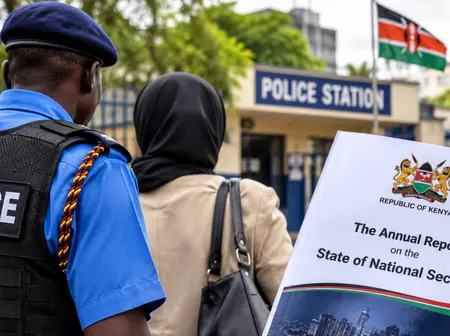
Kenya’s actual crime levels could be significantly higher than official statistics indicate, with a new government security report admitting that public mistrust of law enforcement agencies is discouraging victims from reporting offences.
The 2026 Annual Report on the State of National Security warns that weak community confidence in security agencies, fragmented investigative records and inadequate forensic capabilities are undermining the country’s fight against crime.
In one of its most significant admissions, the report says public mistrust continues to suppress crime reporting, meaning official statistics do not capture the full extent of criminal activity.
The government acknowledges that the reported figures “understate actual incidence by an unquantified margin.”
The revelation raises questions about how many crimes go unreported, why victims lack confidence in security agencies and whether the government can accurately assess insecurity without reliable reporting and investigation systems.
The report covers the period between September 2025 and August 2026.
Kenya recorded 97,946 criminal cases during the reporting period, compared with 97,366 in the previous year, representing an increase of 580 cases, or 0.6 per cent.
The figures include 2,814 homicide cases, 3,549 robberies, 4,655 economic crimes and 5,180 cases of criminal damage.
Dangerous drug-related offences accounted for 6,949 reported cases, while corruption cases stood at 80.
However, the government cautions that these figures should not be interpreted as the full extent of crime because mistrust between communities and law enforcement agencies discourages reporting.
The report identifies this problem as a major constraint to effective enforcement of law and order.
It also records 248 offences involving police officers, compared with 237 in the previous reporting period. However, it does not clarify whether these were offences committed by officers, against officers or other cases involving them.
The figures therefore do not establish that 248 police officers were implicated in criminal activities.
Beyond underreporting, the report identifies weaknesses in the systems used to investigate and track criminal cases.
It says records remain fragmented and substantially paper-based, contributing to cases being lost or abandoned during the investigative process.
The government also acknowledges that forensic and digital evidence capabilities have not kept pace with the demands of modern investigations.
These shortcomings could undermine efforts to secure convictions, particularly as criminal activities increasingly involve digital platforms and sophisticated networks.
To address the problem, the government plans to introduce integrated databases covering Occurrence Book records, forensic information and case tracking across security agencies.
It also intends to train officers in digital evidence handling and strengthen investigative capacity through cooperation with higher learning institutions and development partners.
The report further identifies fast-tracking pending investigations as a priority for rebuilding public confidence in law enforcement.
One of the report’s strongest observations concerns how the government measures its performance in fighting crime.
It acknowledges that security agencies frequently report activities such as arrests, operations and police deployments without adequately demonstrating the outcomes achieved.
“The Report is consequently better able to say what was done than what was achieved.”
It recommends tracking criminal cases from initial reporting through to charging and conviction, arguing that successful disruption of criminal enterprises matters more than the volume of arrests.
The government states that “disruption of criminal enterprise, not volume of arrest, is the measure that matters.”
This admission raises questions about the effectiveness of security operations where arrests are announced, but the subsequent progress of investigations and prosecutions is not clearly established.
The report recommends standardising data collection across government agencies and improving the tracking of cases to provide a more reliable picture of criminal justice outcomes.
The government says it is pursuing reforms to improve policing, strengthen accountability and restore confidence between communities and security agencies.
Among the measures outlined are revitalising community policing, increasing public engagement and fast-tracking proposed security legislation.
However, the report acknowledges that most security-sector reforms remain at different stages of development, with few having been enacted.
It also warns that the 2027 General Election will place additional pressure on the country’s security institutions as political competition intensifies.
Party primaries, boundary reviews and voter registration are identified as potential flashpoints, particularly given the continuing threat of politically mobilised criminal groups.
Ultimately, the report presents a challenge extending beyond police numbers and security operations.
Kenya must address the mistrust discouraging crime reporting, strengthen investigations and demonstrate that reported offences result in meaningful criminal justice outcomes.
Without reliable reporting and effective investigations, the government risks fighting crime with an incomplete picture of the insecurity affecting the country.
A 41-year-old man has died following a devastating early morning fire at a rental house in Thakwa village, Githunguri Sub-County, Kiambu County.
The deceased was identified as Bernard Wafula Cheseret, who reportedly lost his life in the incident that occurred at approximately 4:30am on November 19, 2026.
The tragic incident has raised concerns among residents, with the early morning fire cutting short the life of the 41-year-old man.
The circumstances surrounding the outbreak of the fire remain unclear, including what may have triggered the incident and whether anyone else was affected.
Authorities are expected to investigate the incident to establish the exact cause of the fire.
The death of Cheseret adds to the tragic cases of lives lost through residential fires, highlighting the importance of fire safety measures and emergency preparedness in homes.
Further details regarding the incident and any developments from the relevant authorities are yet to be established.
First Lady Rachel Ruto on Saturday joined cyclists, sports enthusiasts, local leaders and residents at Maili Tisa in Uasin Gishu County for the second edition of the Turbo Pedaling event, which brought together participants to celebrate fitness, wellness and sporting talent.
The event provided a platform for young cyclists to showcase their abilities while encouraging communities to embrace physical activity as part of a healthy lifestyle.
The First Lady said she was encouraged by the enthusiasm and determination displayed by the young participants, noting that nurturing sporting talent required collective support from families, coaches and local communities.
“I was inspired by the enthusiasm and determination of the young cyclists,” she said.
She called for greater investment in young people through mentorship and opportunities that would enable them to develop their abilities and compete at higher levels.
“With the right support from parents, coaches and communities, we can nurture talent and create opportunities for our young people to excel,” she said.
Rachel urged residents to embrace cycling not only as a competitive sport but also as a recreational activity that promotes healthier lifestyles and stronger communities.
“Let us embrace cycling as a lifestyle, promote healthier communities and empower the next generation to realise their full potential,” she said.
The Turbo Pedaling Edition 2.0 also highlighted the role of community sporting events in identifying emerging talent, promoting wellness and bringing residents together through sport.
As November rains sweep across Kenya, bringing renewed hope to farmers and water-stressed communities, the threat of flooding and weather-related disasters is also growing, prompting calls for heightened vigilance and preparedness.
The Kenya Meteorological Service Authority (KMSA) has forecast above-average rainfall across much of the country during the October-November-December (OND) short-rains season, warning of the need for communities and government agencies to strengthen preparedness and response mechanisms.
According to KMSA’s November 2026 rainfall outlook, above-average rainfall is expected in more than 40 counties, including Nairobi, Mombasa, Kisumu, Nakuru, Kiambu, Murang’a, Nyeri, Meru, Garissa, Wajir, Mandera, Kitui, Machakos, Makueni, Kisii, Kakamega, Bungoma, Kericho and Narok, among others.
The forecast presents both opportunities and challenges for Kenya, where rainfall remains critical to agriculture, livestock production, water security and economic activity.
However, excessive rainfall could expose vulnerable communities to flooding, infrastructure damage and disruptions to livelihoods.
Rainfall Levels Raise Concern
Recent meteorological observations indicate increasing rainfall activity across several parts of the country.
During October 5 to 11, 2026, the highest seven-day rainfall total of 207.6 millimetres was recorded at the automatic weather station at Karatina University in Nyeri County.
Marsabit Meteorological Station also recorded 133.3 millimetres within 24 hours on October 10.
Between October 26 and November 1, the highest seven-day rainfall total reached 188 millimeters at the National Youth Service Witu weather station in Lamu County.
Meanwhile, Makaaya Rainfall Station in Kitui County recorded 115.1 millimetres within 24 hours on October 29.
The meteorological review established that rainfall increased across the country during the October 26–November 1 period compared with the preceding week.
Earlier, on October 23, KMSA had issued a heavy rainfall advisory covering more than 40 counties, highlighting the potential for heavy rainfall, strong winds and other hazardous weather conditions.
These developments underscore the importance of timely warnings and proactive disaster management to minimise the impact of extreme weather.
Why the Short Rains Matter?
The OND season is particularly important for Kenya's eastern and northeastern regions, where rainfall contributes significantly to annual water availability.
In Garissa, Wajir, Mandera, Marsabit, Isiolo, Meru, Tharaka-Nithi, Makueni, Kitui, Taita Taveta and Machakos, as well as parts of Kajiado and Tana River, the short rains contribute more than 40 per cent of total annual rainfall.
For these communities, the season supports crop production, livestock farming, replenishment of water sources and household livelihoods.
However, the benefits of rainfall can quickly be overshadowed by flooding, particularly in vulnerable settlements and areas with inadequate drainage infrastructure.
Strengthening Early-Warning Systems
Kenya's meteorological preparedness extends beyond national borders through the Nairobi Regional Specialized Meteorological Centre (RSMC), hosted by KMSA.
The World Meteorological Organization-designated centre provides specialised weather forecasting guidance to 10 Eastern African countries: Burundi, Djibouti, Ethiopia, Kenya, Rwanda, Somalia, South Sudan, Sudan, Tanzania and Uganda.
Its mandate includes monitoring severe weather systems, providing forecasting guidance for periods of one to five days, supporting national meteorological agencies and strengthening regional coordination.
At the national level, KMSA, established under the Meteorology Act, 2026, serves as the principal technical adviser to National and County Governments on meteorological matters.
Its responsibilities include weather forecasting, early-warning services, climate information and disaster risk reduction.
The importance of these services lies not merely in predicting rainfall but in ensuring that warnings reach communities early enough to enable preventive action.
Public Vigilance Remains Essential
Residents in flood-prone areas are being urged to monitor official weather updates and take precautionary measures.
Among the key safety messages are avoiding walking through unfamiliar floodwaters, refraining from driving across flooded waterways and staying away from trees during thunderstorms and heavy rainfall.
County governments and disaster response agencies also have a critical role in monitoring vulnerable areas, communicating warnings and ensuring emergency response arrangements are in place.
Farmers, meanwhile, are encouraged to use reliable weather information to guide planting and other agricultural decisions, helping them maximise the benefits of the rainy season while reducing potential losses.
Beyond the immediate threat of flooding, the rains offer an opportunity to improve water security through harvesting and storage, particularly in arid and semi-arid regions.
As the November rains continue, Kenya's challenge will be to balance the opportunities presented by the season with the need to protect lives, livelihoods and infrastructure.
Ultimately, effective preparedness, timely communication and public cooperation will determine whether the short rains become a season of renewal or one of avoidable disaster.
Lawrence Kinoti works at the Office of the Government Spokesperson.
The Ministry of Roads and Transport has announced plans to open completed sections of the expanded Rironi-Naivasha Highway ahead of the Christmas festivities, offering motorists hope of relief from persistent traffic congestion along the busy Nairobi-Nakuru route.
In an update issued on Saturday, November 21, 2026, the ministry said construction works on the wider Rironi-Mau Summit Highway were being accelerated to allow motorists to start using completed sections before the festive season.
The government said the move would ease traffic congestion, improve mobility and facilitate smoother journeys for thousands of Kenyans expected to travel upcountry during the December holidays.
"The Government is fast-tracking works on the Rironi-Mau Summit Highway, with sections set to be opened to motorists ahead of the Christmas festivities to ease traffic congestion, enhance mobility and facilitate smoother journeys," the ministry stated.
The latest announcement comes after Roads and Transport Cabinet Secretary Davis Chirchir revised the initial October 30 completion deadline for the 60-kilometre Rironi-Naivasha stretch.
Chirchir subsequently indicated that the government was targeting an early December opening, following an inspection of the ongoing construction works.
The project had experienced delays partly attributed to disruptions in the supply of bitumen, a critical material used in road construction.
The expanded highway is expected to significantly improve transportation along one of Kenya's busiest corridors, connecting Nairobi with the Rift Valley, Western Kenya and neighbouring countries.
The government has also indicated that completed sections can be opened to motorists even as contractors continue working on remaining areas.
However, motorists have been urged to exercise caution when travelling through sections that are still under construction and follow instructions issued by traffic marshals.
The project is expected to reduce travel delays, improve road safety and make the movement of passengers and goods more efficient once fully completed.
The latest development will be particularly important during the Christmas holiday period, when thousands of travellers traditionally use the Nairobi-Nakuru highway to visit their families upcountry.
Two students were injured after armed men opened fire on a school bus ferrying candidates who had completed their national examinations in Samburu North.
The incident occurred on Friday in the Bukoi area as students from PCEA Tuum Girls Senior School were being transported from Tuum towards Maralal in a Mitsubishi Fuso bus, police said.
According to police, the bus came under attack from an unknown number of armed men who opened fire from the driver's side.
Three bullets reportedly struck the bus, injuring two students.
The injured students were initially rushed to Murijo Catholic Dispensary for first aid before being referred to Samburu County Referral Hospital for specialised treatment. They were in stable condition as of Saturday, police said.
Police patrol teams from Marti Police Station, alongside General Service Unit (GSU) officers based at Marti and Murijo, responded to the incident and conducted a security sweep of the area.
The bus was subsequently escorted to Maralal by security officers. Police said it had not been under security escort when the attack occurred.
The area remained relatively calm following the incident as security teams continued patrols.
No arrests had been made by Saturday afternoon.
The attack comes amid a special security operation in the area targeting cattle rustling, a menace that has been worsened by the proliferation of illegal firearms.
Authorities have been working to contain cattle rustling and recover illegal weapons, which have continued to undermine security and hamper development in the region.
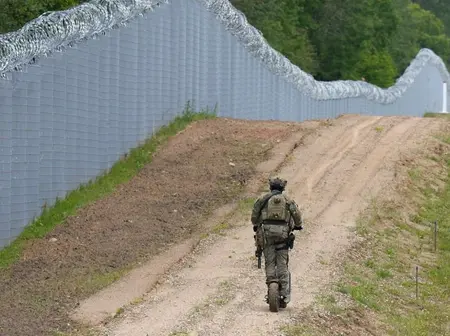
A Kenyan woman froze to death in a forest along the Belarus-Latvia border, while a male compatriot remains missing after the group they were travelling with was reportedly pushed back into the freezing wilderness by Latvian border guards.The incident has raised concerns over the dangers facing African migrants using irregular routes through Eastern Europe in search of opportunities in Europe, particularly as winter sets in and temperatures plunge below freezing.
Nairobi gubernatorial aspirant Geoffrey Mosiria has rescued two children whom he claims were abducted and sold for Ksh50,000 each. He credits the internet for the breakthrough, sharing how an online appeal led straight to their safe recovery.The power of the internetTaking to his Facebook page, Mosiria shared the details of the rescue in a post on Saturday, November 21, 2026.
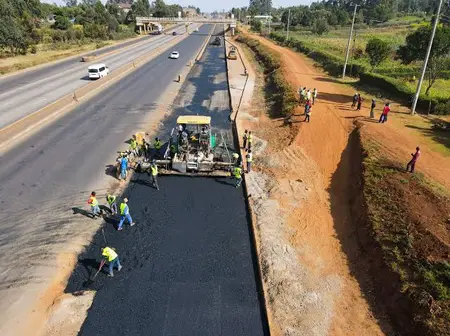
Motorists and holiday travelers plying the busy Nairobi–Nakuru corridor can expect major relief this festive season after the Ministry of Roads and Transport confirmed that completed sections of the expanded Rironi–Naivasha highway will open to traffic ahead of Christmas.
Cabinet Secretary Davis Chirchir announced that contractors are working around the clock to ease the notorious December gridlock experienced by thousands of Kenyans traveling toward the Rift Valley, Western Kenya, and neighboring regional markets. To meet the tight deadline, the Ministry has deployed ten newly imported asphalt paving machines—splitting them equally between the Rironi and Naivasha ends to accelerate road surfacing from both directions simultaneously.
According to the Ministry, substantial progress has already been recorded, including the laying of the initial structural asphalt layer—known as Dense Bituminous Macadam—along key stretches such as Lari. Under a phased traffic management plan, motorists will be permitted to use sections where the foundational tarmac is complete, allowing traffic to flow smoothly while crews return later to apply the final five-centimeter wearing course and install permanent road furniture. However, the Ministry noted that major structural works at the Naivasha Junction—which will feature a modern interchange with an overpass and underpass—will remain ongoing.
While the Rironi–Naivasha stretch targets a December 2026 opening, the broader 81-kilometer Rironi–Naivasha–Gilgil corridor is projected to be fully usable by March 2027, ahead of the entire Rironi–Mau Summit dual carriageway's scheduled delivery in June 2027.
Once fully operational, the upgraded Northern Corridor artery is expected to significantly slash travel times, enhance road safety, and boost regional trade and tourism across the Great Rift Valley. Motorists are urged to observe speed limits and adhere to temporary diversions as finishing works continue.