Owners of Toyota Harrier vehicles in Nairobi have been urged to exercise caution following a worrying trend of criminals targeting the expensive front grilles of the popular SUV.
The thefts have raised concerns among motorists, with criminals reportedly taking advantage of traffic congestion and poorly secured parking areas to remove the valuable vehicle components within seconds.
The Toyota Harrier has increasingly become a target because of the high market value of its original front grille, particularly for newer models fitted with advanced technology and sensors.
In some cases, replacing an original grille can cost motorists tens of thousands of shillings, with prices for certain newer models reportedly reaching KSh120,000 at authorised dealerships.
The growing trend has also exposed the existence of an underground market dealing in stolen vehicle spare parts, where expensive components are allegedly sold at significantly reduced prices.
One of the incidents that attracted widespread attention involved a Toyota Harrier whose front grille was stolen along Parklands Road near the University of Nairobi School of Law.
Dashcam footage showed three suspects approaching the vehicle while it was stuck in traffic.
One of them quickly removed the grille while his accomplices appeared to shield the operation from other motorists.
The incident sparked public outrage and renewed calls for stronger action against organised vehicle parts theft syndicates.
Motorists have also been advised to take precautionary measures, including installing specialised anti-theft locks, using secure parking facilities and remaining vigilant while stuck in traffic.
Car owners have further been encouraged to mark their vehicle components with identification details to make it difficult for criminals to resell stolen parts.
Meanwhile, concerns have emerged over the role of unscrupulous spare parts dealers who allegedly create demand for stolen components by purchasing them through informal networks.
The situation has renewed calls for security agencies to intensify operations against criminal networks involved in vehicle parts theft and bring those responsible to justice.
Toyota Harrier owners are now being encouraged to remain particularly alert in busy Nairobi streets, where criminals can exploit traffic congestion to strike.
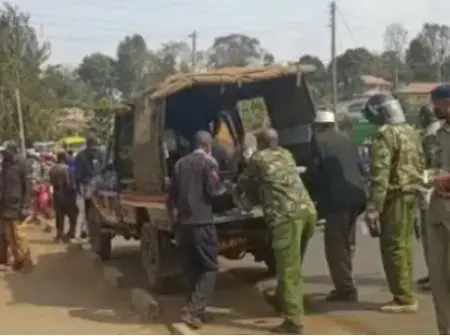
An armed robber was shot dead by police officers following a robbery incident in Mbuthia area of Huruma, Nairobi, in the early hours of Saturday, November 21.
The incident occurred at approximately 3:50 am when a resident was attacked by three men while walking home.
The suspects reportedly approached him, confronted him and began searching his pockets for valuables.
According to the incident report, the victim attempted to raise an alarm, prompting one of the attackers to produce an object resembling a firearm and allegedly threaten him.
The three men managed to steal Sh5,000 in cash and an Infinix mobile phone valued at approximately Sh15,000 before police officers responded to the incident.
Officers who arrived at the scene reportedly confronted the suspects, leading to a confrontation with the man who was allegedly armed.
His two accomplices reportedly abandoned him and escaped into the darkness as police moved in.
During the exchange, the suspect was shot in the right thigh. Officers reportedly recovered an imitation firearm from him after he was subdued.
He was immediately rushed to hospital for emergency medical attention. However, he succumbed to his injuries upon arrival.
Crime Scene Investigation (CSI) personnel, alongside detectives from the Directorate of Criminal Investigations (DCI) Starehe, later visited the scene to collect evidence, document the incident and establish the circumstances surrounding the shooting.
An object resembling a firearm was also recovered as detectives continued their investigations into the robbery and subsequent police confrontation.
Meanwhile, the two suspected accomplices remain at large, with their whereabouts unknown. Detectives are pursuing leads that could help identify and arrest them.
The incident comes amid growing concerns over robbery attacks in different parts of Nairobi, particularly those targeting residents walking home during early morning hours.
Residents have continued to face security concerns, with criminals taking advantage of darkness and quiet streets to attack unsuspecting pedestrians.
Nairobi police boss Issa Mohamud said police have intensified operations across the city to reduce crime.
Murkomen said the selection process must be conducted openly, with members of the public and independent observers allowed to witness the exercise and verify how candidates are selected.
He issued the directive on Saturday, November 21, while addressing participants at the Amaya Youth Empowerment Initiative held at Amaya Plesian Grounds in Tiaty, Baringo County.
The CS insisted that recruitment results should not be announced later or away from the centres, saying candidates who secure positions must be declared publicly at the locations where the exercise takes place.
He argued that announcing the successful applicants immediately would help eliminate doubts about the selection process and strengthen public confidence in the police recruitment exercise.
Murkomen also invited members of the public to attend the recruitment centres as observers, stressing that Kenyans should be able to witness the process rather than rely on announcements made after the exercise.
He warned that anyone found engaging in recruitment irregularities would face stern action, signalling that the government would hold those involved accountable for misconduct.
The directive comes amid growing public concerns over fairness in government recruitment, particularly in security agencies, where allegations of bribery, favouritism and other irregularities have frequently raised questions about how applicants are selected.
Murkomen's latest directive places emphasis on publicly declaring the successful candidates at recruitment centres, making openness and accountability key requirements in the upcoming exercise.
UpdateKWS has issued an update on the ongoing search and rescue operation for an elderly hiker who went missing at Aberdare National Park.The Kenya Wildlife Service (KWS) has issued an update on the ongoing search and rescue operation for an elderly hiker who went missing at Aberdare National Park.
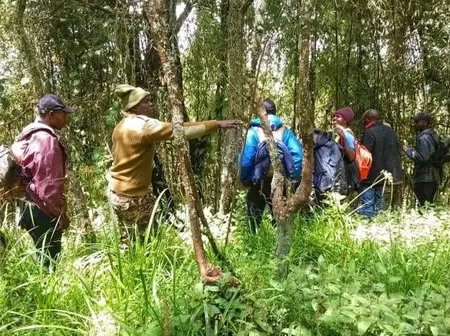
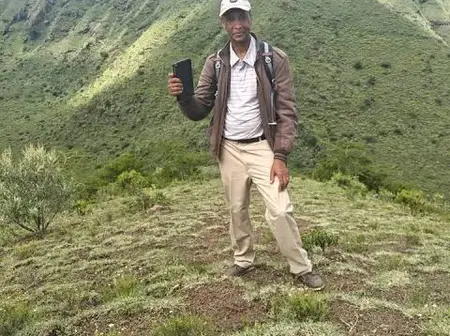
The search for David Kihuna, who went missing during a hiking expedition in the Aberdare ranges, has entered its seventh day, with more than 200 people involved in efforts to locate him.
Rescue teams have continued combing through the forest despite difficult weather conditions and thick vegetation that have made the operation challenging.
Those taking part include Kenya Defence Forces (KDF) personnel, Kenya Wildlife Service (KWS) rangers, local guides and members of the surrounding community.
The teams have been moving through different sections of the mountain terrain in the hope of finding any clues that could help establish Kihuna's whereabouts.
Drones and helicopters have also been deployed to support the ground operation. The aerial teams are helping cover areas that may be difficult for rescuers to reach on foot, particularly sections covered by dense vegetation.
The cold weather in the Aberdares has added another challenge, with searchers having to work in conditions that can make movement and visibility difficult.
Kihuna disappeared while on a hiking expedition in the mountain range, prompting an extensive search involving family members, friends, volunteers and security teams.
Since he went missing, his family and friends have continued appealing for assistance as the operation enters another day without a confirmed breakthrough.
Local guides and community members have also joined the search, bringing their knowledge of the forest and surrounding routes to support the rescue teams.
The involvement of more than 200 rescuers reflects the scale of the operation, which has drawn support from different agencies and members of the public.
The search has focused on navigating the challenging landscape, with teams working to cover as much ground as possible while coordinating their efforts.
The deployment of aerial equipment is expected to complement the work being done by those searching on foot, especially in areas where thick forest cover limits visibility.
However, the difficult terrain and cold conditions continue to complicate the exercise. As the seventh day begins, the search remains ongoing, with rescuers still working to establish Kihuna's whereabouts.
Nairobi is undergoing an extraordinary physical transformation. From Eastleigh and Pangani to Parklands, Kilimani and Kileleshwa, the capital’s traditional low-rise residential neighbourhoods are rapidly giving way to towering apartment blocks, commercial complexes and mixed-use developments.
The emerging skyline reflects growing investor confidence, increasing demand for housing and the economic opportunities associated with urbanisation.
This transformation is welcome. Kenya urgently needs additional housing, more efficient land utilisation and a vibrant construction industry. However, beneath Nairobi’s impressive skyline lies a potentially serious environmental and urban management crisis that has received insufficient public attention: the increasing dependence on privately drilled boreholes and the growing pressure on already constrained water and sewerage infrastructure.
The fundamental question is simple: Can Nairobi continue building vertically while extracting groundwater indiscriminately and without adequately expanding its water and sewerage networks?
A city growing above ground but neglecting what lies beneath
Consider a neighbourhood where a single residential bungalow accommodating one family is demolished and replaced with a 15-storey apartment building housing 100 families. The land parcel remains the same, but water consumption, wastewater generation and infrastructure demand increase enormously.
Multiply this transformation across hundreds of plots in Eastleigh, Pangani, Parklands, Kilimani and Kileleshwa, and the implications become alarming.
Where city water supplies are inadequate or unreliable, developers increasingly turn to private boreholes as alternative sources. What was once an exceptional supplementary water source risks becoming a routine component of high-rise development.
The concern is not simply the existence of boreholes. It is their concentration, cumulative abstraction and the apparent absence of publicly accessible evidence demonstrating that groundwater extraction remains within sustainable limits. Groundwater is not an inexhaustible underground reservoir. It is a finite, replenishable resource whose sustainability depends on the relationship between natural recharge and extraction.
The silent depletion of Nairobi’s aquifer
Aquifers are underground geological formations that store and transmit groundwater. They are replenished through rainfall infiltration and other natural hydrological processes, sometimes over extended periods.
When numerous boreholes extract water faster than an aquifer can recharge, groundwater levels decline. This process can create several interconnected environmental problems.
First, excessive abstraction lowers groundwater levels, forcing existing boreholes to pump from greater depths, increasing energy costs and potentially causing shallower wells to fail.
Second, concentrated pumping can create overlapping cones of depression, whereby neighbouring boreholes compete for the same groundwater reserves. Consequently, one development's water security may come at the expense of surrounding properties and communities.
Third, excessive groundwater withdrawal can contribute to land subsidence where geological conditions permit aquifer-system compaction. Subsidence may damage foundations, roads and underground infrastructure. Although this phenomenon is documented internationally, Nairobi requires location-specific scientific investigations before claims of widespread subsidence can be established.
Fourth, groundwater depletion can reduce natural discharge to springs, streams and groundwater-dependent ecosystems where such hydraulic connections exist.
Finally, uncontrolled abstraction, combined with inadequate wastewater management, increases concerns about groundwater quality. Poorly constructed boreholes, leaking sewers and improperly managed sanitation facilities can create pathways for contamination.
These risks should concern every Nairobi resident, developer, investor and public institution.
The sewerage crisis nobody should ignore
Water abstraction is only half the problem. Every additional apartment generates wastewater that must be collected, transported, treated and safely discharged.
Many neighbourhoods experiencing rapid densification were originally planned around substantially lower populations and development densities.
A sewer line designed for low-rise housing cannot automatically accommodate dozens of high-rise buildings without hydraulic assessment and, where necessary, upgrading.
When sewerage infrastructure is overstretched, the consequences can include blockages, sewer overflows, sewage backflows, environmental pollution and increased public health risks. The danger becomes particularly serious where inadequate sanitation infrastructure and groundwater abstraction coexist.
Nairobi must therefore abandon the assumption that approval of a building's architectural and structural drawings automatically establishes the adequacy of supporting infrastructure.
Development permission must be linked to demonstrated water availability, sewerage capacity and environmental sustainability.
Who is authorising the boreholes?
Kenya already possesses an institutional and legislative framework for managing water resources.
Article 43 of the Constitution guarantees the right to clean and safe water in adequate quantities and to reasonable standards of sanitation. Article 42 guarantees the right to a clean and healthy environment.
The Water Act, 2016, together with the applicable Water Resources Regulations, provides the legal framework for regulating groundwater abstraction.
The Water Resources Authority (WRA) is the principal institution responsible for regulating water resources, including groundwater abstraction. Its mandate includes evaluating applications, authorising abstraction works, issuing water-use permits and monitoring compliance with permit conditions.
A borehole drilling authorisation should not be confused with an unrestricted right to extract groundwater. Water abstraction is subject to applicable permitting requirements, conditions and limits.
The Water Services Regulatory Board (WASREB) performs a different function. It regulates water and sanitation service providers, establishes service standards, licenses providers and protects consumers. It is not the ordinary authority issuing individual borehole abstraction permits.
The Nairobi City Water and Sewerage Company (NCWSC) is responsible for providing water and sewerage services within its licensed service area. Its technical assessments should inform whether proposed developments can be adequately served by existing networks.
The National Environment Management Authority (NEMA) administers environmental impact assessment requirements under the Environmental Management and Co-ordination Act, while Nairobi City County Government exercises development control and physical planning functions under the applicable planning legislation.
These institutions have distinct but complementary responsibilities. Their approvals must not operate as disconnected administrative processes.
The failure of fragmented urban governance
The central challenge is not necessarily the absence of legislation but the possibility of fragmented implementation.
A developer may secure planning approval, obtain environmental clearance, apply for borehole authorisation and arrange sewerage connections through separate institutional processes.
Yet who examines the combined environmental consequences of 100 high-rise developments within the same neighbourhood?
Who determines whether the cumulative abstraction from numerous neighbouring boreholes exceeds sustainable groundwater recharge?
Who verifies that existing sewerage networks can accommodate the population projected from approved developments over the next decade?
These are fundamental urban management questions requiring coordinated answers.
Individual projects may appear technically acceptable when assessed separately, while their combined effects overwhelm neighbourhood infrastructure and environmental systems.
Nairobi needs an urgent groundwater and infrastructure audit
The solution is not to prohibit high-rise construction or indiscriminately ban boreholes. It is to introduce scientifically informed, coordinated and enforceable development management.
First, WRA should undertake and publish a comprehensive groundwater assessment covering Nairobi's rapidly densifying neighbourhoods. This should establish borehole locations, permitted abstraction volumes, actual pumping levels, groundwater trends and sustainable extraction thresholds.
Second, Nairobi City County should require credible water-demand and wastewater-capacity assessments before approving major high-density developments.
Third, NCWSC should undertake network-capacity assessments and identify priority investments in water distribution, sewer rehabilitation and wastewater treatment.
Fourth, WRA and NEMA should strengthen cumulative environmental assessment, particularly in locations where borehole density and groundwater stress are demonstrably high.
Fifth, boreholes should be properly registered, metered and monitored, with effective enforcement against illegal drilling and abstraction beyond permitted limits.
Finally, Nairobi requires a coordinated infrastructure financing framework ensuring that developers contribute fairly to necessary network upgrades without transferring disproportionate costs to existing residents.
Protect the city beneath the skyline
Nairobi's development ambitions must be matched by equally ambitious investment in underground infrastructure and environmental protection.
A modern capital cannot measure urban progress solely by the number of storeys constructed, the value of real estate investments or the changing appearance of its skyline.
True urban progress must also be measured by reliable water supply, functional sewerage systems, healthy aquifers, environmental resilience and the quality of life enjoyed by residents.
The responsibility rests collectively with Nairobi City County, WRA, WASREB, NEMA, NCWSC, developers and urban planning professionals.
We must recognise that groundwater is a shared natural resource, not an unlimited private entitlement attached to every urban plot.
Nairobi must not become a city that rises majestically above ground while silently exhausting the water resources that sustain it beneath the surface.
The time to protect Nairobi's aquifers is now, before today's impressive skyline becomes tomorrow's environmental liability.
The writer is Urban and Land Management Practitioner and Chair Land Sector Forum-Frontier Counties.
Two suspected criminals have been shot dead during a police operation targeting an alleged gang hideout in Kwang’ethe area, Limuru Sub-County, Kiambu County.
The suspects were killed on Friday, November 20, when officers from Limuru Police Station, Limuru Directorate of Criminal Investigations (DCI) and a specialised team from DCI headquarters raided a bush believed to have been used as a hideout by an organised criminal gang.
According to police reports, the operation followed intelligence linking the group to several violent robberies and reported gang rape incidents in the area.
Five suspects were reportedly occupying the hideout when officers approached.
Police said the suspects, who were allegedly armed with crude weapons, confronted the officers, triggering a physical confrontation.
Two sustained fatal injuries during the incident, while the other three escaped into nearby bushes.
One of the suspects killed was identified as Moses Juma Waswa. Investigators believe he was among five suspects who escaped from Limuru Police Station on November 4, 2026, while facing allegations of robbery with violence and gang rape.
During the raid, officers recovered several crude weapons, household items, utensils, clothing and food supplies suspected to have been stolen.
The recovered property was collected and secured as exhibits to support ongoing investigations.
Crime Scene Investigation officers from Kiambu County visited the scene and documented evidence as detectives continued searching the surrounding area for the three suspects who escaped.
The bodies of the two suspects were later transferred to Tigoni Level 4 Hospital mortuary, where they were preserved pending postmortem examinations.
The latest operation is part of efforts to track down the fugitives and dismantle criminal networks blamed for insecurity in parts of Limuru.
According to reports by Kenyans.co.ke published on Saturday, November 21, 2026, the CS issued the directive while speaking during the Amaya Youth Empowerment Initiative at Amaya Plesian Grounds in Tiaty, Baringo County.
He insisted that the recruitment exercise must be conducted openly and based on merit, warning that individuals involved in irregularities would face stern action.
Murkomen encouraged independent observers to visit recruitment centres and monitor the process, adding that successful candidates should be announced publicly at the respective centres.
The directive comes as the National Police Service prepares to recruit police constables on Thursday, December 10, 2026, across designated centres in the country.
According to the official NPS recruitment advertisement, the exercise will run from 8:00 am to 5:00 pm, with applicants required to report to their respective centres by 8:00 am.
The service has outlined several eligibility requirements, including Kenyan citizenship, a valid national identity card, an age bracket of 18 to 28 years and a minimum KCSE mean grade of D+, with at least a D+ in English or Kiswahili.
Applicants must also meet the prescribed physical and medical fitness requirements and have no criminal record or pending criminal charges.
The NPS has further warned applicants against paying money to individuals claiming they can secure recruitment opportunities, emphasising that the exercise is free and open to all eligible candidates.
The police service has urged members of the public to report suspected recruitment malpractice through the nearest police station or its designated emergency reporting channels.
Murkomen's latest directives come amid growing public attention on the recruitment process, with thousands of young Kenyans expected to seek opportunities in the National Police Service.Sources used for verification:
.ke – Murkomen directs police to announce successful recruits at recruitment centres.
National Police Service – Official 2026 recruitment advertisement.
Capital FM – Murkomen promises corruption-free police recruitment.
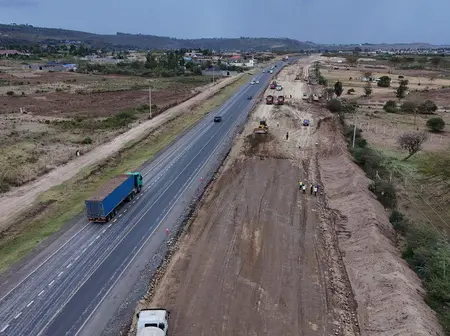
Motorists travelling from Nairobi towards Nakuru and Western Kenya could get relief from traffic congestion this Christmas after the government announced plans to open completed sections of the Rironi–Mau Summit Highway before the festive season.
The Ministry of Roads and Transport said on Saturday, November 21, that construction was being accelerated to allow motorists to use sections that are ready, even as contractors continue working on unfinished areas.
The planned opening is expected to improve movement along the busy Nairobi–Nakuru highway, which experiences heavy traffic during December as families travel upcountry for the holidays.
Roads and Transport Cabinet Secretary Davis Chirchir has previously indicated that the approximately 60-kilometre Rironi–Naivasha section is targeted for opening before the end of 2026.
The government has also indicated that completed portions may be opened before the final asphalt finishing work is completed.
However, the partial opening does not mean the entire Rironi–Mau Summit Highway will be ready before Christmas. Construction will continue on unfinished sections and motorists should expect possible diversions and work zones.
The Kenya National Highways Authority has urged motorists to ensure their vehicles are roadworthy, follow road signs and obey instructions from traffic marshals.
The wider highway expansion is intended to improve connections between Nairobi, the Rift Valley and western Kenya, while supporting the movement of passengers and commercial goods.
For families planning December journeys, the important development will be which completed sections are officially opened and when motorists can begin using them.
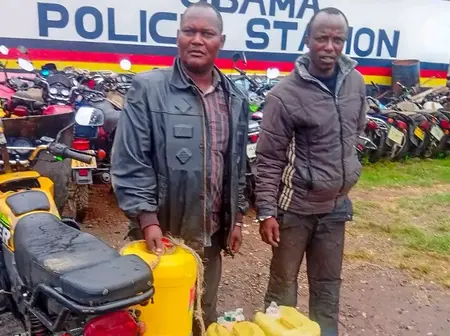
NAIROBI, November 22, 2026 — Police officers in Nairobi have arrested two suspects and impounded 105 litres of illicit alcohol following a patrol interception in Kayole.
According to a statement from the National Police Service (NPS), officers attached to Obama Police Station were conducting routine patrols in the Mwengenye area on Sunday when they flagged a suspicious motorcycle carrying multiple containers.
After a brief pursuit, the officers intercepted the motorcycle and apprehended the two individuals on board. A subsequent search of the cargo revealed five 20-litre jerrycans and one 5-litre jerrycan filled with an illicit brew locally known as Mrambee.
The two suspects were escorted to Obama Police Station, where they remain in police custody pending their arraignment in court. Both the motorcycle and the 105 litres of confiscated alcohol have been secured at the station as exhibits.
In its statement, the NPS reiterated its commitment to eradicating illegal alcohol and urged members of the public to support ongoing security efforts by reporting suspected production or distribution hubs to the nearest police station, or via its toll-free hotlines (999, 911, #FichuaKwaDCI on 0800 722 203) and WhatsApp (0709 570 000).