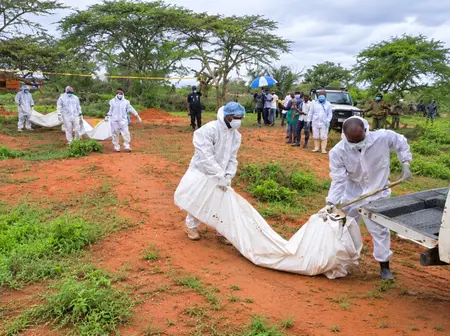
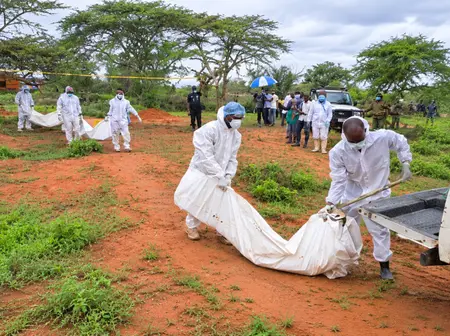
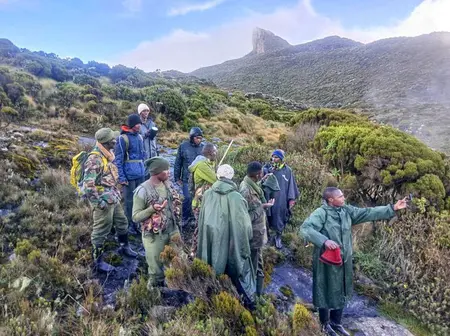
The latest recoveries add to a grim toll that has seen hundreds of bodies unearthed from mass graves linked to the Shakahola forest incident and Good News International Ministries, an apocalyptic group led by Paul Mackenzie.
Investigations and forensic efforts surrounding the tragedy have involved mass exhumations, post-mortem examinations, and DNA profiling aimed at identifying victims and allowing grieving families to conduct dignified burials.
In the courts, the tragedy reached major legal milestones in late 2026 when the Mombasa Law Court delivered convictions in October and handed down lengthy prison sentences in November against Mackenzie and co-accused associates.
Alongside prosecutions and forensic identification, state officials and regional administrators have repeatedly flagged unregistered churches and rogue religious outfits operating outside established legal and registration frameworks.
The push for tighter oversight follows policy reviews and legislative proposals aimed at curbing cult-like exploitation and extremism while balancing constitutional protections for freedom of religion and conscience.
As Kenya moves toward the August 10, 2027, General Election, debates over state regulation, institutional accountability, and safeguarding vulnerable citizens remain closely watched across security and governance circles.
While the Kenya Meteorological Department (KMD) projected above-average rainfall across 43 counties alongside warmer-than-average national temperatures for November 2026, experts emphasize that seasonal outlooks cannot specify exact timing, local intensity, or short-term dry spells.
That gap between seasonal averages and daily reality carries serious consequences for farmers, motorists, and urban residents.
Brief periods of sunny, warm weather can lull households and road users into complacency, only for intense afternoon or evening thunderstorms to trigger rapid flash floods, overwhelm blocked urban drainage systems, and render low-lying bridges or rural access roads impassable within minutes.
For agricultural communities, uneven rainfall distribution also complicates planting schedules, fertiliser application, and post-harvest drying, where sudden downpours or unexpected dry intervals can threaten crop yields.
Climate specialists further note that fluctuating oceanic drivers—including shifting Indian Ocean Dipole conditions and developing El Niño signals—can amplify weather variability from late November into December.
Rather than relying solely on month-long summaries, authorities advise Kenyans to monitor daily and five-day KMD advisories, clear household drainage channels, avoid crossing swollen rivers or flooded roadways, and heed localized thunderstorm and landslide alerts.
What are your thoughts about this articles? Share your reactions in the comment section and don't forget to share and follow for more updates.
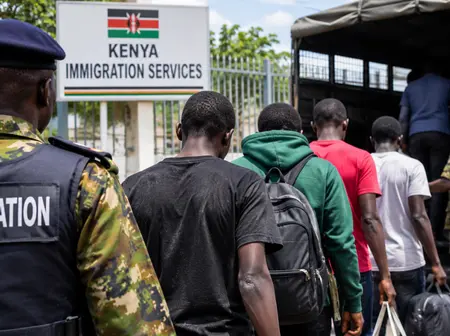
Arrests of Nigerian nationals in Kenya increased sevenfold in the year to August 2026, rising from three to 24, even as the overall number of undocumented foreign nationals arrested in the country grew by 10 per cent.
The figures, contained in the 2025/2026 Annual Report on the State of National Security, show sharp increases in arrests involving Nigerians, Eritreans, Somalis and Tanzanians, while arrests of Ethiopian nationals declined.
Kenyan authorities recorded 1,048 arrests of undocumented foreign nationals between September 2025 and August 2026, compared with 953 in the previous reporting period. The increase of 95 arrests represents a 10 per cent rise.
Nigerian nationals recorded the largest percentage increase among the nationalities listed, with arrests rising from three to 24, a 700 per cent jump.
Arrests involving Eritreans increased from 74 to 126, representing a 70.3 per cent rise, while those involving Somalis grew from 90 to 156, an increase of 73.3 per cent. Tanzanian arrests rose from nine to 25, a 177.8 per cent increase.
Despite the increases involving other nationalities, Ethiopian nationals continued to account for the largest share of arrests.
The report recorded 592 Ethiopian nationals arrested during the latest reporting period, representing 56.5 per cent of the total. This was down from 670 in the previous year, an 11.6 per cent decline.
Arrests involving Burundian nationals also fell, from 69 to 50, while those involving Egyptian nationals dropped from 11 to one.
The government says Kenya continues to experience a “significant influx of undocumented immigrants and irregular migrants” fleeing conflict, political instability and economic hardship in the region.
In describing the challenge, the report states that the movement of undocumented individuals across points of entry “directly undermines Kenya’s national security”.
However, the figures do not explain why arrests involving some nationalities increased while those involving others declined. Nor do they establish whether the changes resulted from shifting migration routes, intensified enforcement or improved detection.
The report records arrests, not the total number of people entering or living in Kenya without regular immigration status.
The government says it has strengthened border surveillance and established the Counter Organised Immigration Crimes Unit within the National Police Service to support efforts against organised immigration-related crime.
Other measures include intelligence-sharing with neighbouring countries, cooperation with diplomatic missions to verify identities and the involvement of border communities in reporting suspected human smuggling and trafficking networks.
The report says authorities have intensified the identification, arrest, prosecution, repatriation and deportation of undocumented migrants in accordance with the law and applicable international obligations.
Despite these measures, it acknowledges continuing weaknesses, including “border management deficiencies”.
It also points to “the increasing sophistication of transnational organised criminal networks involved in human trafficking, migrant smuggling and document fraud” as a major challenge.
The report further identifies “limited public awareness and community cooperation” as obstacles to tackling the problem.
The nationality-specific figures raise questions about where enforcement operations were concentrated and whether migration patterns changed during the reporting period.
For Nigerians, the increase from three arrests to 24 is a sharp percentage rise, but the actual number remains relatively small. It should not be interpreted as evidence that Nigerian migration into Kenya increased by 700 per cent.
Similarly, the decline in Ethiopian arrests does not necessarily mean fewer Ethiopian nationals entered the country irregularly. The report provides no figures on the total number of migrants entering Kenya by nationality.
The government says it plans to introduce modern border management technologies, strengthen regional cooperation and improve the processing of asylum applications and migration cases.
It also commits to reviewing the legal and policy framework governing immigration, asylum and border management to address emerging migration trends.
But the report does not explain what drove the contrasting changes in arrests by nationality.
Further information from the National Police Service and the Directorate of Immigration Services on arrest locations, reasons for interception, suspected migration routes and case outcomes would help establish what lies behind the figures.
For now, the report provides a record of enforcement activity, rather than a complete picture of undocumented migration into Kenya.
The DCI said the case file was forwarded to the Office of the Director of Public Prosecutions (ODPP), which directed that he be charged with grievous harm, among other offences.
The DCI said detectives from Meru launched investigations after the violent disruption of the celebrations.
Reports indicate a group of youths armed with stones and clubs disrupted the event. Anti-riot police intervened, but the group allegedly returned on motorcycles and charged towards the stadium.
Two police officers were seriously injured, and two government vehicles had their windscreens smashed, according to the DCI.
Nation reported that the stadium gates were barricaded with police vehicles to keep battling groups out of the venue.
The clashes involved supporters of former governor Kawira Mwangaza and those of Governor Isaac Mutuma, according to Nation.
Police fired tear gas to disperse youths chanting political slogans, and were pursuing the owners of 10 motorbikes allegedly used to ferry the group, reports say.
Meru County Police Commander Moses Musyoka said investigators were working to ensure every suspect is brought to book.
Mwangaza accused her rivals of orchestrating an attack that damaged her vehicles, while Mutuma accused her of sparking the violence, according to Nation.
Mashujaa Day is marked every year on October 20 to honour Kenya's heroes and heroines.
The national celebrations were held at Kipchoge Keino Stadium in Eldoret, while counties held their own events.
Clergy have also raised the alarm over political violence in Meru and Tharaka Nithi.
Kenya is facing growing concerns over child safety following revelations that nearly 3,000 children were reported missing within a year, raising fresh questions about the country's ability to protect vulnerable minors.
The alarming figures have renewed attention on child disappearances, abductions, trafficking and the challenges facing families searching for missing children.
The situation has sparked concern among parents, child protection organisations and security agencies, with calls for stronger measures to prevent children from falling into the hands of criminals.
Available government data has previously highlighted the scale of the problem.
Records from the Child Protection Information Management System covering January 2025 to March 2026 documented 10,581 child protection cases, including 1,636 missing children cases, 1,952 abductions and 173 trafficking incidents.
The figures also showed that 2,328 children remained unaccounted for at the time of the report.
Nairobi County was identified as having the highest number of reported cases, followed by Nakuru, Kakamega, Homa Bay and Kiambu counties.
Among the concerns raised by authorities are child trafficking networks, illegal adoption arrangements, online grooming and sexual exploitation.
Poverty, family disputes and parental neglect have also been identified as contributing factors in some cases.
The growing concerns have prompted calls for improved coordination between police officers and children's departments to ensure every disappearance is investigated promptly.
Authorities have also urged parents and guardians to remain vigilant about their children's movements, friendships and activities on digital platforms.
Importantly, families have been encouraged not to wait for 24 hours before reporting a missing child, as immediate reporting can improve the chances of tracing and rescuing them.
The National Child Helpline 116 remains available for reporting child protection concerns.
As the country confronts the worrying figures, Kenyans are being reminded that protecting children requires collective responsibility involving families, schools, communities and security agencies.
A tragic road accident involving President William Ruto's motorcade has reportedly left a family mourning and sparked renewed concerns about road safety and the risks associated with presidential motorcade movements.
The tragedy has also raised questions about the safety of other road users whenever presidential motorcades travel through busy public roads, particularly in areas with heavy traffic and large numbers of pedestrians.
Presidential motorcades often involve several security and support vehicles, with movement coordinated by security personnel to ensure the safety of the Head of State. However, incidents involving other road users can have devastating consequences and leave families struggling with unexpected loss.
For the family affected by the accident, the incident represents a painful moment that could change their lives forever. The loss has reportedly left loved ones grieving as they come to terms with the tragedy.
The accident has also triggered discussions about the need for greater caution on public roads and the responsibility of all motorists to protect pedestrians and other road users.
Kenyans are likely to expect relevant authorities to establish exactly what happened, determine the circumstances that led to the accident and communicate their findings to the public.
Questions surrounding the identities of those involved, the location of the incident and whether any official investigation has been launched remain important as more information emerges.
The incident serves as a painful reminder that road accidents can affect anyone, regardless of their background or circumstances.
As the affected family mourns, messages of sympathy and calls for accountability are likely to remain central to public discussions.
https://www.facebook.com/share/p/1KKU4phfEU/
The biggest concern now is ensuring that the circumstances surrounding the tragic incident are fully established and that appropriate action is taken where necessary.
The body of 23-year-old Joy Nangila has been repatriated from Saudi Arabia to Kenya, bringing sadness to her family and loved ones as they prepare to lay her to rest.
Reports indicate that Joy had only been working in the household for approximately three weeks before her untimely death. Her sudden collapse has left her family and the wider community mourning the loss of a young woman whose life ended unexpectedly while working abroad.
Preliminary reports have attributed her death to a suspected heart attack, although further medical information would be necessary to establish the exact circumstances surrounding her passing.
Her repatriation marks the beginning of the final journey home, where family members and friends will have the opportunity to give her a dignified farewell and lay her to rest.
Joy's death also brings renewed attention to the experiences of young Kenyans who travel to foreign countries in search of employment and better opportunities. Many families depend on their loved ones working abroad, hoping that their sacrifices will lead to improved living conditions.
However, incidents involving sudden deaths, difficult working conditions and the welfare of migrant workers continue to raise concerns about the safety and protection of Kenyans employed overseas.
As the family prepares for her burial, Joy's story remains a painful reminder of how quickly life can change. Her sudden passing has left behind unanswered questions and deep sorrow among those who knew and loved her.
The grim recovery coincides with a newly released government security report warning that unregistered and poorly regulated religious groups continue to pose serious threats to public safety, vulnerable families, and national security across Kenya.
According to security officials involved in ongoing search and forensic operations within the expansive Chakama Ranch area, detectives uncovered the additional remains during renewed sweeps of suspected burial sites linked to the Good News International Ministries network.
The remains have been transferred to mortuary facilities for post-mortem examination and DNA profiling as authorities work to match victims with relatives still searching for missing loved ones.
The latest exhumations come shortly after cult leader Paul Mackenzie and 28 co-accused associates were convicted and handed lengthy prison sentences—including a 200-year term for Mackenzie—over the deaths of followers coerced into starving themselves to death.
Despite judicial milestones, the new security report warns that splintered or unregistered religious outfits operating in remote areas remain difficult to monitor when they evade formal registration and local administrative oversight.
Authorities emphasized that the government is stepping up intelligence gathering, community reporting, and compliance checks through the Registrar of Societies and county security committees to prevent similar tragedies from recurring, while respecting constitutional protections for legitimate freedom of worship.
What are your thoughts about this articles? Share your reactions in the comment section and don't forget to share and follow for more updates.
A family in Kenya is preparing to lay their loved one to rest following the repatriation of the body of 23-year-old Joy Nangila from Saudi Arabia.
Joy's death has left relatives and those who have come across her story saddened, particularly after a video reportedly showing her final moments emerged.
According to the information shared, Joy had reportedly been working in the household for only three weeks before the tragic incident occurred.
Her sudden collapse reportedly came as a shock, especially given the short period she had spent with the family. Preliminary reports have attributed her death to a suspected heart attack, although further official details would be necessary to establish the exact medical cause.
Following the tragedy, arrangements were made to bring her body back to Kenya, allowing her family and relatives to prepare for her final burial.
Her story has once again drawn attention to the difficult experiences some Kenyan domestic workers face while seeking employment opportunities abroad. Many young Kenyans travel to foreign countries hoping to improve their lives and support their families back home.
For Joy's loved ones, however, the journey that was expected to offer hope has ended in heartbreak.
As preparations for her burial continue, family members and friends are left to mourn a young life cut short.
Her final moments, as captured in the circulating video, have touched many people, with messages of sympathy expected to continue reaching her family during this difficult period.
May Joy Nangila rest in peace, and may her family find strength during this painful time.
David Kenneth Kihuna, the Kenyan hiker who disappeared in the Aberdare Ranges more than a week ago, is a family man, church elder and outdoor enthusiast whose whereabouts remain unknown.
Kihuna went missing on Saturday, November 14, 2026, while participating in a hiking expedition in the Aberdare National Park.
According to a fundraising appeal organised by Milkah Kihuna on behalf of his family and friends, Kihuna is a husband, father, son, brother and friend.
He is also described as a devoted Presbyterian Church of East Africa (PCEA) church elder whose life is rooted in faith, family and community.
The appeal further describes him as a hiking enthusiast who enjoys exploring nature and the outdoors.
His disappearance has left his family and friends concerned, prompting them to seek public support to finance efforts to locate him.
Kihuna was among six hikers accompanied by three mountain guides who had embarked on an expedition covering Elephant Hill, the 12 Apostles and Mount Kinangop.
However, he reportedly became separated from the group and lost his way during the expedition.
His disappearance prompted a search involving local mountain guides, community members and Kenya Wildlife Service (KWS) rangers.
In an appeal shared on November 20, members of the hiking community indicated that more than 200 people had participated in an extensive search operation without finding him.
The search teams faced difficulties navigating the expansive mountainous landscape, with thick vegetation and challenging terrain complicating the operation.
As the search continued without a breakthrough, Kihuna’s family and friends launched a fundraising campaign to support ground and aerial rescue operations.
In the appeal, the family said it was seeking financial assistance to facilitate searches, including chartering a private helicopter to cover difficult-to-access sections of the Aberdare Forest.
“David’s disappearance has left his family, friends, and loved ones deeply concerned, as everyone holds on to hope for his safe return,” the appeal stated.
The family also urged people who could not contribute financially to share the appeal widely to help reach more people.
On Sunday, November 22, KWS announced that it had deployed a search and rescue helicopter alongside drones to intensify efforts to locate Kihuna.
The agency said the equipment would help rescue teams cover more ground and navigate sections hidden beneath the dense forest canopy.
“The search and rescue operation for Elder David Kenneth Kihuna, who went missing on Saturday, 14th November 2026, while hiking in Aberdare National Park, is still underway,” KWS stated.
The multi-agency operation involves KWS rangers, the Mountain Rescue Team from Mount Kenya National Park, local community guides and other supporting partners.
KWS said the teams were working around the clock across the challenging terrain as the search entered its second week.
“We remain fully committed to this operation and are utilising every available resource to bring Elder Kihuna home safely,” the agency added.
The wildlife service also expressed sympathy with his family and loved ones, promising to provide further updates as the search and rescue operation progresses.