
Listen to articleThe alcoholic drinks were crushed to make them unfit for consumption and prevent them from finding their way back into the market, while other counterfeit goods were burnt.The Anti-Counterfeit Authority (ACA) has destroyed counterfeit goods worth Sh104 million in Mombasa, including alcoholic beverages valued at Sh14 million, in its second major disposal exercise this year.
Category: Society
-
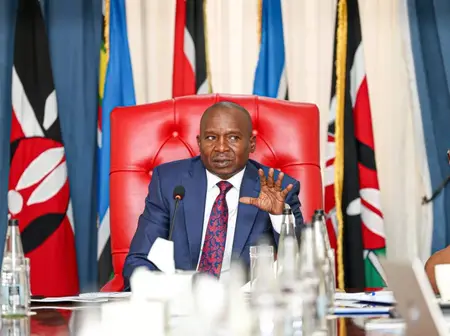
Kindiki announces tougher penalties for illicit alcohol and drug dealers
Deputy President Kithure Kindiki has announced plans to introduce tougher penalties against manufacturers, distributors and sellers of illicit alcohol and drugs, including asset forfeiture and increased fines, as the government intensifies its nationwide crackdown.
Kindiki said the government was reviewing the Alcoholic Drinks Control Act of 2010 to introduce more punitive measures against individuals and businesses involved in the illegal trade, while ensuring proceeds recovered from seized assets support rehabilitation programmes for victims of substance abuse.
He spoke on Wednesday at the Official Residence in Karen, Nairobi, where he received the Charter for the National Steering Committee on Combating Illicit Alcohol and Drugs, a framework intended to strengthen coordination among government agencies and other stakeholders.
The Deputy President said the proposed legal changes would ensure those responsible for the manufacture and distribution of illicit substances face severe financial consequences.
“We are reviewing comprehensively the Alcoholic Drinks Control Act of 2010 to make it extremely punitive for people who are perpetuating this criminal activity, to ensure forfeiture of their assets, and to ensure that proceeds of such forfeiture are used for rehabilitation of the victims of their crime directly,” Kindiki said.
The proposed measures will also include increasing fines imposed on offenders, requiring them to pay several times the market value of ethanol diverted for illegal purposes.
The government is also considering changes to the existing legal framework to ensure that money recovered through enforcement operations can directly support rehabilitation initiatives across the country.
Kindiki further announced plans to tighten taxation in the alcoholic drinks industry, warning that some licensed manufacturers were failing to meet their statutory tax obligations.
He said the government had identified significant compliance gaps within the sector, which could undermine efforts to eliminate illicit alcohol and drug distribution.
“We are going to strengthen taxation in this industry to ensure that all people in this sector adhere to their tax obligations because we have discovered only a few licensed manufacturers are honouring their tax obligations,” he said.
The Deputy President described the newly adopted Charter as a significant addition to the ongoing multi-agency crackdown, providing clear responsibilities and accountability mechanisms for institutions involved in the campaign.
It outlines the roles of national and county governments, private sector actors, civil society organisations and communities in combating substance abuse.
The framework also provides for intelligence-led operations, legislative interventions and administrative measures intended to sustain the crackdown beyond the ongoing enforcement operations.
The campaign will operate under the theme Okoa Jamii, Jenga Taifa, reflecting the government's stated commitment to protecting communities from the effects of alcohol and drug abuse.
Kindiki urged enforcement agencies to maintain professionalism and intensify their efforts, saying the arrests and seizures recorded so far needed to translate into lasting results.
He commended law enforcement agencies for supporting the National Authority for the Campaign Against Alcohol and Drug Abuse (NACADA) and other institutions in the fight against illicit substances.
“I call upon those teams to continue exercising professionalism in the exercise and continue to take this matter with the seriousness it deserves,” he said.
The meeting was attended by Attorney General Dorcas Oduor, Inspector General of Police Douglas Kanja, Director of Public Prosecutions Renson Igonga, Principal Secretaries and other senior government officials.
-
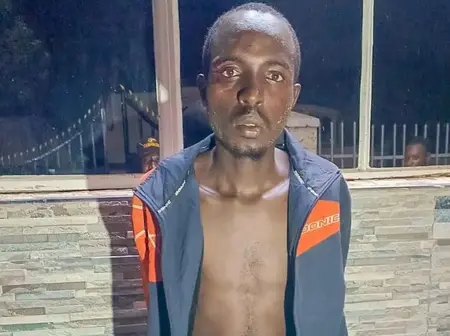
Kondele Burglary Suspect Arrested as Police Recover Cut Window Grills and House-Breaking Tools
The arrest was made on Wednesday, November 18, 2026, following a swift police response to a reported burglary in the Pembe Tatu area.
According to the National Police Service (NPS), officers from Kondele Police Station were conducting a routine patrol when they responded to the incident.
Their operation led to the arrest of one suspect and the recovery of several items believed to be connected to the burglary.
Among the items recovered were a metal crowbar, a heavy-duty bolt cutter, a hand knife and three pieces of window grills that had reportedly been cut during the break-in.
Police also recovered two ornament holders and several earrings, among other items suspected to have been stolen from the residence.
However, the operation did not result in the arrest of everyone involved, as several suspected accomplices managed to escape.
The escapees reportedly scaled the perimeter wall of a neighbouring school as officers moved in, making it difficult to apprehend them at the scene.
The arrested suspect was subsequently taken to Kondele Police Station, where he remains in custody as police complete the necessary procedures ahead of his arraignment in court.
Meanwhile, officers have launched a manhunt for the remaining suspects and are pursuing leads that could help establish their identities and whereabouts.
The National Police Service has urged members of the public to remain vigilant and share timely information with security agencies to help prevent criminal activities.
The public can also share information through the DCI's toll-free #FichuaKwaDCI line on 0800 722 203 or WhatsApp number 0709 570 000.
Source
-
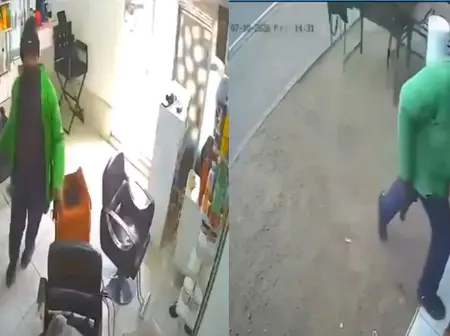
Suspect Arrested in Mowlem Linked to Armed Phone Robbery in Ruaka
The robbery occurred at a salon in RuakaDetectives have linked a man arrested in Nairobi’s Mowlem area with a loaded pistol to an armed robbery in Ruaka, Kiambu County, where a woman lost her mobile phone at gunpoint.The robbery occurred at a salon in Ruaka, where the suspect allegedly approached the woman, snatched her phone and fired a shot while escaping.
-

Regina Re mother’s burial: Court orders Thandie’s father to record funeral for her to watch in police custody
Listen to articleThe judge directed that the photographs and videos be presented to Thandie in the presence of police officers, allowing her to follow the funeral proceedings despite remaining in custody.The High Court has directed the father of Thandie Malaika Wanjiku Gitau, who is accused of killing her 86-year-old grandmother, to attend the deceased's burial in Murang'a County, record videos and take photographs for his daughter to watch while in police custody.
-
Forced DNA tests: Paternity disputes raise concern over pressure on women and welfare of children
Growing demands for DNA testing are exposing a sensitive crisis in relationships, with questions of biological parentage increasingly bringing family disagreements into the workplace and raising concerns about children's welfare.The controversy over DNA paternity testing is putting the spotlight on trust, fatherhood, relationship stability and the rights of children caught up in disputes between their parents.
-
Zimbabweans Question Missing Black Box in Fatal Helicopter Crash as Report Sparks Outrage
Image: Zimbabwean entrepreneur and regional investor Sir Wicknell Chivayo paid a distinguished courtesy call on President William Ruto of Kenya.pool
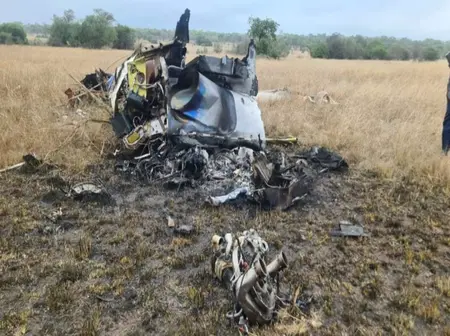
Zimbabweans have taken to social media to question the findings of a preliminary investigation into the helicopter crash that killed businessman Wicknell Chivayo, his wife and three other people.
A 14-page report released by Zimbabwe’s Ministry of Transport has triggered widespread debate, particularly over the revelation that the helicopter’s cockpit voice recorder was not recovered and is believed to have been destroyed during the crash.
Several social media users have expressed disbelief over how the recording device could have been destroyed, especially after investigators indicated that the helicopter remained intact until it struck the ground.
Some have drawn comparisons with major international aviation accidents in which flight recorders were recovered despite aircraft sustaining extensive damage from impact and fire.
Others have demanded a more comprehensive technical explanation, arguing that the preliminary findings leave several critical questions unanswered.
Among those who reacted was social media user TheHumbleGuy, who ridiculed the revelation by comparing the incident with aircraft crashes in the United States.
“Only in Zimbabwe where a black box or voice recorder cannot be found. We saw a jet that crashed in Florida, USA, and its black box was recovered. Then in Zim, a helicopter crashed,” he wrote.
Another user, The Chief, dismissed the report, arguing that it lacked the technical information needed to explain what happened.
“That’s not an accident report; that’s a story narration. Excuse us, please,” the user commented.
The Observer also questioned the length of time taken to complete the investigation, suggesting that the report largely repeated details that had already been made public.
“So it took them about 50 days of rigorous investigation and analysis to basically regurgitate what Wicknell’s bodyguard already told the media?” the user posed.
Meanwhile, Jah Cure raised concerns over what he described as inconsistencies surrounding the recovery of the cockpit voice recorder.
“Initially, we were told that the cockpit voice recorder was recovered, but now it’s a different story,” he wrote.
According to the report, two helicopters, a Bell 407 and a Bell 430, departed Gandami Village in Mashonaland East at approximately 4:20pm on September 30, 2026, en route to Marondera.
About 10 minutes into the journey, weather conditions reportedly deteriorated as clouds moved in from the east.
The pilot of the Bell 407 responded by turning west to avoid the clouds, while the Bell 430 continued towards the north-east after reporting that the route ahead was clear.
However, the last radio communication from the Bell 430 indicated that the aircraft had entered another layer of clouds and had not yet emerged.
Witnesses at Kudenga Farm reportedly heard a helicopter flying overhead but could not see it because of heavy fog and drizzle. They later heard a loud impact.
Investigators identified unintended flight into instrument meteorological conditions and controlled flight into terrain as key factors surrounding the accident.
The report also established that there was no evidence that the helicopter exploded or broke apart while airborne.
The Wolf of all Streets also questioned the report’s findings, particularly details concerning the helicopter’s maintenance history and the missing cockpit voice recorder.
According to the document, the helicopter was manufactured in 2004, with its last recorded inspection conducted on August 25, 2026.
Its Certificate of Airworthiness was valid until May 2027, although investigators are still examining its maintenance records.
The social media user argued that the findings raised more questions than answers, drawing comparisons with another controversial accident investigation in Zimbabwe.
Despite the criticism, the preliminary report has not established the exact cause of the crash.
Investigators also provided details about the pilot, a 44-year-old Zimbabwean who had accumulated 2,756 flying hours and held a valid Commercial Pilot Licence and medical certificate.
The report indicated that there was no evidence he had been physically incapacitated before the accident.
The investigation remains ongoing, with authorities expected to publish a final report after examining all available evidence.
-

AKI warns motorists against fake insurance certificates, urges use of Bima Yangu platform
Despite years of public awareness campaigns, fake motor insurance certificates remain a concern in Kenya, exposing motorists to financial risks and possible criminal charges.
The Association of Kenya Insurers (AKI) says that, to protect motorists, it has intensified efforts to promote insurance verification through its Bima Yangu campaign, which encourages drivers to confirm the validity of their cover before hitting the road.
In an interview, William Kiama, Manager, General Insurance Business at the Association of Kenya Insurers (AKI), explains how fake insurance certificates find their way into the market, the measures being taken to combat fraud and how motorists can use the Bima Yangu App and USSD code to verify their cover.
Despite several years of public awareness campaigns, fake motor insurance certificates remain a concern. How widespread is insurance fraud in Kenya's motor insurance sector, and what is the estimated number of motorists currently driving with fake or invalid insurance certificates?
Kiama: We do not have the exact data on the number of fake certificates that are out there. However, what we have established is that all categories of vehicles are exposed.
Many motorists unknowingly purchase fake insurance certificates, sometimes through intermediaries or other unlicensed persons. How are these fraudulent certificates finding their way into the market, and what measures is AKI taking to identify and hold rogue agents and fraudsters accountable?
Kiama: We are tackling fraudulent certificates from several angles. First, we have enabled customers to verify their own certificates so they are not duped by rogue intermediaries. Second, we have equipped the Traffic Police by training them on how to verify the validity of insurance certificates. Third, we are working with the Traffic Police and the Insurance Fraud Investigation Unit under the IRA to carry out crackdowns across the country. These efforts have already led to several individuals being charged and jailed for this criminal activity.
The 2026 Bima Yangu campaign seeks to make insurance verification a routine practice among motorists. What motivated AKI to intensify the Bima Yangu campaign? What has been the impact of the campaign since its launch in 2023? What measurable progress has AKI recorded in terms of public awareness, verification rates and reduction in insurance fraud?
Kiama: We noticed a trend of motorists reporting claims, only to discover at that point that their insurance certificates were invalid. This showed us that motorists were unknowingly exposed to major financial risk while also committing a criminal offence by driving without valid insurance.
In response, we stepped up our customer protection efforts through the Bima Yangu campaign to enable motorists to check the status of their motor insurance certificates at any time. The campaign has been very well received, and many motorists now know that their cover could be invalid and how to verify it.
The campaign promotes the AKI Bima Yangu App and USSD code 352#. How exactly can motorists use these platforms to verify their insurance, what information will they receive, and what should they do if their certificate turns out to be invalid?
Kiama: Motorists can verify their cover in two ways, which together work for all mobile users.
With the Bima Yangu App, download the app, scan the QR code on the motor insurance certificate and enter the vehicle registration number to see the status of your insurance instantly.
With the USSD code *352#, follow the prompts to enter the vehicle registration and certificate numbers, and the result will be displayed.
The verification result will show one of the following statuses: Genuine, Invalid, Expired, Upcoming or Cancelled.
If the result is invalid, contact AKI or call the number on the certificate.
Beyond the legal requirement, motor insurance is meant to protect motorists and other road users financially. What are the financial and legal consequences of driving with fake insurance, particularly when a motorist causes an accident, and what policy or regulatory changes are needed to strengthen consumer protection?
Kiama: Beyond the legal consequences, the motorist is personally responsible for repairing damaged vehicles, paying medical expenses, compensating injured third parties and meeting property damage claims. Depending on the circumstances, these costs can quickly become overwhelming.
While multi-stakeholder efforts are being made to prosecute persons found to be interfering with certificates, the consumer is today empowered to establish the status of their motor insurance certificate.
What is the biggest misconception Kenyans have about motor insurance?
Kiama: That it is only taken for purposes of police checks. However, given it is the most used form of transport, Kenyan law recognises the importance of motor insurance for all road users.
-

State Department Cautions Against Using Vulnerable Minors For Online Fundraising Amid Eric Omondi’s Recent Drives
Comedian and philanthropist Eric Omondi may need to adjust how he documents and publicizes the plights of vulnerable children during his online fundraising drives, following a strict new government directive on child privacy.
On Tuesday, November 17, 2026, the State Department for Children Services issued a stern caution to individuals, organizations, and digital content creators against publishing photographs, videos, and sensitive personal details of minors in ways that compromise their identities while soliciting financial aid. Although the department did not mention Omondi by name, the directive directly impacts the visual storytelling model he relies on to rally Kenyans behind charitable causes.
Omondi has built a prominent humanitarian initiative around sharing raw, unfiltered videos of struggling families and children on social media to highlight their living conditions and medical challenges. In one notable recent appeal, he featured 17-year-old Bryson Makokha, who suffers from a rare skin condition, sharing the teenager’s images and story online in a campaign that reportedly raised Ksh10.2 million for his medical care and family welfare.
While acknowledging the vital role well-wishers play in supporting needy households, the State Department expressed deep concern over the rising trend of using minors’ faces and medical histories to evoke public sympathy and generate donations. Officials warned that exposing a child’s identity, health status, or domestic struggles leaves them vulnerable to long-term stigma, bullying, discrimination, and exploitation, emphasizing that good intentions must never override a child’s fundamental rights.
Crucially, the department clarified that obtaining consent from a parent or guardian does not give fundraisers a free pass to broadcast a child’s private life online. Even when desperate families agree to have their circumstances publicized in hopes of securing financial relief, the child’s dignity, privacy, and best interests must take precedence over publicity or fundraising goals.
Although the directive does not bar Omondi or other well-wishers from mobilizing financial support for vulnerable youth, it sets clear boundaries on how those appeals are packaged. Moving forward, the comedian may have to adopt privacy-first practices—such as blurring children’s faces, omitting identifying details, and withholding sensitive medical records—to balance effective charitable fundraising with the legal and ethical protection of minors.
-
DCI Officer Arrested for Allegedly Demanding Bribes
A police officer attached to the Directorate of Criminal Investigations (DCI) office in Kibera has been arrested by the Ethics and Anti-Corruption Commission (EACC) over allegations of demanding a KSh50,000 bribe from a resident.In a statement on Wednesday, November 18, EACC said the officer allegedly demanded the money as a condition for recording a fraud complaint in the Occurrence Book (OB) and initiating investigations.