Category: Entertainment

  • “I’m Not A Journalist”: Oga Obinna Responds To Critism He Is Being Paid For Political Content Critique

    “I’m Not A Journalist”: Oga Obinna Responds To Critism He Is Being Paid For Political Content Critique

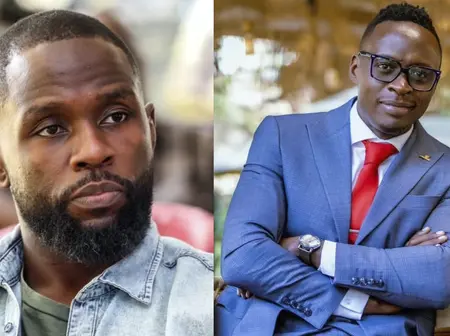
    Media personality Oga Obinna has pushed back against criticism from investigative journalist John Allan Namu regarding content creators accepting money from politicians, clarifying that he does not view himself as a journalist.

    Obinna emphasized that his enterprise, Obinna TV Studios, operates strictly as a digital content and media production company rather than a traditional journalism outlet.

    “I’m not a journalist. I do have my company. It’s a media company that focuses on just productions. We do content production, meaning our biggest asset is digital assets,” Obinna stated. He explained that conducting interviews does not automatically make someone a journalist, noting that his platform centers on scripting, comedy, music, and entertainment—though he does employ professional journalists within his organization to manage journalism-related tasks.

    The response follows concerns raised by veteran journalist John Allan Namu regarding the blurring lines between digital media and political patronage. Namu questioned the independence of podcasters and content creators who take funds from political figures to host events or produce content while posturing as unbiased commentators.

    Namu warned that failing to clearly disclose these financial arrangements compromises platform credibility and risks creating a public perception that digital media creators are simply available to the highest bidder.

    Defending his business model, Obinna highlighted the distinction between journalism—which demands rigorous research, investigation, fact-checking, and public accountability—and content creation.

    He maintained that his primary mission is to entertain, inspire, and motivate his audience. By distinguishing his personal role as a media entrepreneur and content creator from the qualified journalists he employs, Obinna argued that entertainment-driven platforms should not be held to traditional editorial standards.
  • Oga Obinna Responds to John Allan Namu’s Criticism of Politically Funded Podcasters

    Oga Obinna Responds to John Allan Namu’s Criticism of Politically Funded Podcasters

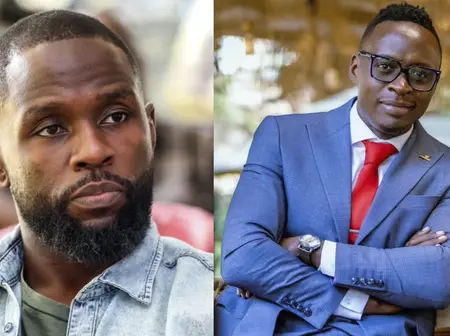
    Media personality Oga Obinna has responded to investigative journalist John Allan Namu’s criticism of podcasters and content creators who receive money from politicians, insisting that he does not identify himself as a journalist.

    Obinna said his company, Obinna TV Studios, is primarily a media production outfit specialising in digital content, entertainment and creative productions rather than traditional journalism.

    Speaking about his work, he explained that the company’s biggest asset is its digital content and argued that interviewing guests does not automatically make someone a journalist.

    “I’m not a journalist. I do have my company. It’s a media company that focuses on just productions. We do content production, meaning our biggest asset is digital assets,” he said.

    He explained that his work involves scripting, comedy, music and interviewing guests to create content for digital audiences.

    Obinna added that he has journalists working within his organisation to handle assignments that require journalism-related skills, distinguishing his role as a content creator and media entrepreneur from that of professional journalists.

    Obinna’s response follows remarks by Namu, who questioned the independence of some podcasters and digital content creators who receive money from politicians to organise events or produce content while presenting themselves as independent journalists.

    The investigative journalist raised concerns about the growing financial relationships between politicians and digital media personalities, warning that such arrangements could undermine the credibility and independence of media platforms.

    Namu particularly questioned the practice of accepting money from political figures under the guise of organising events while simultaneously presenting oneself as a journalist responsible for holding leaders accountable.

    He also warned that undisclosed financial arrangements could create the impression that media practitioners are available to advance the interests of whoever pays them.

    His concerns centred on the distinction between paid political promotion and independent journalism, particularly where content creators fail to disclose their financial relationships with politicians.

    In responding to the criticism, Obinna maintained that his platform is built around entertainment and content production rather than investigative reporting.

    He argued that journalism involves responsibilities such as research, investigations, fact-checking and holding public officials accountable, which are not the primary focus of his company’s operations.

    Instead, he said his objective is to inspire, motivate and entertain audiences through productions created by his team.

    Obinna also pointed to the journalists employed by his company, saying they handle journalism-related assignments while he concentrates on content creation and the business side of media production.

  • “Why should I beef with you when you want to be King of Uganda, while I want to be King of the World?” – Joshua Baraka hits back at King Saha

    “Why should I beef with you when you want to be King of Uganda, while I want to be King of the World?” – Joshua Baraka hits back at King Saha

    thumbnail

    Singer Joshua Baraka has hit back at fellow musician King Saha over his criticism of his international ambitions, saying he is aiming for global recognition rather than settling for dominance in Uganda.Baraka made the remarks during a TikTok Live session after Saha questioned whether pursuing an international music career was worth the financial investment and uncertainty involved.

  • Cassypool Admits Supporting Ruto Cost Him Fans, Destroyed His Brand

    Cassypool Admits Supporting Ruto Cost Him Fans, Destroyed His Brand

    Cassypool Capon has admitted that his public support for President William Ruto damaged his entertainment brand, cost him a significant number of followers and took a toll on his mental health.

    Speaking during an interview on Sunday, November 1, 2026, the outspoken entertainer said the political position he took alienated some of his fans and attracted intense online criticism.

    “I do regret supporting President William Ruto. I do regret it because it cost me my brand. I killed my brand,” he said.

    Despite acknowledging the damage, Cassypool maintained that he would still have supported Ruto if given another opportunity to make the decision.

    He also apologised to fans who felt betrayed or hurt by his political stance, asking them to forgive him for allowing his political allegiance to affect their relationship.

    “To all those people I hurt because of the political stance I took, I just want to apologise to them. I’m asking for your forgiveness. I did wrong and took a political stand that hurt my fans,” he added.

    The influencer said the consequences went beyond losing followers and business opportunities, revealing that the constant insults and negative comments affected his mental well-being.

    He disclosed that the experience pushed him into depression and that he reached a point where he contemplated taking his own life.

    Cassypool explained that the criticism was particularly difficult to deal with because he had previously enjoyed widespread public attention and support.

    He also expressed concern that his children, who are old enough to access social media, could come across the negative comments directed at him.

    According to the entertainer, the backlash also affected his wife, who became overwhelmed by the criticism and at one point urged him to consider quitting.

    The experience, he said, reminded him that public figures are equally vulnerable to online hostility despite their visibility and influence.

    Cassypool’s political association with Ruto dates back to the 2022 General Election, when he initially declared interest in the presidency before withdrawing from the race to support the then Deputy President.

    During a 2024 interview, he said he had abandoned his presidential ambitions to back Ruto, whom he referred to as his boss.

    His support became more prominent during the controversy surrounding the Finance Bill 2024, when he was among public figures who defended the government’s position.

    At the time, he argued that Kenyans would have to endure difficult economic conditions before the country could improve.

    He subsequently became one of Ruto’s outspoken defenders, frequently clashing with critics of the President.

    In August 2025, Cassypool also explained that his disagreement with musician Bien-Aimé Baraza began after the singer chanted ‘Ruto Must Go’ during a performance, an act he considered disrespectful to the Head of State.

    Although he now acknowledges that his political loyalty came at a heavy professional and personal cost, Cassypool maintains that he would make the same political choice again.

  • Cleophas Malala, Jeff Koinange Exchange Personal Jabs in Heated TV Interview

    Cleophas Malala, Jeff Koinange Exchange Personal Jabs in Heated TV Interview

    thumbnail

    A television interview turned confrontational after Democracy for the Citizens Party (DCP) Deputy Party Leader Cleophas Malala and veteran journalist Jeff Koinange exchanged personal remarks over career growth, professional stability and political ambitions.The two engaged in a heated back-and-forth during an interview, with Malala questioning Koinange’s career progression and accusing the veteran broadcaster of becoming too comfortable in his current position at Citizen TV.

  • Kanye Smashes U.S. Stadium Rap Attendance Record In Houston

    Kanye Smashes U.S. Stadium Rap Attendance Record In Houston

    thumbnail

    In SummaryKanye Smashes U.S. Stadium Rap Attendance Record In Houston.The show was held at the Relient Stadium on October 31, drawing 80,120 fans.Kanye West also tagged along Playboi Carti and his daughter North West, Drake and Travis Scott also witnessed the historic moment.

  • From “Naye Banange” to “Ohh my goddiii”: Five Kapere memes that took social media by storm

    From “Naye Banange” to “Ohh my goddiii”: Five Kapere memes that took social media by storm

    thumbnail

    Ugandan comedian Kapere Lufotose, whose real name was Yokana Mbuuse, died on Sunday, 1 November, aged 56, leaving behind a collection of hilarious skits, memorable one-liners and facial expressions that have made him a social media favourite.His comedy has found a second life on TikTok and other social media platforms, where clips from his performances continue to circulate as memes and reaction videos.

  • Comedian Kapere Lufotose dies

    Comedian Kapere Lufotose dies

    thumbnail

    Comedian Yokaana Mbuuse, popularly known as Kapere Lufotose, has died at a medical facility in Buddo.Details surrounding his death, including the cause, had not been established by the time of publication.Kapere rose to fame as a member of the Amarula Family, a comedy group led by comedian Amooti Omubalanguzi.

  • Crazy Victor: Comedian Takes TikTok by Storm with Funny Skits

    Crazy Victor: Comedian Takes TikTok by Storm with Funny Skits

    A Kenyan TikTok creator known as Crazy Victor has quietly become one of the most talked-about faces on the platform, except nobody actually knows his face.

    Crazy Victor is amassing followers on TikTok.

    The comedian, who goes by @crazy_victo on TikTok, has built a following of more than 290,000 people using a face filter that completely obscures his identity, with many of his videos crossing the one million view mark.

    His tagline, "radar bruh?", has become instantly recognisable among his fanbase, and the deliberate mystery around his appearance has only added to his appeal, with followers actively trying to unmask the creator even as the comedy keeps drawing them back.

    Video of Diamond Platnumz avoiding curvy woman during photo session at press conference emerges

    PAY ATTENTION:TUKO is in WhatsApp Channels now! Subscribe and read news in your favourite messenger.

    Part of what has set Victor apart is his ability to pull established names into his skits.

    In one recent video titled "How lovers rage bait the seller," comedian Njugush and a woman visit a fruit stall manned by Victor.

    Every time Njugush reaches for his wallet to pay, he turns and dissolves into laughter with his companion, leaving Victor visibly fuming behind the stall.

    The clip captures the kind of relatable, everyday frustration that resonates strongly with Kenyan audiences.

    In another popular skit, Victor finds himself seated across from KRG during a job interview.

    The moment Victor walks in carrying flowers for the interviewer, KRG questions the odd gesture.

    Victor's response — "I don't even know what the job is" — sets the tone for an interview that goes spectacularly off the rails. When pushed on his qualifications, Victor deadpans:

    Dr Sketch: Kenyans mourn artist after family confirms his death

    The comment sections on Crazy Victor's videos paint a picture of a creator who has genuinely connected with his audience.

    Pato:

    Hillah:

    @wanjalafabian001:

    Jay Boy:

    Steve.

    Mr MCA:

    The combination of high-profile collaborations, consistent viral output and an anonymous persona has carved out a genuinely unique space for Victor in Kenyan digital comedy.

    Whether or not fans ever unmask the creator behind the filter, the content itself appears to be more than enough to keep them coming back.

    Source: TUKO.co.ke

  • Reggae Na Lami: Inside Entertainment Culture Defining Young People’s Send-Offs in Kakamega

    Reggae Na Lami: Inside Entertainment Culture Defining Young People’s Send-Offs in Kakamega

    Almost a routine, every Thursday and Friday, a familiar spectacle plays out near the mortuary yards in Kakamega County, majorly at Kakamega County Referral Hospital funeral parlour and the Mukumu Funeral Home near the St. Elizabeth Mukumu Mission.

    Kakamega County.

    Motorcycle engines rev, reggae music blare, and groups of young men assemble before the hearse even pulls out.

    The practice is known locally as "Reggae na Lami", ordinarily meaning "reggae on the tarmac", and has taken hold as an informal send-off tradition among young people in western Kenya.

    John-Allan Namu calls out podcasters taking cash from politicians: "Giving us a bad name"

    The processions involve large convoys of motorcycle riders escorting a body from the mortuary to the burial home, with music playing along major roads throughout the journey.

    John Sakwa, from Esumeyia in Kakamega County, is among those who regularly take part. He describes the riders' role as a focused act of solidarity, not an attempt to override family or religious customs.

    He explained that such groups are coordinated through groups, where members agree on timing, logistics and dress code before setting out in matching regalia and blow-ing vuvuzelas.

    They, however don't lock anyone out of it, as many moved by the vibe of the spectacle join in the course of the procession.

    Yvonne Okwara: David Maraga, Martha Karua and 5 other politicians send warm wishes as journalist exits stage

    They don't interfere with the procedures in the mortuaries. Theirs, he says, he it to carry the body home; the coffin itself is most times strapped to one of the motorcycles rather than transported by a hearse.

    He says the particular bike ferrying the body is the one that sets the pace. It is sandwiched by others that ride closely to offer support.

    Beyond the escor-t, members, when called upon, contribute money to bereaved families and assist with tasks such as digging graves.

    Security officials have documented a pattern of riders stopping traffic, removing caskets from hearses and placing them on the road while music plays, leaving other motorists stranded.

    The disruptions have been especially pronounced in Kakamega's central business district on Thursdays and Fridays.

    Moipei sisters ask fans to help fund dad's treatment in India

    In May this year, Kakamega County police command formally banned funeral processions in the town centre and designated alternative routes for mourners heading to various directions.

    The authorities warned that hearse owners whose vehicles participated in banned processions could have their licences revoked, and that bereaved families who entertained such processions risked arrest.

    The concern extended beyond Kakamega in June, when the Ekwanda Assistant County Commissioner warned that the practice had become a hazard along the Kisumu-Busia highway, particularly on the Maseno-Luanda stretch, and said a ban was being prepared.

    Looking ahead, he expressed hope that the groups could expand their role.

    Source: TUKO.co.ke