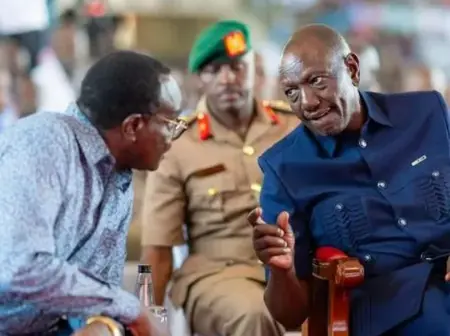
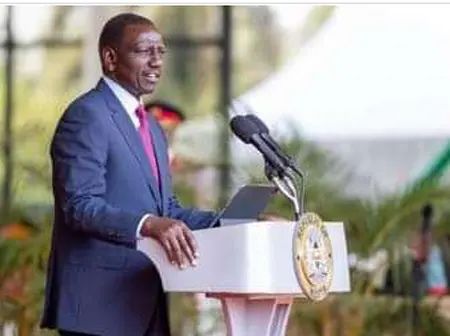
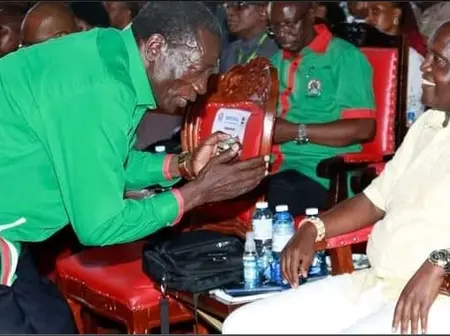
During the World Teachers' Day celebrations at Kasarani Stadium in Nairobi on October 5, 2026, President Ruto remarked that the funding for education has remained largely static since 2015, despite significant changes in the sector.
Currently, secondary school students receive about KSh22,000 each year, while junior secondary students get around KSh14,000. Funding for primary education is approximately KSh2,300 per student.
The President emphasized the need to increase these funding levels to ensure that schools have adequate resources for teaching and other vital operations.
He instructed the Ministry of Education to collaborate with key stakeholders, including the Teachers Service Commission (TSC), to initiate a review of funding after the ongoing placement and funding process for tertiary education is complete.
This proposed adjustment comes in response to ongoing worries from school leaders about rising operational costs, delays in funding, and the growing expense of necessary supplies.
These potential changes could significantly impact school operations and the financial burden faced by both parents and administrators.
The sound of classroom bells and the sight of chalkboards have temporarily given way to crashing waves, warm sunshine and laughter as teachers flock to Mombasa for a refreshing coastal getaway.
After months of standing before classrooms, preparing lessons, marking exercise books and guiding learners through their academic journeys, educators are taking time off to enjoy the beauty of Kenya's coastal paradise.
Dressed in colourful swimsuits and light beachwear, the teachers are embracing the relaxed atmosphere along Mombasa's stunning beaches. Some are enjoying refreshing dips in the Indian Ocean, while others are walking along the sandy shores, soaking up the sunshine and capturing beautiful memories with friends.
For many, the trip offers a welcome escape from the demanding responsibilities of the teaching profession. The opportunity to step away from school schedules, examinations, staff meetings and endless paperwork allows them to relax and reconnect with themselves.
The coastal experience is also bringing colleagues together outside the professional environment. Teachers who ordinarily interact over staffroom discussions and academic matters are now sharing laughter, enjoying meals and participating in fun activities that strengthen their friendships.
Mombasa's breathtaking coastline, warm weather, vibrant nightlife and rich Swahili culture provide the perfect setting for such memorable experiences. From beachside relaxation to boat rides and delicious coastal delicacies, there is plenty to keep the holidaymakers entertained.
Their getaway also serves as a reminder that teachers, despite their demanding responsibilities, need time to rest and recharge. Their contribution to society goes beyond delivering lessons, and their well-being remains equally important.
As the teachers enjoy the ocean breeze and beautiful coastal scenery, one thing is clear: for a moment, marking schemes can wait, lesson plans can take a back seat, and the only assignment on the timetable is having fun.
After all, even those who spend their days teaching others deserve a chance to enjoy a lesson in relaxation.
The President noted that increased funding would help schools meet their needs and improve the quality of education offered to learners. He also attributed the need for higher capitation to inflation and the rising cost of running schools.
Currently, the government allocates KSh1,420 annually for each primary school learner, KSh15,042 for a junior secondary school learner and KSh22,244 for a senior secondary school learner. However, schools have struggled with funding due to rising enrolment and increasing operational costs. Some institutions have also failed to receive the full approved allocation.
Ruto also directed the Ministry, TSC and teachers' unions to develop a single funding model for primary and junior secondary schools operating under the comprehensive school system. He said the new arrangement would bring together funding for the two levels to improve planning and resource allocation.
The proposed review could ease financial pressure on parents by giving schools more money to meet their operational needs. However, any reduction in additional contributions from parents will depend on the final funding decisions made by the government.
Link source:https://www.facebook.com/share/p/1FNk1eaPDX/
A teacher in Samburu County has touched the hearts of many Kenyans after showing an extraordinary act of kindness towards a KCSE candidate who had to attend her national examinations while caring for her young baby.
The teacher, identified as Francis Lesilampa, attracted widespread attention after he was captured cradling the candidate’s baby, allowing the young mother to concentrate on her examinations without worrying about the child's immediate needs.
The heartwarming incident has sparked conversations online, with many Kenyans praising the teacher for going beyond his professional responsibilities to support a student facing the challenges of motherhood while pursuing her education.
In a country where many young mothers struggle to balance parenting and academic responsibilities, the teacher's gesture has been described as a powerful example of compassion, understanding and dedication to education.
One social media user observed that being a teacher does not end in the classroom, highlighting the important role educators play in shaping students' lives beyond academic lessons.
Other Kenyans also expressed admiration for Francis Lesilampa, saying his actions demonstrated that teachers can make a significant difference in the lives of learners through simple acts of kindness.
The situation also highlights the challenges faced by teenage mothers and young parents who are determined to complete their education despite difficult circumstances. For some young mothers, attending school or sitting for national examinations can become complicated when they have nobody to look after their children.
However, the Samburu teacher's actions offered the candidate an opportunity to focus on her Kenya Certificate of Secondary Education (KCSE) examinations while knowing that her baby was being cared for.
The incident has also renewed discussions about the importance of creating supportive learning environments for pregnant students and young mothers.
Although teachers are primarily responsible for delivering lessons and guiding learners academically, moments like this demonstrate the value of empathy and humanity in the education system.
Francis Lesilampa's gesture has become a reminder that education is not only about passing examinations but also about supporting learners through life's challenges.
His kindness has left many Kenyans celebrating the teacher, with some saying his actions represent the true meaning of dedication to the teaching profession.
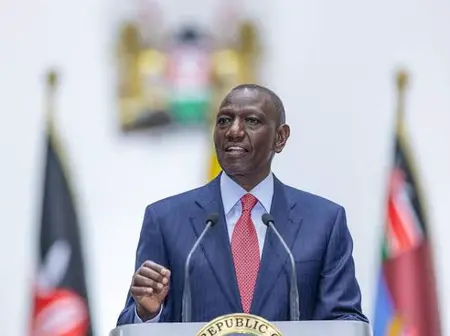
Listen to articleThe President said he had instructed Education Cabinet Secretary Julius Ogamba, TSC and teachers' unions to re-examine the figures and establish how much additional funding schools require.President William Ruto has directed the Ministry of Education and the Teachers Service Commission (TSC) to review school capitation and submit a report by January 2027, paving the way for a possible increase in government funding to schools amid rising costs.
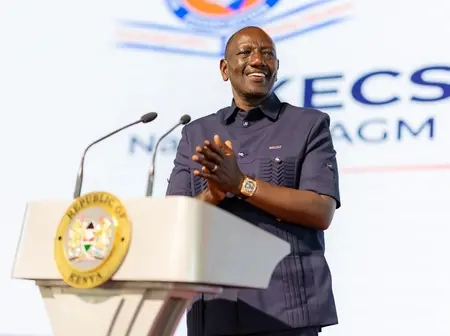
The directive came during the Kenya Comprehensive School Heads Association National Annual General Meeting held in Mombasa on Thursday, November 12, where the President addressed school administrators and education stakeholders.
Ruto tasked Education Cabinet Secretary Julius Ogamba, the Teachers Service Commission (TSC) and other relevant stakeholders with examining the current funding structure and recommending higher allocations to enable schools to meet their financial obligations.
He directed the team to present its findings to his office by January next year, allowing the government to consider adjustments before learners return for the first term.
The proposed review comes amid growing concerns among school heads over rising operational expenses and inadequate funding, which have placed pressure on institutions to seek additional financial support from parents.
Under the existing arrangement, the government provides KSh1,420 annually for every primary school learner, KSh15,042 for junior secondary pupils and KSh22,244 for each senior secondary student.
However, increased enrolment and rising costs have made it difficult for many institutions to operate comfortably within the available resources.
Ruto also announced plans to establish a unified capitation framework for primary and junior secondary schools operating under the comprehensive school system.
He directed the Ministry, TSC and teachers' unions to jointly develop a suitable funding arrangement.
The President attributed the proposed changes to inflation and increasing school expenses, assuring administrators that the government was working towards improving funding arrangements.
The President said the government plans to merge primary and junior school capitation into a single funding framework, allowing comprehensive schools to operate under one funding arrangement.
Ruto made the announcement on Thursday, November 12, 2026, while addressing the Kenya Comprehensive School Heads Association (KESSHA) National Annual General Meeting in Mombasa.
He explained that the government was reviewing the existing capitation rates to ensure schools receive sufficient resources despite rising operational costs and inflation.
The President directed the Ministry of Education, the Teachers Service Commission (TSC) and teachers' unions to work together and reassess the amount allocated to each learner.
He also instructed Education Cabinet Secretary Julius Ogamba and the TSC to prepare a report by January 2027, which will guide the government's decision on whether to increase the current allocation.
Ruto observed that the last major review of school capitation was conducted in 2015. Although subsequent adjustments raised the amount from KSh1,400 to KSh2,300 per learner, he said changing economic conditions had created the need for another assessment.
The proposed review could result in additional funding for schools if the government approves an increase following the January report.
Beyond the proposed changes to capitation, Ruto announced that schools would continue receiving government funding before the beginning of every academic term from 2027.
He said the government had already released more than KSh86 billion in capitation during the 2026 school calendar.
The amount was disbursed in three instalments, with KSh44 billion released in January, KSh23.4 billion in April and KSh18.5 billion in August.
According to the President, the advance disbursement arrangement would become a permanent practice rather than a temporary measure.
He said the decision would help head teachers concentrate on classroom activities instead of spending the opening days of each term following up on delayed government payments.
Ruto also addressed concerns surrounding the management of education funds, revealing that a government audit had identified approximately 800,000 non-existent pupils in primary school registers.
Nearly 200 schools were also reportedly found to exist only on paper.
To address the problem, the government is digitising learner records to ensure capitation payments are based on the actual number of children enrolled in schools.
The President maintained that public funds must reach genuine learners rather than being allocated using inaccurate school registers.
He further directed the Ministry of Education to work with KESSHA and submit proposals within 90 days for amendments to the Basic Education Act.
The proposed legal changes will address the governance, staffing and financing of comprehensive schools, providing a clearer framework for their management.
The Ministry's January 2027 report on capitation will therefore be an important step in determining whether primary and junior schools will receive higher allocations under the proposed funding arrangement.
Thousands of teachers across Kenya could soon have an opportunity to advance their careers following President William Ruto's announcement that the revised Career Progression Guidelines have received approval from the Salaries and Remuneration Commission (SRC).
Speaking in Mombasa on Wednesday, November 11, President Ruto revealed that the guidelines, negotiated between the government, the Teachers Service Commission (TSC) and teachers' unions, had been concluded two days earlier before receiving SRC approval.
The approval is expected to pave the way for the implementation of the revised framework, which seeks to improve teachers' career advancement opportunities.
In a major boost to the teaching profession, Ruto also announced that the government would provide an additional KSh4 billion to facilitate career progression.
"The new career progression guidelines that we agreed with the Teachers Service Commission and the unions were concluded two days ago and approved," the President said.
He further confirmed that 50,000 teachers would be promoted during the current financial year, describing the exercise as the largest single-year promotion exercise in Kenya's history.
The announcement comes as teachers continue to raise concerns about career stagnation, lengthy promotion intervals and limited opportunities to move into higher job groups.
For many educators, the promised promotions could provide an opportunity to improve their professional standing and financial circumstances.
The revised guidelines are also expected to introduce improved career pathways, giving teachers opportunities to advance through classroom teaching or administrative leadership.
The involvement of teachers' unions in the negotiations is significant, considering their longstanding demands for better promotion structures and recognition of teachers' experience.
Attention will now shift to the TSC as teachers await details on the implementation schedule, eligible job groups and the criteria that will guide the promotion of the 50,000 educators.
If implemented as announced, the reforms could mark a major development in the country's teaching profession.
Teachers across Kenya have received encouraging news after President William Ruto announced an additional KSh4 billion to support their career progression following negotiations involving the government, the Teachers Service Commission (TSC) and teachers' unions.
The announcement comes at a time when thousands of teachers have been demanding improved promotion opportunities, better career structures and recognition of their professional experience.
The additional funding is expected to support the implementation of revised Career Progression Guidelines aimed at addressing challenges that have affected teachers seeking advancement within the profession.
Under the proposed reforms, teachers will have two career pathways through which they can advance professionally. These include classroom teaching and administrative leadership.
The classroom teaching pathway is particularly significant because it will allow experienced educators to pursue higher professional grades without necessarily moving into administrative positions.
The proposed changes are also expected to reduce the time required for teachers to reach the highest professional grade from approximately 30 years to 18 years.
The negotiations involved the TSC and teachers' unions, including the Kenya National Union of Teachers (KNUT), the Kenya Union of Post Primary Education Teachers (KUPPET) and KUSNET.
Meanwhile, President Ruto has previously directed the TSC to increase the number of teachers targeted for promotion from 34,016 to 50,000.
The government has also increased the annual promotion allocation from KSh1 billion to KSh2 billion.
The latest announcement is therefore likely to attract considerable attention among teachers who have remained in the same job groups for years.
Teachers will now be looking forward to further communication from the TSC regarding implementation arrangements, eligibility requirements and the actual promotion opportunities under the revised guidelines.
The Kenya National Union of Teachers (KNUT) has called for an end to growing divisions between experienced teachers and newly recruited educators, urging both groups to embrace unity and mutual respect for the good of the teaching profession.
The union wants seasoned teachers and their younger colleagues to put aside differences arising from age, experience, salaries and career progression. According to the union's position, the differences should not become a source of hostility among professionals who share similar responsibilities and face common workplace challenges.
Experienced teachers have spent years building their careers and acquiring valuable knowledge that can benefit the entire education sector. Their contribution to mentorship, discipline, curriculum implementation and learner development remains important. However, newly recruited teachers also bring fresh perspectives, technological skills and modern teaching methods that can strengthen classroom delivery.
KNUT believes that cooperation between the two groups is essential in building a strong and united teaching fraternity. Veteran teachers should be willing to guide younger colleagues, while newly employed educators should recognise the sacrifices and contributions made by those who paved the way before them.
The union's call for a truce also comes at a time when teachers need a united voice to address employment concerns, career progression, promotions, remuneration and improved working conditions. Internal disagreements could weaken collective efforts to secure better terms and protect teachers' professional interests.
Rather than viewing one another as competitors, teachers should recognise themselves as partners working towards a common goal. Experience should be used to mentor, while fresh ideas should be welcomed to improve the quality of education.
KNUT's message is clear: the teaching profession cannot afford unnecessary divisions. Both seasoned and inexperienced teachers have important roles to play, and their cooperation is essential for the future of education in Kenya.
Ultimately, unity among teachers will strengthen the union, improve workplace relationships and ensure that learners benefit from the combined knowledge and abilities of all educators.