
The Teachers Service Commission (TSC) has shortlisted five candidates for the position of Secretary and Chief Executive Officer (CEO), with the acting chief, Dr Evaleen Mitei, among those considered.Mitei, who has been serving as the acting TSC CEO, will compete for the top position alongside four other candidates drawn from different counties.
Category: Education
-
UoN Issues Fee Payment Notice to Students as Classes Resume
The University of Nairobi has instructed students to settle all outstanding fee balances following the immediate resumption of academic and administrative operations after a prolonged lecturers' strike.In an official notice issued on Monday, November 2, Acting Deputy Vice Chancellor for Academic Affairs Prof. John Mande confirmed that normal learning activities have officially restarted.
-
UoN Issues Notice to Students Over Fee Payment After Resumption of Classes
UpdateUoN said that teaching, learning, examinations, research and other functions resume immediately.The University of Nairobi has urged its students to clear any outstanding fees following the resumption of classes after the end of the prolonged lecturers' strike.In a notice issued on Monday, November 2, the Ag.
-
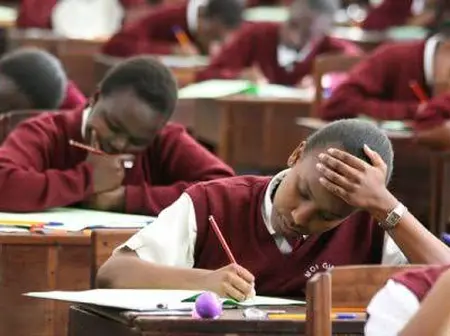
KCSE 2026 Kicks Off With Nearly One Million Candidates, Full Timetable
Close to a million students settled into exam rooms across Kenya this morning as the 2026 Kenya Certificate of Secondary Education (KCSE) got going in earnest. In all, 996,078 candidates are registered.English Paper 1 kicked off the day at 8.00 a.m., with Chemistry Paper 1 to follow at 2.00 p.m. For most of those in the room, it is the point four years of secondary school have been heading towards.
-

RFK Jr is wrong about the Arab world
At a recent campaign rally in Michigan, United States Secretary of Health Robert F Kennedy Jr made remarks that have caused much controversy. He alleged that Muslim Arabs do not produce science and literature and do not win major awards because of the influence of the Muslim Brotherhood.
This was not merely a hasty and inaccurate assessment of the knowledge production of a specific demographic. It was a statement that reflects racist attitudes and misconceptions about an entire region and an entire religion. It is also easily refutable.
There are plenty of Muslim Arab scientists, thinkers and writers who have made major contributions over the past century. Some of them are Nobel laureates, such as novelist Naguib Mahfouz, diplomat Mohamed ElBaradei, journalist Tawakkol Karman, and scientists Ahmed Zewail, Moungi Bawendi and Omar Yaghi. Many others have not received a Western award but have nevertheless contributed significantly to their own countries and the world.
The Arab world does face challenges in knowledge production, but this does not prove an inherent deficit in its people or the overwhelming influence of a certain political group. Rather, it reflects historical and institutional conditions that impact this process.
Human civilisations have not been equal in knowledge production across history. Some have witnessed scientific and intellectual flourishing while others have faced decline and turmoil.
Downturns have not occurred because populations had suddenly lost their mental capacities but because the political, economic, cultural and institutional conditions that allow knowledge to thrive change over time.
In the case of the Islamic civilisation, its centres – from Baghdad and Damascus to Cairo and Cordoba – experienced a vast scientific and intellectual movement involving scholars, translators, philosophers, physicians and mathematicians from diverse religious and linguistic backgrounds for centuries. This prosperity was not isolated from the world; it was built on the translation, critique, development and interaction with Greek, Syriac, Indian and other bodies of knowledge.
Meanwhile, parts of Europe experienced significant backwardness in scientific education and development. However, Europe was not a monolith, nor were those centuries a homogeneous dark period. It also witnessed varying intellectual, institutional and scientific developments across different regions and timeframes.
European conditions then gradually changed: Educational institutions and universities evolved, networks for book and knowledge circulation expanded, and European scientific traditions interacted with scientific knowledge transferred from the Islamic world and elsewhere.
No one can claim, based on these historical disparities, that Europeans are inherently incapable of producing science or that their religion or ethnic origins preclude them from innovation. Serious historical interpretation focuses on institutions, economics, education, political patronage and knowledge networks rather than claims that certain populations lack innate abilities.
The exact same principle must apply to Arabs and Muslims today. Since Europe was able to change the conditions of knowledge production, it is illogical to assume that the contemporary reality of Arab and Islamic societies reflects fixed limits in their scientific or literary capacities.
Science is universal and not the racial or religious property of anyone. Decline is not a genetic destiny for any people, and prosperity is not an eternal privilege.
Rejecting RFK Jr’s generalisations does not mean denying the challenges facing scientific research in many Arab countries. There are serious questions concerning research and development funding, university independence, education quality, freedom of research and expression, institutional stability, the ability to attract and retain scientists, and links between knowledge and the economy and production. However, these questions are the beginning of scientific analysis, not the end.
A society that does not provide a researcher with a suitable laboratory, does not grant universities sufficient independence, does not allocate the necessary resources for research and does not ensure the continuity of scientific institutions cannot expect results comparable to those of a society that invests sustainably in these areas.
Furthermore, wars, conflicts, displacement, brain drain and weak scientific cooperation can disrupt the accumulation of knowledge, even when a society possesses qualified human capital. The capacity for thought and innovation is one thing, and the ability to translate them into sustainable scientific production is another. Between the two lies an entire system of socioeconomic conditions, institutions and policies.
Blaming the challenges contemporary Arab societies face on a single political group – in RFK Jr’s case, the Muslim Brotherhood – and presenting this as a comprehensive explanation for the state of science and literature among hundreds of millions of people falls short of serious historical or social analysis.
Scientific production is influenced by a set of intersecting variables: state structure, economic policies, education quality, research expenditures, academic freedom, stability, international relations and the capacity for knowledge circulation.
Certain political movements or intellectual trends might impact educational policies or the cultural climate in specific contexts. However, proving this impact requires evidence and comparative analysis, which RFK Jr would likely fail to produce, should he be asked to do so.
Moving from critiquing an institution or political movement to issuing a judgement on Arabs or Muslims in general is a form of racism, hatred and Islamophobia because it transitions from analysis to generalisation, and from seeking causes to reproducing stereotypes.
The problem with RFK Jr’s statement is not merely its factual inaccuracy regarding awards and their superficiality, but the logic upon which it is based: transforming historical disparities in knowledge production into broad judgements about peoples.
His words hold symbolic, intellectual and political significance, reflecting a hostile Orientalist stance towards Arab-Islamic and even Eastern heritage.
A serious response to these statements requires more than merely recalling past glories or listing Arab and Muslim scientists and thinkers; it requires turning the discussion into a project for the future.
In the Arab world, we need more independent universities capable of research, equipped laboratories, sustainable funding, an environment that permits critique and experimentation, policies that retain scientific talent and institutions that link education with the economy and innovation.
We also need a documented, critical rereading of the history of sciences in Islamic civilisation – one that studies both achievements and failures and examines how scientific concepts emerged, evolved and were transferred between civilisations.
A civilisation does not regain its stature by repeating that its ancestors were great but by building the institutions that allow new generations to produce new knowledge.
The views expressed in this article are the author’s own and do not necessarily reflect Al Jazeera’s editorial stance.
-
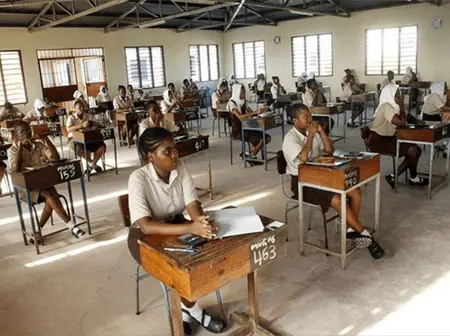
KCSE 2026 Officially Begins: 996,078 Candidates Sit Main Papers
KCSE 2026 Begins in Earnest With English and Chemistry as 996,078 Candidates Sit ExamsNAIROBI. The 2026 Kenya Certificate of Secondary Education (KCSE) examination officially got under way today, Monday 2nd November, as 996,078 candidates across the country settled at their desks for the first of the major written papers.
-
Unemployed Teachers on High Alert as TSC Recruitment Drive Set to Begin in Three Weeks
Unemployed Teachers Prepare as TSC Set to Launch Massive Recruitment Exercise in Three WeeksThousands of unemployed teachers across Kenya have started preparing for fresh employment opportunities as the Teachers Service Commission (TSC) moves closer to launching its November teacher recruitment and replacement exercise, with major recruitment activities expected to begin in about three weeks.
-
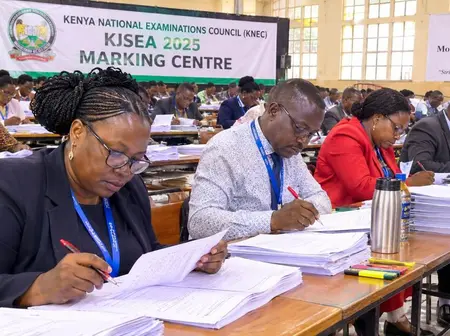
How Much Can You Earn Marking KJSEA? The Numbers, Script by Script
How Much Will KNEC Pay Examiners Marking KJSEA 2026? Ksh 35 Per Script, Ksh 1,500 Basic and Ksh 250 DailyWith the 2026 Kenya Junior School Education Assessment (KJSEA) concluded on Friday, October 30, thousands of teachers have turned their attention from the examination room to the marking centre.
-
Teachers’ Focus Shifts to Lucrative KNEC Marking Exercise as KJSEA 2026 Exams End
KNEC Activates KJSEA 2026 Marking as Examiners Prepare to Report to CentresWith the 2026 Kenya Junior School Education Assessment (KJSEA) concluded on Friday, October 30, the attention of thousands of teachers across the country has quickly moved from the examination room to the marking centre.
-

Kibabii University student arrested in suspected KCSE exam cheating syndicate
Detectives have arrested a Kibabii University student suspected of coordinating a KCSE examination cheating syndicate, as candidates across the country began their theory papers on Monday.John Odhiambo Opiyo was arrested in Bungoma after investigators allegedly traced the sharing of examination papers to him. Police recovered a mobile phone suspected to have been used to circulate the papers.