Category: Education

  • “If We Can Print Currency, Why Not Exams?” Ruto Celebrates Historic Achievement

    “If We Can Print Currency, Why Not Exams?” Ruto Celebrates Historic Achievement

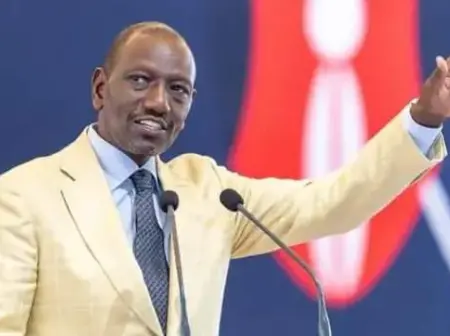
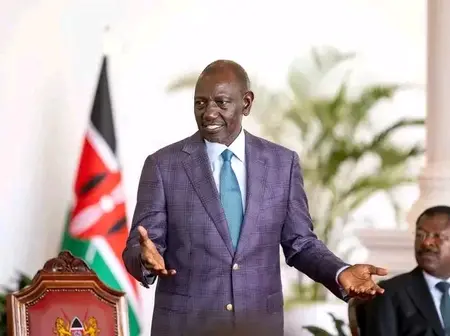
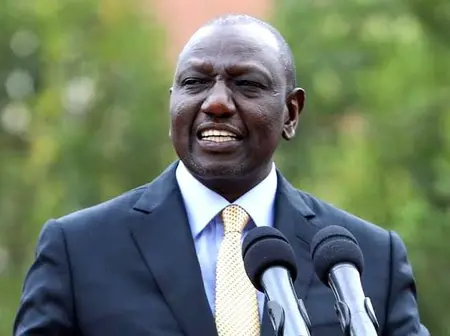
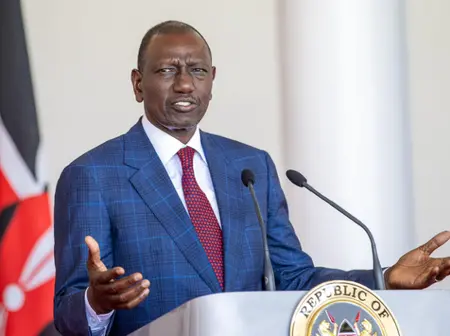
    President William Ruto has celebrated what he described as a historic achievement in Kenya's education sector after national examination papers were printed locally for the first time in 65 years.

    He compared the development to currency printing, arguing that if Kenya can produce its own currency, there should be no reason it cannot print examination papers.

    The President said the achievement demonstrated the country's ability to undertake important national projects without relying on foreign companies.

    For decades, the Kenya National Examinations Council (KNEC) relied on foreign security printing companies to produce national examination materials, with much of the work historically undertaken in the United Kingdom.

    The arrangement attracted criticism over the cost of printing and transporting examination papers, with education stakeholders questioning why the country continued outsourcing a service that could potentially be handled locally.

    The move was expected to strengthen local capacity and reduce dependence on foreign printing companies.

    Treasury Cabinet Secretary John Mbadi had also questioned the continued outsourcing of examination printing to London, arguing that the practice placed unnecessary financial pressure on taxpayers.

    However, printing examinations locally requires strict security arrangements to prevent leakage and protect the credibility of national assessments.

    The Kenya National Examinations Council has been strengthening examination security through improved storage facilities, smart electronic padlocks and other measures designed to prevent malpractice.

    The development comes at a time when the government is implementing major changes in the education sector through the Competency-Based Education system.

    The shift towards local examination printing could also create opportunities for Kenyan institutions and businesses involved in secure printing technology.

    Sources:https://www.facebook.com/share/1KAeNmszQ6/
  • Good News for Unemployed Teachers as Ruto Announces Major Recruitment Plan

    Good News for Unemployed Teachers as Ruto Announces Major Recruitment Plan

    The announcement came during his State of the Nation address, where the Head of State described education as an area where the government must ease the burden on Kenyans. For parents facing school expenses and teachers working in crowded classrooms, the proposed recruitment could offer relief.

    Ruto said preparations were underway to bring in the additional teachers next month. If implemented, the recruitment would expand the teaching workforce and could help address staffing gaps in schools.

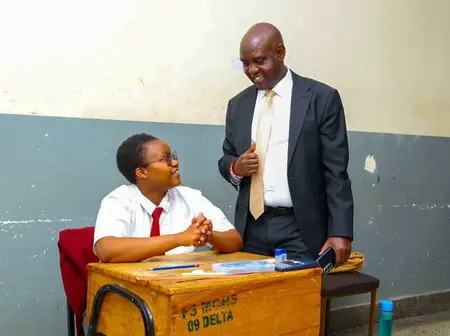
    The issue is important in public schools, where shortages can leave teachers handling large classes and pupils struggling to get individual attention. Parents also want their children to receive quality education without being left behind because of limited resources.

    However, the announcement is likely to raise questions about how recruitment will be carried out, which schools will benefit and whether the planned intake will match needs on the ground. Thousands of qualified unemployed teachers may also be watching closely, hoping the promise translates into employment.

    The statement has given education stakeholders something significant to discuss. Supporters may view the planned recruitment as a step towards improving learning conditions, while critics are likely to demand clear timelines and details on funding.

    Many people were left talking because the announcement touches families, learners and jobseekers at the same time. The incident sparked reactions online, with supporters appearing divided over whether the plan will bring lasting change.

    What happens next will depend on whether the government delivers on the proposed timeline. Do you believe recruiting 20,000 more teachers will meaningfully improve education in Kenya? Share your views in the comments.

  • TSC Reveals How New CEO Emerged as Top Candidate for the Position

    TSC Reveals How New CEO Emerged as Top Candidate for the Position

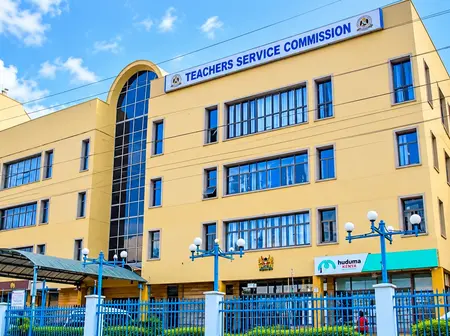
    The Teachers Service Commission (TSC) has appointed CPA Cheptumo Ayabei as its new Secretary and Chief Executive Officer, marking a significant milestone in the institution's leadership.

    Ayabei was appointed on Monday, November 16, 2026, after emerging as the best candidate among five shortlisted applicants who took part in the recruitment process.

    His appointment followed a lengthy selection exercise that had been interrupted twice by court orders, delaying the process of filling the top position at the commission.

    The new CEO brings extensive experience within the education sector's regulatory body, having joined the TSC in 1999. He has spent more than 27 years working at the commission, rising through different positions before becoming Director of Finance and Accounts.

    During his time at the institution, Ayabei gained experience in financial management and administration, areas expected to be important in overseeing the commission's operations.

    His appointment also carries historical significance, as he becomes the first person with a disability to head the Teachers Service Commission.

    The recruitment process attracted attention because of the importance of the CEO's office in managing the affairs of teachers and overseeing the implementation of education policies.

    The TSC Secretary and CEO serves as the commission's accounting officer and is responsible for coordinating its daily operations. The office also plays a central role in implementing decisions made by the commission.

    Ayabei's selection came after the commission assessed candidates based on their qualifications, professional experience and suitability for the position.

    The five shortlisted applicants were considered during the final stages of the recruitment exercise, with Ayabei eventually ranking highest.

    His appointment comes at a time when the commission continues to handle major issues affecting teachers, including recruitment, promotions, transfers and remuneration.

    The new chief executive is expected to provide administrative leadership as the TSC continues, carrying out its constitutional mandate of managing the teaching service in Kenya.

    LINK: https://www.tuko.co.ke/business-economy/647109-tsc-shares-career-achievements-ceo-explains-how-selected-top-job/?fbclid=IwZXh0bgNhZW0CMTEAcGRvZgRzcnRjBmFwcF9pZA80MDk5NjI2MjMwODU2MDkAAR_cyWxzBLKYwjjFQA7rEA2GXKVysj1MJtKgCIYPqDpNiaNBUKTOxFdSDl33fg_aem_ZOn8zC79aCgs2vRhhdHnew

  • Ruto’s Administration Makes History After 65 Years as First Government to Achieve This Milestone

    Ruto’s Administration Makes History After 65 Years as First Government to Achieve This Milestone

    President William Ruto has announced a major achievement in Kenya's education sector, revealing that national examination papers have been printed locally for the first time in 65 years.

    The President described the move as an important milestone, highlighting the government's efforts to strengthen local institutions and improve the country's ability to handle sensitive national responsibilities.

    For decades, the production of national examination papers has involved specialised security printing arrangements, with Kenya relying on external printing capacity for some of its examination materials.

    The latest development is expected to strengthen the country's examination management system while reducing dependence on foreign service providers.

    Examination papers require specialised security measures because of the importance attached to national assessments. Any improvement in their production and handling is therefore significant for learners, teachers, parents and education officials.

    The announcement comes at a time when the government is implementing various reforms aimed at transforming the education sector. These include changes in curriculum implementation, school funding and the administration of national assessments.

    Ruto's remarks have also drawn attention to the importance of investing in local technology, equipment and expertise to enable Kenyan institutions to undertake services that were previously outsourced.

    The development is likely to generate discussion among Kenyans, particularly education stakeholders who have followed the country's examination administration over the years.

    In a Facebook post circulating on Wednesday, November 18, the President reiterated the achievement, describing it as the first time in 65 years that examination papers had been printed in Kenya.

    The announcement adds to the government's efforts to showcase progress in building local capacity and strengthening national institutions.

    Kenyans will now be keen to see how the development improves examination security, efficiency and the overall management of national assessments in the coming years.

  • No exam irregularities recorded in Uasin Gishu so far in 2026 KCSE, says PS Ololtuaa

    No exam irregularities recorded in Uasin Gishu so far in 2026 KCSE, says PS Ololtuaa

    thumbnail

    Basic Education Principal Secretary John Ololtuaa has said there are no traces of examination irregularities in Uasin Gishu County in the ongoing 2026 Kenya Certificate of Secondary Education (KCSE) examinations.Speaking on Wednesday, November 18, 2026, at the Kapsoya Deputy County Commissioner's Office in Uasin Gishu County, Ololtuaa expressed confidence in the integrity of the national examinations.

  • State of the Nation Address: Ruto highlights local printing of KCSE, KJSEA examinations

    State of the Nation Address: Ruto highlights local printing of KCSE, KJSEA examinations

    State of the Nation Address: Ruto highlights local printing of KCSE, KJSEA examinations

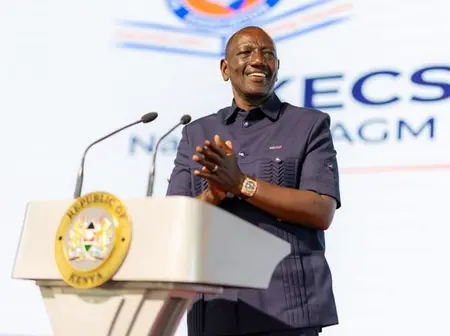
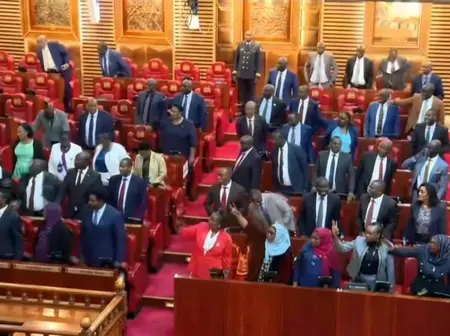
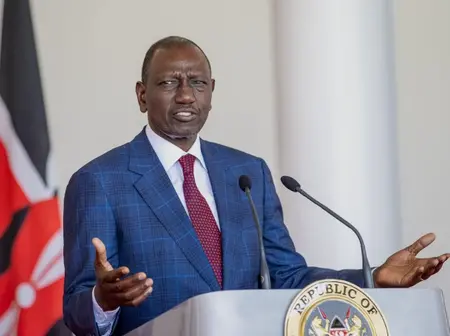
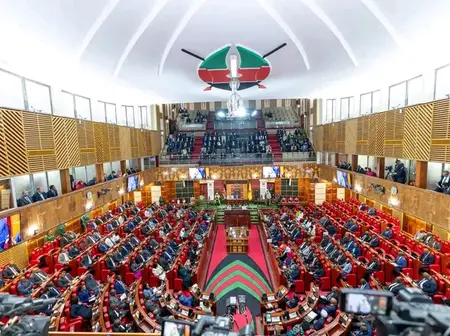
    President William Ruto has announced that Kenya printed national examination papers locally for the first time in 65 years, highlighting the development during his State of the Nation Address at Parliament on Wednesday, November 18, 2026.

    Ruto said the local production of examination papers was among the changes in the education sector, as candidates across the country continued sitting the 2026 Kenya Certificate of Secondary Education (KCSE) and Kenya Junior School Education Assessment (KJSEA).

    “For the first time in 65 years, examination papers were printed here in Kenya,” Ruto told a joint sitting of the National Assembly and Senate.

    The president also addressed the security arrangements during this year’s examinations, saying candidates had completed their papers without police officers being deployed at examination centres.

    “We have currently undertaken examinations without the presence of a single policeman. This is how it should be, examinations are a normal part of learning, not a security operation,” Ruto said.

    His remarks came as more than one million KCSE candidates sat Geography Paper 2 in the morning and Physics Paper 2 in the afternoon.

    The president said the examinations had been conducted in a calm and orderly atmosphere, contrasting the current arrangements with previous examination seasons when security officers were deployed at centres.

    The government has maintained that examination security measures should protect the integrity of national assessments without creating an intimidating environment for learners.

    The 2026 KCSE examinations began with oral, practical and low-candidature papers on October 19, while the main written examinations started on November 2.

    According to the Kenya National Examinations Council (KNEC) timetable, candidates sat Geography Paper 2 from 8 am to 10.45 am on Wednesday, followed by Physics Paper 2 between 2 pm and 4 pm.

    The examination period is scheduled to end on Friday, November 20, with candidates sitting Physics Practical.

    Education Cabinet Secretary Julius Migos Ogamba on Friday, January 9, 2025 during the release of KCSE 2025: PHOTO/@HonJuliusMigos/X

    This year’s KCSE examinations have attracted 1,048,355 candidates, the highest number in the history of the assessment.

    Education Cabinet Secretary Julius Ogamba said the figure represented a 5.27 per cent increase from the 995,860 candidates registered in 2025.

    The candidates are sitting their examinations in more than 10,000 centres across the country, requiring the deployment of thousands of personnel to oversee the exercise.

    KNEC planned to engage 10,765 centre managers, 12,274 supervisors, 57,432 invigilators and 21,388 security officers during the examination period.

    The council also introduced integrity measures, including restrictions on mobile phone use by candidates and examination personnel, to prevent examination irregularities.

    The 2026 KCSE candidates form the second-last cohort under the 8-4-4 education system, with the final group expected to sit the examinations in 2027 as the country completes its transition to Competency-Based Education (CBE).

    The transition has also brought changes to the assessment of learners in junior school, with the Kenya Junior School Education Assessment (KJSEA) forming part of the new education framework.

    Ruto’s address brought attention to the administration of both KCSE and KJSEA examinations, particularly the local printing of papers and changes in security arrangements.

    The examination season has also faced challenges, including reports of candidate deaths, absenteeism in some areas and concerns raised earlier over payments for teachers involved in administering the tests.

    With the KCSE examinations approaching their conclusion, the President used the local printing milestone and the conduct of the assessments to highlight developments in the country’s examination system.

  • Ruto Announces Plans to Hire 20,000 More Teachers Next Month After Recruiting 100,000

    Ruto Announces Plans to Hire 20,000 More Teachers Next Month After Recruiting 100,000

    The announcement comes after the government recruited approximately 100,000 teachers, a move aimed at strengthening the education sector and improving the teacher-to-pupil ratio in public schools.

    Speaking about the government's plans, Ruto indicated that the additional recruitment would provide more employment opportunities for qualified teachers while helping schools address persistent staffing challenges.

    The proposed recruitment is also expected to support the implementation of the Competency-Based Education (CBE) curriculum, which requires adequate teaching personnel to ensure effective learning.

    Teacher shortages have remained a major concern in several parts of the country. Some schools have struggled with inadequate staffing, particularly in areas experiencing high student enrolment.

    The Teachers Service Commission (TSC) is responsible for recruiting and deploying teachers in public schools. The commission also oversees their professional development and management.

    The planned recruitment could offer an opportunity to thousands of unemployed trained teachers who have been waiting for employment opportunities in the public education sector.

    However, prospective applicants will be expected to follow the official recruitment procedures and meet the qualifications outlined by TSC when the vacancies are announced.

    If implemented as announced, the additional 20,000 positions would further expand the number of teachers employed in public schools.

    The recruitment details, including the application dates, distribution of vacancies, and specific requirements, are expected to be communicated through the relevant government channels.

    The development will be closely followed by unemployed teachers and education stakeholders across the country.

    https://www.facebook.com/share/p/1J1H91czkK/

  • Ruto Highlights Major Changes in Kenya’s National Examination Process

    Ruto Highlights Major Changes in Kenya’s National Examination Process

    President William Ruto has highlighted changes in the management of national examinations saying examination papers have been printed locally for the first time in 65 years.

    In a statement shared on November 18, 2026, the President said this year examinations had been conducted in a calm and orderly atmosphere. He contrasted the process with previous years when examination centres were associated with heavy security deployments.

    Ruto said candidates had undertaken their examinations without the presence of a single police officer. He described this as how examinations should be handled saying they are a normal part of learning and should not be treated as a security operation.

    The President remarks draw attention to two issues local printing of examination papers and security arrangements during national examinations. Printing the papers in Kenya marks a change from the practice of the past 65 years according to his statement.

    His comments are likely to attract interest from candidates, parents, teachers and education officials who follow the examination process closely. National examinations remain important because students rely on a fair and orderly process to complete this stage of their education.

    Ruto did not provide further details about the local printing arrangements or explain how security was coordinated at individual examination centres.

  • Ruto Says Kenya Printed National Examination Papers Locally for First Time in 65 Years

    Ruto Says Kenya Printed National Examination Papers Locally for First Time in 65 Years

    President William Ruto has highlighted changes in the administration of national examinations, announcing that Kenya printed its examination papers locally for the first time in 65 years.

    Speaking during his State of the Nation Address in Parliament on Wednesday, November 18, 2026, Ruto said the country had achieved the milestone as part of efforts to strengthen local capacity and improve the management of national examinations.

    The President also praised the manner in which the 2026 examinations were conducted, saying candidates completed their papers in a calm and orderly environment without the anxiety and tension associated with previous years.

    He further stated that the government had moved away from the traditional approach of deploying heavily armed police officers to oversee examination activities, arguing that the previous system subjected learners to unnecessary pressure.

    “We have undertaken exams without the presence of a single policeman,” Ruto said.

    The President said the changes had helped create an environment where learners could concentrate on their examinations without feeling intimidated by security personnel.

    For decades, the administration of national examinations in Kenya involved extensive security arrangements, with police officers deployed to oversee the transportation, storage and distribution of examination materials.

    The government has been implementing reforms aimed at changing how national examinations are managed, including reducing the direct involvement of security officers in examination rooms and strengthening accountability in the handling of examination materials.

    The local printing milestone also represents a major development in the country's examination management, with the government seeking to build domestic capacity in the production of sensitive national documents.

    Ruto's remarks come amid ongoing education reforms under the Competency-Based Education system, which has introduced new assessment structures and changed how learners' progress is evaluated.

    The President used the State of the Nation Address to highlight the developments as part of his administration's achievements in the education sector.

    His comments are expected to draw attention from parents, teachers and education stakeholders, particularly regarding the future management of national examinations and efforts to protect the integrity of the assessment process.

    The Kenya National Examinations Council (KNEC) remains responsible for administering national examinations and coordinating the assessment process across the country.

    https://www.facebook.com/share/v/19jgTviqu8/

  • Not a Single Police Officer : Ruto Makes Big Revelation About National Exams.

    Not a Single Police Officer : Ruto Makes Big Revelation About National Exams.

    President William Ruto has spoken about the conduct of national examinations in Kenya, saying the country has managed to administer exams without the presence of a single police officer.

    The President made the remarks while discussing the government's efforts to improve the education sector and ensure that national examinations are conducted smoothly.

    According to Ruto, the absence of police officers during the examinations shows that the government has taken steps to strengthen the examination process and promote discipline among learners and examination officials.

    For many years, the administration of national examinations has attracted attention because of concerns about examination cheating, security and possible interference. Security officers have often been involved in supporting the process and helping maintain order in areas where examinations are conducted.

    Ruto's statement is therefore likely to attract public discussion, especially among parents, teachers and education stakeholders who have followed changes in the examination system.

    The government has repeatedly spoken about its commitment to protecting the credibility of national examinations. Ensuring that every learner gets a fair opportunity to complete their papers without interference remains an important part of the process.

    The President's remarks also raise questions about the measures that have been put in place to make examination administration more secure and reliable without relying on police officers.

    Education is one of the key sectors that directly affects the country's future. Parents want their children to sit examinations in a peaceful environment, while teachers expect the results to reflect the learners' actual performance.

    However, the success of such an arrangement depends on proper supervision, accountability and the ability of examination officials to respond to any challenges that may arise.

    Ruto's statement has added another talking point to the ongoing national conversation about education reforms and the future of examinations in Kenya.

    As Kenyans react to his remarks, attention will remain on how the government continues to protect the integrity of national examinations.

    Source:https://www.facebook.com/share/19tmNWiXd4/