President William Ruto has announced plans to recruit and absorb all teachers employed by Boards of Management (BOM) in public schools into the government payroll, a move that could end years of uncertainty for thousands of teachers who have been working on locally funded contracts.
Ruto argued that paying teachers should be the responsibility of the government, insisting that parents should not be forced to finance the salaries of teachers hired by schools to address staffing shortages.
He said the planned transition would ensure that teachers currently employed through Boards of Management are brought under the national government's payroll, although he did not provide a specific timeline for the recruitment exercise or explain the criteria that would be used to absorb them.
The move is expected to bring relief to BOM teachers, many of whom have served in public schools for years while earning relatively low salaries compared to teachers employed by the Teachers Service Commission (TSC).
Their employment has largely depended on individual schools' financial ability to pay them, with parents often contributing money to sustain their contracts.
The announcement comes amid growing pressure on the government to address teacher shortages and improve employment terms for educators, particularly those working under temporary arrangements.
Ruto also reiterated his administration's commitment to expanding the country's teaching workforce, saying the government had already employed 100,000 teachers in recent years and was planning to recruit an additional 20,000.
Heartbreaking scenes at Chuka University as a graduand breaks down in tears after his family and friends refuse to attend his graduation. He sat alone, watching other graduands celebrate with their loved ones.
The emotional moment was captured on video on Friday, November 21, 2026, during the university's graduation ceremony. The video has since gone viral on Facebook, Instagram and TikTok, leaving many Kenyans touched and divided.
In the video, the young man is first seen in photos smiling in his black graduation gown, yellow stole, cap, and a shiny blue tinsel lei around his neck. He looks proud and happy, like any other graduand on his big day.
He sits with his legs stretched out, resting his head on his hand, looking dejected. He wipes his face as tears flow. Around him, other graduands are laughing, hugging their parents, taking photos, and celebrating with their families. He is just watching them.
According to the person filming, the graduand said his parents refused to attend his graduation despite him travelling from far away. He said his family and friends failed to show up, leaving him to celebrate alone.
The video has sparked a huge conversation online. Many Kenyans have expressed sympathy and shared their own painful stories.
Some said they also graduated alone. One person said this was exactly what happened to them in November 2024. Another said they went alone and were happy, saying family presence is not a must.
Others offered comfort, telling him to be strong, to give himself courage, and to remember that the degree itself is the biggest achievement. Some asked for his contact so they could buy him flowers or lunch.
The students were travelling from Tuum towards Maralal when the bus came under attack in the Bukoi area of Samburu North, according to police.
The vehicle, a Mitsubishi Fuso bus, was reportedly shot at from the driver's side by an unknown number of gunmen.
Police said three bullets struck the bus during the attack, leaving two students injured.
The victims were first taken to Murijo Catholic Dispensary for emergency treatment before being referred to Samburu County Referral Hospital for specialised medical care. They were reported to be in stable condition.
Officers from Marti Police Station and General Service Unit (GSU) personnel stationed in Marti and Murijo responded to the incident and launched a security operation in the surrounding area.
The bus was later escorted to Maralal by security officers. Police noted that it had not been under security escort at the time of the shooting.
Security patrols were intensified following the attack, with authorities reporting that the area remained relatively calm as officers continued monitoring the situation.
No arrests had been made by Saturday afternoon, as investigations into the shooting continued.
The latest attack has renewed concerns over the safety of students and other travellers using roads in areas affected by insecurity, particularly where armed criminal groups remain active.
Former Education Cabinet Secretary (CS) Jacob Kaimenyi has called on the government to simplify and improve the university funding model, warning that financial barriers should not prevent deserving students from accessing higher education.
Speaking during a graduation ceremony at Moi University in Kesses, Uasin Gishu County, on Saturday, November 21, 2026, Kaimenyi said ongoing reforms in the higher education sector must address funding gaps and ensure that students from financially disadvantaged backgrounds are not left behind.
He urged lawmakers to ensure that the proposed legislation on higher education reforms provides a lasting solution to challenges facing students seeking government support.
“We are reforming the university education or higher education sector in this country. That Bill which is in Parliament should be able to address that so that there is no child who will miss education for want of funds,” Kaimenyi said.
The former Education CS described the current higher education financing system as complex, calling for improvements to make it easier for students to access financial assistance.
He appealed to the government to review the funding mechanisms used across universities and other institutions of higher learning, saying students should not be forced to discontinue their studies because they cannot afford the cost.
“When you look at the funding model of higher education lending, it’s a bit complex, and I’m calling upon the government on behalf of all the students who are in our various institutions of learning that funding models must be improved,” he said.
His remarks come amid continued debate over the implementation of the student-centred funding model introduced in 2023, which combines government scholarships and loans based on students’ assessed financial needs.
The call for reforms comes as projections for the 2026/2027 financial year indicate a significant gap between scholarship requirements and available government allocations.
Figures reported in October 2026 showed that scholarship requirements were projected at Ksh47 billion against an allocation of Ksh30.1 billion, leaving a shortfall of Ksh16.9 billion.
The projected deficit has raised concerns about whether available resources will adequately support the growing number of students seeking government assistance.
The Universities Fund projected that scholarship beneficiaries would increase to approximately 608,879 in the 2026/2027 financial year, placing additional pressure on public finances.
The funding debate also comes as public universities grapple with mounting financial obligations that threaten their operations.
Reported government figures placed public universities’ pending bills at Ksh100.3 billion as of January 31, 2026, including unpaid salaries, statutory deductions and supplier bills.
The institutions must also meet operational costs, maintain infrastructure and support teaching and research activities.
Kaimenyi’s remarks underscore the need for reforms that match the government’s commitment to widening access to higher education with adequate financial resources.
For students and their families, the effectiveness of the funding system will be measured by whether financial assistance reaches those who need it most and enables them to complete their studies without avoidable interruptions.
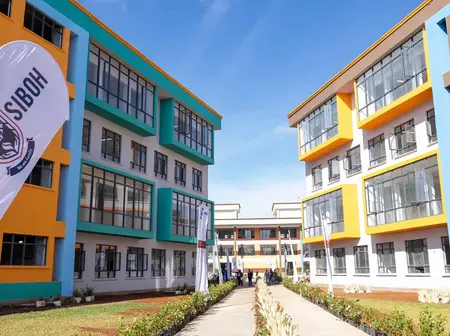
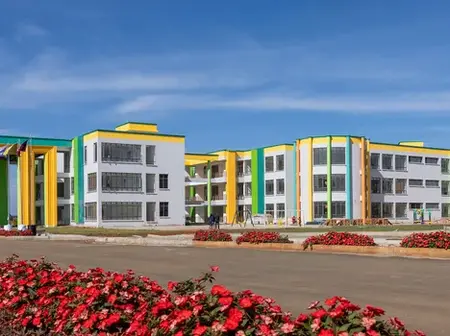
Parents planning to enrol their children at the newly established SIBOH School and Sports Academy in Eldoret now have a clearer picture of the financial commitment required. The institution, launched by First Lady Rachel Ruto, has attracted public attention following the announcement of its fee structure.
According to the information shared, the school’s termly fees range between KSh 90,000 and KSh 370,000. The difference in charges suggests that the amount parents will pay depends on the particular programme or level of education selected.
The fees have already generated interest, especially among parents who would like to understand the school's learning environment, facilities and available opportunities before making admission decisions.
A Focus on Education and Sports
One of the notable features of SIBOH School and Sports Academy is its combination of education and sports. This approach highlights the importance of developing children's academic abilities while also identifying and nurturing their talents outside the classroom.
Sports play an important role in children's development. They encourage discipline, teamwork, confidence and physical fitness. Combining these activities with classroom learning can help students develop skills that may benefit them throughout their lives.
However, parents will also be interested in understanding the school's academic programmes, teaching standards, sports facilities and other services before committing financially.
Parents Have Important Decisions to Make
With fees reaching KSh 370,000 per term, the institution falls within a considerable financial commitment for many Kenyan households.
The school's January 2027 opening will provide an opportunity for interested families to learn more about its operations and educational approach.
Ultimately, the success of SIBOH School will depend not only on its facilities or public profile but also on the quality of education, discipline and opportunities it provides to learners.
What is your opinion about the fees charged by SIBOH School and Sports Academy? Do you think the investment is reasonable for a school combining academics and sports?
Comment, share your views and follow for more updates.
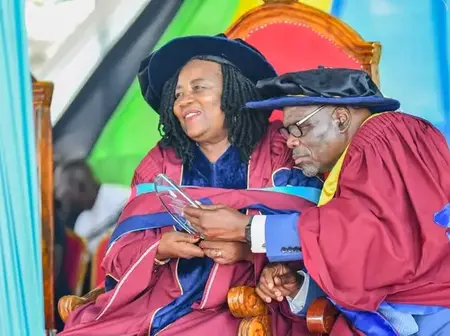
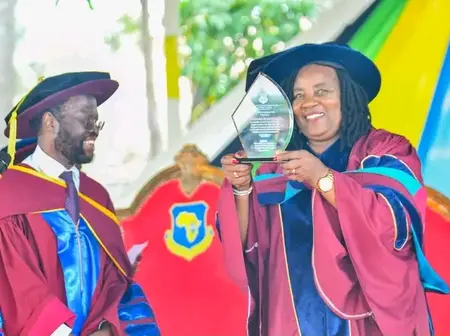
In a statement shared following the ceremony, Ida expressed her honour at being invited to address the graduating students, acknowledging the dedication, determination and resilience that had enabled them to reach the end of their academic journey.
Her message went beyond congratulating the graduates, focusing on the responsibility that comes with acquiring education and the importance of using knowledge to make a meaningful contribution to society.
According to Ida, graduating from university should not simply be viewed as an opportunity to celebrate academic certificates. Instead, it should mark the beginning of a new chapter in which graduates put their acquired knowledge, professional skills and individual talents into practice.
Her remarks highlighted the wider purpose of education, particularly at a time when young people are expected to apply their expertise, creativity and innovation in different sectors of the economy.
The ceremony brought together graduating students, university officials and other guests who witnessed the institution's latest group of learners celebrate years of academic commitment.
Photographs shared alongside Ida's statement captured moments from the colourful graduation ceremony, including interactions between university representatives and the keynote speaker.
Her message also served as encouragement to graduates preparing to enter the competitive employment market, pursue further studies or establish their own professional ventures.
As the Class of 2026 begins its next chapter, the challenge remains to turn academic qualifications into practical solutions that improve people's lives.
What do you think about Dr Ida Odinga's message to the graduates, particularly her call for education to transform society? Share your views, remarks and comments in the comment section below.
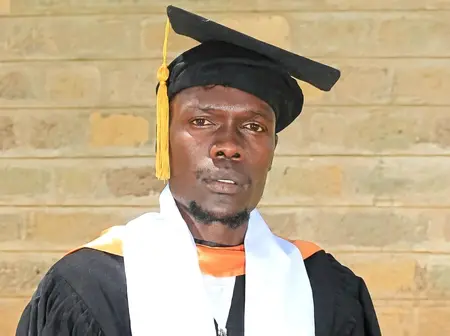
The 25-year-old has now completed the journey and graduated from Kibabii University with a Bachelor of Arts degree in Journalism and Mass Communication.
Chesum joined the university in August 2022 with a clear ambition of building a career in journalism. However, financing his studies was a major challenge. Instead of abandoning his dream, he took up a night security job and used his earnings to pay tuition and meet his daily expenses.
His schedule was demanding. After spending the night guarding premises, he would head to class in the morning. Often, he struggled to remain awake during lectures because of exhaustion.
There were moments when the pressure became overwhelming. Bills continued to pile up while he tried to balance work and school. However, Chesum kept reminding himself why he had started the journey.
During university holidays, he also volunteered at a local community radio station without pay. His goal was to gain practical journalism experience and improve his skills.
The unpaid opportunities eventually helped him get into the media industry. He is now working at Stewards Media, having transitioned from a volunteer trainee to a practising media professional.
His graduation on November 20, 2026, marked the end of years of sleepless nights and financial struggles.
Looking back, Chesum said every experience shaped his journey. From working in the cold during night shifts to volunteering at the radio station, he believes the sacrifices were worth it.
He has encouraged other young people facing financial difficulties while pursuing education not to give up.
Chesum now hopes to continue developing his journalism career. He also dreams of joining the Kenya Defence Forces as a communication officer.
For Chesum, the graduation gown represents more than an academic achievement. It is a symbol of the years he spent working through the night, attending classes during the day and refusing to abandon his dream.
His journey from a night guard to a trained journalist is a reminder that difficult beginnings do not have to determine how a person’s story ends.
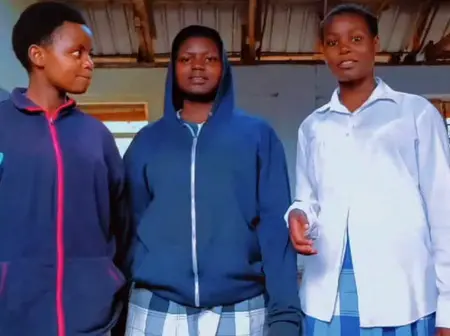
In the video, the excited girls are seen recording themselves as they celebrate reaching the end of their secondary school journey. Their remarks suggest they are looking forward to a new chapter after spending years in school.
One of the statements that stood out was their declaration, “Tumemaliza shule, wababaz mjipange,” which loosely translates to telling men to get ready now that they have completed school.
The girls also directed a cheeky warning at women, urging them to keep an eye on their partners because they were coming. Their playful remarks added to the excitement captured in the recording.
The video reflects the excitement that often accompanies the completion of national examinations, as students look forward to a break from classroom routines, friendships and new experiences outside school.
For many candidates, finishing KCSE marks an important milestone after years of preparation, examinations and academic pressure. It also opens the door to different opportunities, including further education, training and career exploration.
While the girls appeared to be enjoying the moment and expressing themselves humorously, their recording has drawn attention because of the confidence and cheeky nature of their remarks.
As the candidates celebrate completing their examinations, many will now be waiting for their results and considering the next steps in their academic journeys.
Parents planning to enrol their children at President William Ruto’s newly launched SIBOH School and Sports Academy in Eldoret will have to prepare financially after the institution unveiled its fee structure, revealing the cost of education across different learning levels.
The school, which has attracted public attention following its launch, has outlined charges for various classes, with fees ranging from KSh90,000 for playgroup pupils to more than KSh300,000 for learners in the senior classes.
The fee structure provides parents with an indication of the financial commitment required to secure admission for their children at the institution.
According to the details released, parents with children joining playgroup will pay KSh90,000, while those seeking admission for learners in senior classes will face significantly higher charges, exceeding KSh300,000.
However, tuition fees are not the only expenses families will need to consider when planning to enrol their children.
The institution has also listed additional charges covering essential services and other school requirements.
These include boarding fees, transport, medical cover and other related expenses that could increase the overall cost of education.
This means parents will need to carefully examine the full fee structure before making admission decisions, particularly those intending to have their children reside within the school.
The unveiling of the charges comes after SIBOH School and Sports Academy was officially launched by President Ruto, placing the institution in the spotlight and generating interest among parents and members of the public.
The school combines academic education with sports, an approach that seeks to provide learners with opportunities to develop their talents alongside classroom learning.
Its fee structure is expected to be an important consideration for families assessing whether the institution fits their educational priorities and financial capabilities.
With some senior classes attracting fees exceeding KSh300,000 before additional expenses are considered, the institution is likely to attract considerable discussion over the cost of private education in Kenya.
The former Prime Minister Raila Odinga's widow expressed her honour at being invited to address the graduating class of 2026, describing the occasion as an important moment for the institution, the students.
She encouraged the graduates to look beyond academic certificates and focus on applying the knowledge, skills they had acquired to improve society.
According to Ida, education carries a greater responsibility than simply obtaining qualifications, noting that graduates should use their talents to create meaningful change in their communities.
The ambassador also wished the graduates success as they transitioned from university life into different professional and personal journeys.
Governor Nyong'o was among the leaders who attended the ceremony, which brought together university officials, families, invited guests and students to celebrate the academic achievements.
The 20th graduation ceremony marked another milestone for Great Lakes University of Kisumu, as the institution continued to recognise students who had completed various academic programmes.
Ida encouraged the Class of 2026 to make a positive contribution wherever their careers take them.