Author: lincor

  • 2027 Presidential Race: New Poll Shows William Ruto Likely to Defeat Kalonzo, Sifuna

    2027 Presidential Race: New Poll Shows William Ruto Likely to Defeat Kalonzo, Sifuna

    PAY ATTENTION:TUKO is in WhatsApp Channels now! Subscribe and read news in your favourite messenger.

    Harry Ivan Mboto is a Current Affairs and Politics Editor at TUKO.co.ke, covering political and world news. Mboto has five years of journalism experience and joined TUKO.co.ke in 2024

    President William Ruto has maintained his lead in the 2027 presidential race, with a new national opinion poll placing him ahead of Kalonzo Musyoka and Edwin Sifuna.

    Ruto likely to beat Kalonzo, Sifuna

    According to a survey by Swiss Poll International, Ruto commands 37% support among respondents, giving him a nine-percentage-point lead over his closest challenger, Kalonzo Musyoka, who has garnered 28%.

    Nairobi Senator Edwin Sifuna occupies the third position with 15% support, according to the findings released following interviews conducted between November 5 and November 10, 2026.

    2027 General Election: Kalonzo Musyoka emerges as most favourite opposition flagbearer, new poll

    PAY ATTENTION:TUKO is in WhatsApp Channels now! Subscribe and read news in your favourite messenger.

    Former deputy president Rigathi Gachagua and former Interior Cabinet Secretary Fred Matiang’i are tied at 6% each, while Kiharu MP Ndindi Nyoro has attracted 4% support.

    Other presidential hopefuls collectively account for 1% of respondents, while 3% remain undecided about their preferred candidate.

    The findings position Ruto ahead of the other potential contenders, with Kalonzo recording the highest support among the opposition figures included in the survey.

    The poll was conducted through telephonic interviews involving 4,113 respondents. However, the published findings did not provide details on the survey's margin of error or the distribution of respondents across the country.

    The latest findings come amid growing political realignments and discussions over who will carry the opposition's presidential ticket in the August 2027 General Election.

    In a separate national opinion poll released by TIFA Research on Thursday, November 12, Ruto and Sifuna emerged as joint frontrunners, each commanding 31% support.

    Kalonzo followed with 9%, while Fred Matiang'i and Rigathi Gachagua recorded 5% and 4%, respectively. TIFA's survey involved 2,036 respondents interviewed between October 26 and November 5 across all 47 counties.

    Source: TUKO.co.ke

  • Trending video shows Maasai men destroying UDA caps after chaos rocks Maa event attended by Ruto

    Trending video shows Maasai men destroying UDA caps after chaos rocks Maa event attended by Ruto

    thumbnail

    A trending video has captured two Maasai men using a machete to slice a United Democratic Alliance (UDA)-branded cap into pieces in the aftermath of chaotic scenes that disrupted the Maa Cultural and Tourism Festival attended by President William Ruto in Narok County.The footage shows the two men standing behind a tent at the festival venue, where several white plastic chairs had already been smashed, as they hold the political party’s cap and repeatedly cut through it with a sharp machete.

  • Probe as two-year-old boy found dead at church compound in Kirinyaga

    Probe as two-year-old boy found dead at church compound in Kirinyaga

    Detectives in Kirinyaga county have launched investigations after the body of an unidentified two-year-old boy was found at a church compound in Karagara Village, Mwea East Subcounty.

    The body was discovered on Thursday, November 12, within the compound of a church, which was reportedly unguarded.

    Police officers who visited the scene found the body of the boy lying within the church compound.

    A preliminary examination revealed that the child's head had been wrapped in a red cloth. He also had visible injuries to the head and face, suspected to have been inflicted using a blunt object.

    Blood was reportedly oozing from the child's nose.

    Police processed and documented the scene before moving the body to Kerugoya County Referral Hospital Mortuary, where it is awaiting identification and a postmortem examination.

    Investigations are ongoing to establish the circumstances surrounding the child's death and identify those responsible.

    Meanwhile, a 70-year-old man who was seriously assaulted by unknown assailants in Tigania West, Meru county, has died while receiving treatment at St Theresa Mission Hospital in Kiirua.

    Lawrence Ntabuku died on November 12 at around 4 pm, nearly a month after the assault, which was initially reported to police on October 19, 2026.

    According to police, Ntabuku succumbed to injuries suspected to have been inflicted during the attack.

    Police officers visited the hospital following reports of his death, where the doctor on duty confirmed the death and indicated that injuries sustained during the assault may have contributed to it.

    His body was moved to the mortuary pending a postmortem examination.

    Police are pursuing investigations into the assault to establish the circumstances surrounding the attack and identify those responsible.

  • Uganda wins bid to host 2027 CAVB Zone V Club Championship

    Uganda wins bid to host 2027 CAVB Zone V Club Championship

    thumbnail

    Listen to articleThe country's first hosting experience in the current cycle was in 2025, when matches were played at Lugogo Indoor Stadium and Old Kampala Sports Arena in the capital, Kampala.Uganda has won the bid to host the 2027 Confederation of African Volleyball (CAVB) Zone V Club Championship, the president of the Uganda Volleyball Federation (UVF) said on Friday.

  • Neighbour Recounts How Agent Killed Tenant with a Hammer Over Ksh1,500 Rent

    Neighbour Recounts How Agent Killed Tenant with a Hammer Over Ksh1,500 Rent

    thumbnail

    A neighbour has narrated how a dispute over Ksh1,500 in unpaid rent turned fatal when a house agent attacked Maurice Otieno with a hammer, resulting in his death.Addressing the media on November 14, Margaret Mutheu said the agent had initially visited Maurice Otieno Sande’s house to demand the outstanding rent.

  • Nema outlines safeguards for used electric car imports at COP31

    Nema outlines safeguards for used electric car imports at COP31

    Kenya has outlined strict environmental and quality safeguards governing the importation of used electric vehicles as it seeks to accelerate the transition to clean transport without exposing the country to new environmental risks.

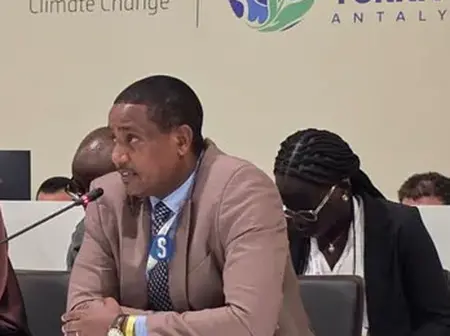
    National Environment Management Authority (Nema) Director General Mamo Mamo said Kenya welcomes used EV imports as part of efforts to reduce transport-related emissions, but warned that the vehicles must meet stringent quality standards and have clear end-of-life battery management plans.

    Speaking during a high-level side event organised by the United Nations Environment Programme (UNEP) and Naspers-Prosus at the ongoing United Nations Climate Change Conference (COP31) in Antalya, Türkiye, Mamo said the transition to electric mobility must be accompanied by robust environmental safeguards.

    He noted that electric vehicles can reduce lifecycle emissions by up to 70 per cent compared with conventional petrol-powered vehicles, making them an important technology in efforts to decarbonise the transport sector.

    However, he emphasised that imported vehicles must undergo verified quality checks at the border and meet clear requirements for the safe management of batteries once they reach the end of their useful life.

    A key part of Kenya's regulatory framework is the Sustainable Waste Management (Extended Producer Responsibility) Regulations, 2024, which place legal responsibility on producers and importers for managing waste generated by products they introduce into the market.

    “Under these regulations, there is mandatory registration. All producers and importers of batteries must register with Nema,” Mamo said.

    He added that importers must also belong to an approved Extended Producer Responsibility (EPR) scheme.

    “Any entity introducing a battery onto the Kenyan market bears full responsibility for its end-of-life management,” he said.

    The framework is intended to ensure that battery waste is properly collected, transported, reused or recycled rather than becoming an environmental and public health hazard.

    Despite the regulatory framework, Nema acknowledged that Kenya faces practical challenges in managing the growing electric mobility sector.

    The country has a shortage of specialised facilities capable of safely collecting, transporting, reusing and recycling large volumes of lithium-ion batteries.

    Other challenges include the uneven distribution of charging infrastructure and limited access to reliable local data on battery health, vehicle mileage and vehicle history.

    The safeguards come as Kenya seeks to reduce emissions from a transport sector heavily dependent on fossil fuels.

    The country's economic expansion, driven by agriculture, services, construction and manufacturing, has increased demand for motorised transport, contributing to rising greenhouse gas emissions.

    More economic activity also means increased movement of people and goods, further driving demand for petrol and diesel-powered vehicles.

    The transport sector consumes about 72 per cent of the petroleum products imported into Kenya, highlighting its dependence on fossil fuels.

    In 2015, transport accounted for 13 per cent of the country's greenhouse gas emissions, a figure projected to rise to 17 per cent by 2030, largely due to population growth and industrialisation.

    To address this challenge, the government has developed an e-mobility policy that identifies electric vehicles as a key decarbonisation technology in its ambition to achieve net-zero carbon emissions by 2050.

    Electric mobility refers to the use of electric power for transportation and covers a range of vehicles, including cars, buses, two-wheelers and three-wheelers.

    The wider e-mobility category also encompasses trains, trucks, ships, ferries and off-road vehicles.

    Through stricter import controls, producer accountability and improved battery waste management, Kenya aims to develop a circular electric mobility ecosystem that supports emissions reduction while protecting public health and the environment.

  • Kalonzo: I will never join Ruto’s government, ready to sacrifice for opposition unity

    Kalonzo: I will never join Ruto’s government, ready to sacrifice for opposition unity

    Wiper leader Kalonzo Musyoka has ruled out joining President William Ruto's administration, declaring that he will remain in the opposition even if he is not selected as its presidential candidate for the 2027 General Election.

    Kalonzo said he was prepared to sacrifice his presidential ambitions once again to support a single opposition candidate, insisting that unity and the interests of Kenyans must take precedence over individual political ambitions.

    He spoke on Saturday at Thegu Ward in Kieni Constituency, Nyeri county, during the burial of Mama Eunice Nyangari Gachagua, the elder sister of Democracy for the Citizens Party (DCP) leader Rigathi Gachagua.

    He was accompanied by DAP-Kenya leader Eugene Wamalwa, Linda Mwananchi Movement leader Edwin Sifuna, Ukombozi Coalition chairman and Siaya Governor James Orengo, Chief Justice Emeritus David Maraga and other opposition leaders.

    The leaders condoled with the Gachagua family before reaffirming their commitment to presenting a joint opposition presidential candidate in 2027.

    Kalonzo said he had previously put aside his presidential ambitions in support of the late Raila Odinga for about 15 years and was prepared to make a similar sacrifice for the sake of opposition unity.

    "My word is my bond. Unity is not negotiable. The interests of Kenyans must come before our individual ambitions," he said.

    He dismissed suggestions that he could negotiate his way into Ruto's government if the opposition settled on another candidate.

    "I will never join Ruto's administration, whatever the outcome of our consultations. Those speaking on my behalf are speaking for themselves," Kalonzo said.

    He also recalled standing with Gachagua during his impeachment, saying he would continue supporting the former Deputy President and the wider GEMA community.

    Kalonzo reminded residents that Nyeri was the home of former President Mwai Kibaki, under whom he served as Vice President.

    He credited Kibaki with championing the 2010 Constitution and Vision 2030, saying both were among his greatest contributions to the country.

    "We will do whatever it takes to uphold the rule of law and constitutionalism and to deliver Vision 2030," he said.

    The Wiper leader also introduced what he termed the Kenya at 100 conversation, urging political leaders to consider the country's long-term future beyond electoral contests.

    He noted that Kenya would mark its centenary in 2063, meaning children born this year would be 36 when the country turns 100.

    "Let us start the Kenya at 100 conversation: the children born this year will be 36 when Kenya turns 100 in 2063. What Kenya are we leaving them?" he posed.

    Kalonzo weighs in on Sudan tea ban

    Kalonzo also welcomed Sudan's decision to lift its ban on Kenyan tea, but criticised the circumstances that led to the trade dispute, saying farmers and exporters had borne the economic consequences of the government's foreign policy decisions.

    Sudan imposed the ban in March 2025 after Nairobi hosted a meeting at which the Rapid Support Forces (RSF) and their allies signed a charter for a parallel government in Sudan.

    Khartoum described the move as interference in its internal affairs.

    The ban shut Kenyan tea out of a market estimated to be worth about Sh9 billion annually for 20 months. Tea valued at more than Sh3.1 billion was also in transit or awaiting shipment when the restrictions took effect.

    Sudan's Sovereignty Council approved the lifting of the ban on November 2, followed by the Cabinet on November 5. Ministerial Order No. 25 was subsequently signed on November 8.

    Kalonzo said he had personally appealed to the Sudanese government to lift the restrictions during a visit to the Sudanese Embassy in Nairobi on August 6, citing the interests of Kenyan farmers and exporters.

  • Uasin Gishu steps up fight against HIV, GBV and teenage pregnancies

    Uasin Gishu steps up fight against HIV, GBV and teenage pregnancies

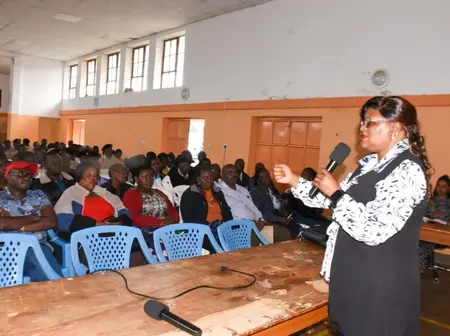
    Uasin Gishu County has stepped up efforts to address new HIV infections, gender-based violence and teenage pregnancies through a multi-sectoral approach bringing together health officials, community leaders and national government representatives.

    The county government, in partnership with the National Syndemic Diseases Control Council (NSDCC), convened a forum on Friday to review the county's HIV and tuberculosis situation, assess emerging challenges and strengthen community-led interventions targeting vulnerable groups, particularly adolescents and young women.

    Officials at the meeting called for coordinated and sustained action, warning that progress against HIV and related health challenges would remain limited without the involvement of communities and different government departments.

    County Executive Committee Member for Health Services Janet Kurgat challenged men to speak out against GBV and seek assistance when they experience abuse.

    “Men must speak out and seek help when they experience abuse, silence only allows the cycle of violence to continue,” she said.

    Kurgat also highlighted investments in healthcare under Governor Jonathan Bii's administration, saying four theatres had been established to improve access to surgical services.

    She urged residents to enrol in the Social Health Authority (SHA) scheme, saying it would ease the financial burden of healthcare and improve access to essential services.

    Representing County Commissioner Dr Eddyson Nyale, Senior Deputy County Commissioner Dr Diana Wekesa called on national government officers to lead by example in addressing the three challenges.

    “Know your HIV status, reject stigma and discrimination, and actively engage communities on these triple threats,” she said.

    Wekesa also emphasised the need to protect the confidentiality and rights of people seeking HIV and TB services.

    Promotive and Preventive Health Chief Officer Dr Billy Lubanga identified alcohol and drug abuse as among the factors contributing to the overlapping challenges of new HIV infections, adolescent pregnancies and GBV.

    “We must intensify prevention and awareness efforts, especially during the festive season when risky behaviours tend to rise,” he said.

    Lubanga reminded residents that GBV survivors could access services free of charge and encouraged the uptake of safe male circumcision as an HIV prevention measure.

    “Our goal is to prevent avoidable deaths and complications,” he added.

    Participants reviewed findings from the 2026 HIV Estimates Dashboard alongside sub-county trends in GBV and teenage pregnancies, examining how the challenges intersect with HIV transmission.

    The discussions also focused on stigma, discrimination and human rights barriers that continue to prevent some people from accessing healthcare and support services.

    Voluntary medical male circumcision featured prominently, with stakeholders urged to intensify community mobilisation, address misconceptions and promote informed decision-making among adolescent boys.

    Chiefs, Community Health Promoters and other local leaders were asked to encourage safe uptake while ensuring procedures are undertaken with informed consent and through referrals to certified health facilities.

    The forum ended with a commitment to strengthen collaboration among government departments, healthcare providers and community structures.

    The three challenges, commonly referred to as the triple threat, remain interconnected. Sexual violence and coercion can increase exposure to HIV through unprotected sex, while teenage pregnancies can disrupt girls' education, deepen poverty and expose them to further vulnerability.

    Stigma and discrimination also discourage people from seeking HIV testing, treatment and other support services, reinforcing the need for accessible and coordinated interventions.

  • Tragedy as Grade 5 pupil drowns while swimming in River Kithyoko in Kitui

    Tragedy as Grade 5 pupil drowns while swimming in River Kithyoko in Kitui

    Police are investigating an incident in which a 10-year-old boy drowned while swimming in a water pond along River Kithyoko in Migwani Subcounty, Kitui county.

    The deceased was a Grade Five pupil at Kyangungi Primary School, police said.

    Officers who visited the scene found the boy's lifeless body floating in a water pond within Kyusiani Sub-Location.

    Preliminary reports indicate that the child had accompanied other youths for an afternoon swim at a pond estimated to be 10 metres deep when he drowned.

    The body was retrieved from the water, with police reporting no visible external injuries.

    The scene was processed before the body was moved to Thitani Mortuary, where it is awaiting a postmortem examination.

    Police have commenced investigations into the incident.

    Meanwhile, a 39-year-old woman was killed after being struck by a commuter passenger train along the railway line in the KTDA area of Miritini, Mombasa county.

    The incident occurred at around 9.10 am on November 12 as the train travelled from Miritini Metre Gauge Railway (MGR) Terminus towards Mombasa Railway Terminus.

    The deceased was identified as Faith Njoki, a resident of the Miritini/Vikobani area.

    Njoki was walking alone along the railway line when she was struck by the approaching train, sustaining severe head injuries that killed her instantly.

    Her family said she had a history of epilepsy, although it was not established whether the condition contributed to the incident.

    Police officers from Mombasa Railways Police Station visited and processed the scene before moving the body to Coast General Hospital Mortuary, where it is awaiting a postmortem examination.

    Elsewhere, police in Manga Subcounty, Nyamira county, have launched investigations following the murder of a 48-year-old village elder whose body was found in a tea plantation at Nyagetuboci Village.

    The deceased, identified as Fredrick Angwenyi, was discovered dead on Friday, November 13, in a tea plantation about 200 metres from his home in Getare Location.

    Police who visited the scene found his body with injuries to the head and left eye, suspected to have been inflicted using a sharp object.

    Preliminary inquiries established that the village elder was last seen on Thursday at around 6.30 pm at Amaiga Centre.

    While at the establishment, Angwenyi reportedly told the bar owner that he was involved in a land dispute with his neighbour.

    Police processed and documented the scene before moving the body to Kisii Level Five Hospital Mortuary, where it is awaiting a postmortem examination.

    Investigations are ongoing to establish the circumstances surrounding the killing and determine whether the reported land dispute was connected to the murder.

  • Fuel prices remain unchanged as State spends Sh4.6bn to cushion motorists

    Fuel prices remain unchanged as State spends Sh4.6bn to cushion motorists

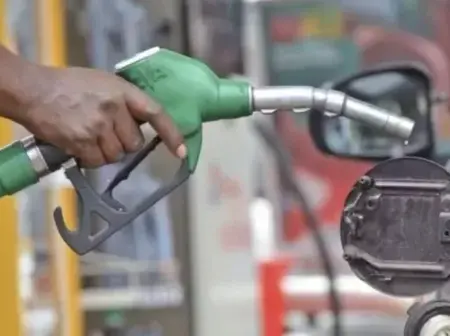
    ‎Motorists will continue paying the same prices for petrol, diesel and kerosene for the next 30 days after the Energy and Petroleum Regulatory Authority retained pump prices despite an increase in the cost of imported fuel.

    ‎In its latest monthly review announced Saturday, Epra said the prices would remain unchanged from November 15 to December 14, 2026, with the government spending Sh4.6 billion from the Petroleum Development Levy Fund to shield consumers from higher international petroleum prices.

    ‎In Nairobi, a litre of Super Petrol will continue retailing at Sh226.96, diesel at Sh227.76 and kerosene at Sh219.87.

    ‎The prices include eight per cent Value Added Tax (VAT).

    ‎The latest decision means there will be no additional increase or reduction at the pump compared with the October 15 to November 14 pricing cycle.

    ‎However, the decision follows a sharp increase in fuel prices in the previous review, when Epra raised petrol by Sh12.93 per litre, diesel by Sh9.90 and kerosene by Sh28.49 in Nairobi.

    ‎The increases took effect on October 15, pushing petrol to Sh226.96, diesel to Sh227.76 and kerosene to Sh219.87, the same prices that will now apply for another month.

    ‎In its statement, Epra said the average landed cost of imported Super Petrol rose by 6.11 per cent, from US$977.55 per cubic metre in September to US$1,037.30 in October.

    ‎Diesel recorded a 6.73 per cent increase, from US$1,065.38 to US$1,137.09 per cubic metre, while kerosene rose by 0.71 per cent, from US$1,098.31 to US$1,106.11.

    ‎The regulator attributed the decision to retain pump prices to the government's intervention through the Petroleum Development Levy Fund.

    ‎"The government has applied Sh4.6 billion from the Petroleum Development Levy Fund to stabilize the computed petroleum pump prices for the November-December 2026 cycle," Epra said.

    ‎It added that without the intervention, the higher landed costs would have translated into increases of Sh8.58 per litre for petrol, Sh10.54 for diesel and Sh1.16 for kerosene.

    ‎The subsidy therefore prevented another round of increases at a time when international petroleum prices remained elevated.

    ‎The latest review comes against the backdrop of rising international petroleum prices, which have increased the cost of importing refined products into the country.

    ‎Epra said movements in the international petroleum market and the exchange rate are also key factors in determining local pump prices.

    ‎The US dollar traded at an average of Sh130.17 in October, compared with Sh129.91 in September, representing a slight weakening of the shilling against the dollar.

    ‎Kenya imports all its petroleum requirements in refined form, exposing local pump prices to changes in international market benchmarks and currency movements.

    ‎Data contained in Epra's latest review showed that international Super Petrol prices declined from US$1,300.65 per metric tonne in September to US$1,187.08 in October.

    ‎Diesel prices also dropped from US$1,215.83 to US$1,142.17 per metric tonne, while kerosene increased slightly from US$1,253.50 to US$1,255.31.

    ‎Despite the mixed movements in international prices, the landed costs of all three products increased, reflecting the different components used in calculating the final import costs.

    ‎Epra said the petroleum pricing regulations are intended to cap retail prices of products already in the country, allowing importation and other prudently incurred costs to be recovered while protecting consumers from unreasonable prices.

    ‎"The purpose of the Petroleum Pricing Regulations is to cap the retail prices of petroleum products which are already in the country so that importation and other prudently incurred costs are recovered while ensuring reasonable prices to consumers," the authority said.

    ‎The regulator added that it remained committed to ensuring fair competition and protecting the interests of consumers and investors in the energy and petroleum sectors.