Author: lincor

  • Kindiki Announces Fresh Crackdown on Alcohol Dealers as Government Targets Their Wealth

    Kindiki Announces Fresh Crackdown on Alcohol Dealers as Government Targets Their Wealth

    The proposed measures include increased fines, seizure and forfeiture of assets belonging to offenders, and changes to existing laws to ensure money recovered from illegal activities can help fund rehabilitation programmes.

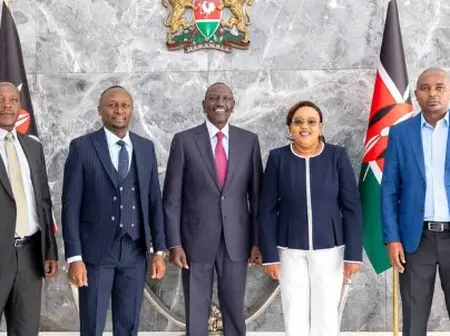
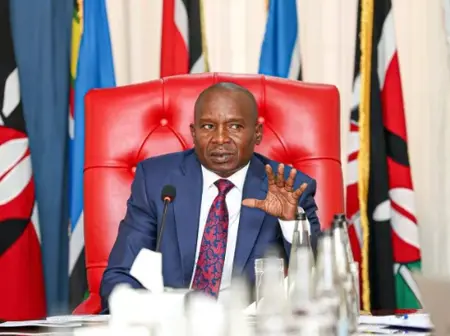
    Kindiki made the announcement on Wednesday, November 18, during a meeting with the National Steering Committee on Combating Illicit Alcohol and Drugs at his official residence in Karen, Nairobi.

    The meeting also marked the presentation of a new charter outlining how government agencies, county administrations and other stakeholders will coordinate efforts to combat illicit alcohol and drug distribution.

    The Deputy President said the government was undertaking a comprehensive review of the Alcoholic Drinks Control Act of 2010 to introduce stricter consequences for individuals and businesses involved in the illegal trade.

    He explained that the proposed amendments would target the financial interests of offenders by allowing authorities to confiscate assets acquired through illicit activities.

    Kindiki further indicated that proceeds recovered through asset forfeiture should be channelled directly towards supporting victims of substance abuse through rehabilitation programmes.

    “We are reviewing comprehensively the Alcoholic Drinks Control Act of 2010 to make it extremely punitive for people who are perpetuating this criminal activity, to ensure forfeiture of their assets, and to ensure that proceeds of such forfeiture are used for rehabilitation of the victims of their crime directly,” he said.

    The proposed changes will also seek to increase financial penalties imposed on offenders, including introducing fines calculated at several times the market value of ethanol diverted for illegal purposes.

    Beyond tougher penalties, the government is considering additional measures to address tax compliance within the alcoholic drinks industry.

    Kindiki raised concerns over what he described as widespread failure by some licensed manufacturers to meet their statutory tax obligations.

    He warned that tax compliance gaps in the sector could undermine the government's efforts to eliminate illicit alcohol production and distribution.

    “We are going to strengthen taxation in this industry to ensure that all people in this sector adhere to their tax obligations because we have discovered only a few licensed manufacturers are honouring their tax obligations,” he stated.

    The Deputy President also presented the newly adopted charter as an important framework for strengthening accountability among institutions involved in the anti-drug and illicit alcohol campaign.

    The document outlines the responsibilities of national and county governments, private sector organisations, civil society groups and local communities.

    It also provides for intelligence-led operations, legislative interventions and administrative measures to strengthen enforcement beyond the ongoing crackdown.

    The initiative will operate under the theme Okoa Jamii, Jenga Taifa, reflecting the government's stated commitment to protecting communities from the effects of alcohol and drug abuse.

    Kindiki urged security agencies and other enforcement teams to maintain professionalism while intensifying operations against those involved in the illegal trade.

    He said the arrests and seizures already recorded should translate into sustainable progress rather than temporary enforcement successes.

    He also praised law enforcement agencies for working alongside the National Authority for the Campaign Against Alcohol and Drug Abuse (NACADA) and other institutions involved in the campaign.

    “I call upon those teams to continue exercising professionalism in the exercise and continue to take this matter with the seriousness it deserves,” he said.

    The proposed legal changes and enforcement measures signal a tougher approach by the government, with particular attention shifting towards the financial networks supporting illicit alcohol and drug businesses.

    Source
  • Dangote Refinery Project Under Scrutiny as CS Mbadi Denies Knowing Move by Ruto

    Dangote Refinery Project Under Scrutiny as CS Mbadi Denies Knowing Move by Ruto

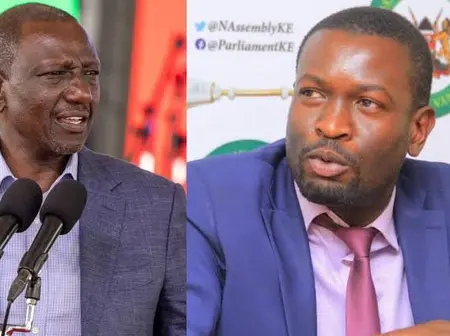
    Mbadi's remarks have sparked fresh attention over President William Ruto's earlier comments regarding the proposed investment in the Nigerian-owned refinery, particularly as questions emerge about the approval process.

    The Treasury CS said he had no information about a decision by the NIF board to invest in the facility, suggesting that the proposal may not have reached the stage of formal approval.

    His statement comes amid growing public interest in the government's plans to participate in major infrastructure and energy projects beyond Kenya's borders.

    President Ruto had previously spoken about the possibility of Kenya investing in the Dangote refinery, presenting the proposal as part of broader efforts to strengthen energy security and reduce the country's dependence on imported petroleum products.

    The refinery, owned by Nigerian billionaire Aliko Dangote, is among Africa's largest oil processing facilities and has attracted interest from several countries seeking to improve their access to refined petroleum products.

    However, Mbadi's latest remarks have created uncertainty about the status of the proposed investment and whether the relevant government institutions have formally considered the matter.

    The National Infrastructure Fund is expected to play a significant role in financing major development projects, making its decisions particularly important when it comes to investments involving public resources.

    The development also places renewed attention on the relationship between presidential announcements and the formal procedures followed by government agencies before major financial commitments are made.

    Kenyans will now be keen to understand whether the proposed refinery investment remains under consideration or whether discussions are still at an early stage.

    Mbadi's clarification is likely to generate further debate about transparency, accountability and the management of public funds as the government pursues its infrastructure agenda.

  • Ruto Revives Ol Kalou Development Pledge After UDA’s Crushing By-Election Defeat

    Ruto Revives Ol Kalou Development Pledge After UDA’s Crushing By-Election Defeat

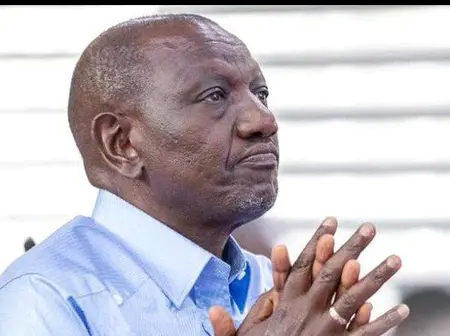
    The president made the announcement on Wednesday, November 18, following a meeting with elected leaders from Nyandarua County at State House, Nairobi.

    During the meeting, Ruto said the government had reviewed the progress of several development projects and agreed to accelerate their completion to improve the lives of residents.

    Among the projects discussed were the proposed Nyandarua University, Ol Kalou Stadium, affordable housing developments, modern markets, student hostels and road construction.

    "We also reviewed progress in the construction of roads, modern markets, student hostels, affordable housing, stadium and the university at Ol Kalou," Ruto stated.

    The president added that the government was committed to speeding up the projects, signalling that the administration intended to maintain its development agenda in the constituency despite the recent political setback.

    The announcement comes against the backdrop of UDA's disappointing performance in the Ol Kalou parliamentary by-election, which handed the opposition Democracy for the Citizens Party (DCP) a decisive victory.

    DCP candidate Sammy Kamau Waweru won the contest with 35,440 votes, defeating UDA's Samuel Muchina Nyagah, who received approximately 5,450 votes.

    The outcome was a significant setback for the ruling party, particularly because the contest had attracted considerable attention from senior government officials and politicians.

    Several Cabinet secretaries, principal secretaries and other political leaders had participated in campaigns supporting Muchina.

    UDA's campaign heavily highlighted government development programmes, with its leaders presenting ongoing and proposed projects as evidence of the administration's commitment to transforming Ol Kalou.

    However, the extensive campaign efforts did not translate into electoral success, with Waweru securing a commanding victory.

    Following the defeat, questions emerged over the future of projects that had featured prominently in the campaigns.

    In July, Muchina visited State House and said Ruto had assured him that government development programmes would continue despite his failure to win the parliamentary seat.

    Muchina also pledged to follow up on the projects, arguing that residents should not lose out on development because of an election result.

    Some of the initiatives he highlighted included the proposed Ol Kalou Stadium, Nyandarua University, JM Kariuki Level Five Hospital, five borehole projects, electricity connections and road construction.

    He maintained that the projects were intended to benefit the entire community rather than serve the interests of individual politicians.

    Ruto's latest announcement appears to reinforce that assurance, with the president once again promising to accelerate the implementation of development programmes in the constituency.

    For Ol Kalou residents, the key issue will be whether the latest promise translates into visible progress on the ground, including improved roads, access to education, housing and better public facilities.

    Source

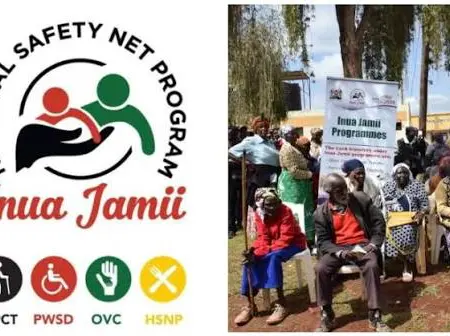
  • Inua Jamii Registration 2026: Who Qualifies and How Kenyans Can Apply

    Inua Jamii Registration 2026: Who Qualifies and How Kenyans Can Apply

    The Kenyan government has outlined eligibility requirements and application procedures for citizens seeking to benefit from the Inua Jamii cash transfer programme in 2026.

    The initiative, administered by the Ministry of Labour and Social Protection, provides financial assistance to vulnerable households to help them meet basic needs, including food, healthcare and other essential expenses.

    The programme targets three main categories of beneficiaries: older persons, households caring for orphans and vulnerable children, and families supporting persons with severe disabilities.

    Under the Older Persons Cash Transfer (OPCT), Kenyans aged 70 years and above who do not receive a government pension can apply for monthly financial support.

    Applicants must be Kenyan citizens with valid national identity cards and must have lived in their current locations for at least one year. They are also required to have caregivers with valid identification documents.

    Meanwhile, households with severely disabled members requiring constant care may qualify under the Persons with Severe Disabilities Cash Transfer programme. Applicants must meet the programme's poverty and residency requirements and should not be enrolled in another cash transfer scheme, except where exemptions apply.

    The Cash Transfer for Orphans and Vulnerable Children programme supports families caring for vulnerable children, particularly households where caregivers face serious health or other challenges.

    Interested applicants are required to visit their nearest Sub-County Social Development Office to begin the registration process. They may also seek assistance from local administrators, including chiefs and assistant chiefs.

    Applicants should carry their national identity cards and relevant supporting documents. Government officers subsequently conduct household assessments to establish whether applicants meet the eligibility conditions.

    Successful beneficiaries receive KSh2,000 through the eCitizen-M-Pesa payment platform. Payments can be accessed through authorised M-Pesa agents by dialling *222# using a registered Safaricom line linked to their identification details.

    The government has encouraged eligible households to use official registration channels and avoid individuals demanding money to facilitate enrolment.

  • Kindiki Approves Nationwide Crackdown on Illicit Alcohol and Drugs

    Kindiki Approves Nationwide Crackdown on Illicit Alcohol and Drugs

    According to the information provided, the campaign is intended to strengthen the government's ongoing crackdown on illicit alcoholic drinks and narcotic substances, which remain a concern for public health and security.

    The initiative is expected to provide a nationwide framework for intensifying efforts against the production, distribution and consumption of illegal alcoholic products and drugs.

    The meeting brought together members of the National Steering Committee, which is tasked with coordinating government interventions against illicit alcohol and substance abuse.

    Kindiki's approval signals the government's intention to strengthen coordination among relevant agencies and increase public involvement in addressing the problem.

    The campaign's name, Okoa Jamii, Jenga Taifa, translates to saving society and building the nation, reflecting its stated focus on protecting communities from the effects of substance abuse.

    The nationwide initiative comes amid continued government efforts to address the social and economic consequences associated with illicit alcohol and narcotic drugs.

    However, further details regarding the campaign's official launch date, implementation schedule, participating agencies and specific enforcement measures were not provided in the information available.

    The government is expected to provide additional information on how the initiative will be implemented across counties and the role different agencies will play in the crackdown.

    The effectiveness of the campaign will depend on coordination between national and county authorities, enforcement agencies and communities in identifying and addressing the distribution of illegal substances.https://www.facebook.com/share/p/1AA5DBReew/

  • “T-shirt Siku Zombo,” Kenyans Hilariously React to Photo of Natembeya and Sifuna During Light Moment

    “T-shirt Siku Zombo,” Kenyans Hilariously React to Photo of Natembeya and Sifuna During Light Moment

    Politics is often associated with heated exchanges, sharp criticism and competing interests. However, a light moment shared between George Natembeya and Edwin Sifuna has attracted attention, offering a different picture of the interactions among Kenya's political leaders.

    George Natembeya, the Governor of Trans Nzoia County, has increasingly attracted national attention through his political activities and outspoken positions on matters affecting the country. His influence has continued to grow, particularly in Western Kenya, where he has maintained a strong political presence.

    On the other hand, Edwin Sifuna, the Nairobi Senator, has established himself as one of the country's outspoken political figures. He is known for his strong defence of constitutional principles, accountability and good governance.

    Sifuna has also been involved in emerging political conversations surrounding the future of the opposition and the direction Kenya should take ahead of the 2027 General Election.

    The light moment between the two leaders is particularly interesting because both have been associated with discussions about political realignments and the possibility of building a stronger alternative political movement.

    Their interaction could attract attention among Kenyans who are closely following the changing political landscape. However, a friendly exchange alone should not be interpreted as confirmation of a political agreement or a new alliance.

    As the country approaches the next election cycle, Kenyans will be watching closely to understand the relationships, conversations and decisions shaping the political direction of different leaders.

    For now, the interaction between Natembeya and Sifuna offers a refreshing moment in a political environment that is frequently dominated by disagreements and strong public statements.

    What do you think about the interaction between George Natembeya and Edwin Sifuna? Could their cordial relationship translate into closer political cooperation ahead of 2027?

    Comment and share your views.

    https://www.facebook.com/share/1ES3mYTwoH/

  • KCB Targets Revenge Against Dominant Kabras Sugar in Explosive Kenya Cup Season Opener

    KCB Targets Revenge Against Dominant Kabras Sugar in Explosive Kenya Cup Season Opener

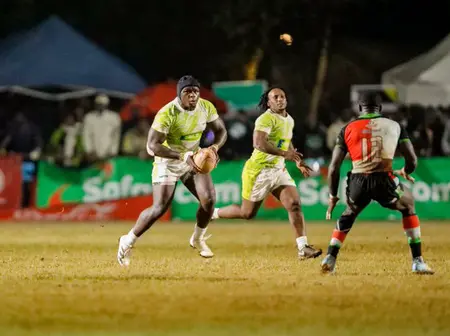
    KCB Rugby Club is confident of making a strong start to the 2026/2027 Kenya Cup season as it prepares to face defending champions Kabras Sugar in a highly anticipated opening fixture this Saturday.

    The two sides will meet at the ASK Showground in Kakamega on November 21, setting the stage for an exciting start to the new campaign. The encounter brings together two of the country's strongest rugby clubs, both determined to establish their authority early in the competition.

    The victory ended a two-year wait for the prestigious tournament trophy and provided a major boost ahead of the Kenya Cup campaign.

    Head coach Andrew Amonde said the team had used more than eight weeks to prepare for the new season and was ready for the challenge. He attributed the squad's confidence to improved preparations, investment in the team and the arrival of several new players.

    Amonde believes the strengthened squad has the quality to compete against the country's top clubs as KCB pursues its ninth Kenya Cup title.

    Club captain Winston Macharia also expressed confidence in the team's readiness, saying the recent Floodlit triumph had strengthened the players' belief and motivation.

    Macharia noted that the squad was determined to maintain its winning momentum and improve on last season's performance, when KCB reached the Kenya Cup final but failed to lift the trophy.

    The bankers last won the league title in 2021, when they defeated Kabras Sugar 28-25 in the final. They will therefore be keen to reclaim the championship after several seasons without the trophy.

    Citizen Digital+1

    However, KCB faces a difficult test against a Kabras Sugar side that has dominated Kenyan club rugby in recent years.

    The Kakamega-based club has enjoyed an impressive run, winning five consecutive Kenya Cup titles and remaining unbeaten in the competition for four seasons.

    During that period, Kabras recorded 53 victories and one draw, underlining the consistency that has made them a formidable opponent.

    The defending champions defeated KCB 14-8 in last season's final, extending their dominance and securing another league crown.

    Daily Nation+1

    The 2026/2027 Kenya Cup will feature 12 teams competing for the national club rugby championship. The Kenya Rugby Union has also introduced changes to the competition format, with major clubs facing one another earlier in the season.

    The revised structure is intended to create a more competitive league while giving developing teams an opportunity to build confidence and improve throughout the campaign.

    For KCB, Saturday's fixture offers an early opportunity to demonstrate its title ambitions. For Kabras, it is a chance to begin their championship defence with a victory in front of their home supporters.

    With both teams carrying strong squads and clear objectives, their opening encounter is expected to attract considerable attention from rugby fans across the country.

    The result could provide an early indication of how the two sides will approach another demanding Kenya Cup season.

    Daily Nation+1

  • Bungoma Records Alarming Rise in Premature Births as Doctors Identify 3 Major Health Risks

    Bungoma Records Alarming Rise in Premature Births as Doctors Identify 3 Major Health Risks

    Health professionals have attributed the concerning trend partly to maternal health complications, including hypertension, diabetes and malaria, warning that failure to detect and manage such conditions during pregnancy can increase the risk of early delivery.

    Dr Dickens Lubanga, a paediatrician at Webuye County Hospital, said underlying medical conditions, maternal age and multiple pregnancies are among the factors associated with premature births.

    He raised the concerns during activities marking World Prematurity Day, where healthcare professionals highlighted the challenges facing mothers and newborns requiring specialised medical attention.

    Premature birth occurs when a baby is delivered before completing 37 weeks of pregnancy. A full-term pregnancy typically lasts approximately 40 weeks.

    According to Lubanga, women below the age of 17 and those above 35 may face increased risks of premature delivery. He also identified hypertension, diabetes and malaria as conditions that require careful monitoring throughout pregnancy.

    "When these diseases are not properly managed, they can easily lead to babies being born earlier than expected," he said.

    The paediatrician urged expectant mothers to attend all eight recommended antenatal clinic visits to allow healthcare workers to monitor their health, identify complications early and assess the development of their unborn babies.

    The importance of specialised newborn care was also highlighted through the experience of Millicent Wabukala, a mother who delivered a baby weighing 2.3 kilogrammes.

    Shortly after birth, the newborn developed jaundice, a condition that causes yellowing of the skin and eyes due to elevated levels of bilirubin in the blood.

    The baby was admitted to the Newborn Unit at Webuye County Hospital, where medical professionals placed the child under phototherapy to manage the condition and monitored the newborn's progress.

    Wabukala recalled that the experience was emotionally difficult, particularly because she was uncertain whether her baby would survive.

    She said the uncertainty and stress took a significant psychological toll on her, nearly developing into a mental health challenge.

    The mother expressed gratitude to the doctors, nurses and other healthcare workers who supported her family throughout the difficult period.

    "I want to thank the healthcare providers and nurses at Webuye County Hospital for the care and dedication they showed in ensuring that my baby survived. It was not an easy journey, but their support gave me hope," she said.

    Wabukala added that her child had made encouraging progress, gaining weight from 2.3 kilogrammes at birth to 10.5 kilogrammes.

    Her experience illustrates the challenges families can face when newborns require specialised treatment and prolonged medical attention after delivery.

    The high rate of premature births in Bungoma has renewed attention on the importance of accessible antenatal services, timely treatment of pregnancy-related complications and properly equipped newborn units.

    For families whose children arrive before completing the normal pregnancy period, access to specialised newborn care can also make a significant difference in their recovery and development.

    Source

  • Kalonzo Put on Notice as Masinga MP Mwalyo Warns Him Against Sifuna and Gachagua

    Kalonzo Put on Notice as Masinga MP Mwalyo Warns Him Against Sifuna and Gachagua

    Masinga Member of Parliament Joshua Mwalyo has urged Wiper Party leader Kalonzo Musyoka to reconsider his political association with Nairobi Senator Edwin Sifuna and former Deputy President Rigathi Gachagua ahead of the 2027 General Election.

    Speaking during the Mavoko Empowerment Drive on Wednesday, November 18, Mwalyo questioned the benefits of such an alliance to the Kamba community, arguing that political partnerships should prioritise development and economic empowerment rather than opposition to the government.

    The legislator challenged Kalonzo to consider what residents of Ukambani stood to gain from working with leaders whose political activities, according to him, largely revolve around criticising the government instead of presenting practical solutions to the challenges facing ordinary Kenyans.

    Mwalyo also dismissed opinion polls and opposition rallies, maintaining that political popularity should not be measured by public demonstrations alone but by the ability of leaders to improve people's livelihoods.

    Defending his cooperation with President William Ruto's administration, the Masinga MP argued that working with the national government provides a better opportunity for Ukambani to secure development projects, particularly in infrastructure, water provision and economic empowerment.

    He cautioned Kalonzo against political alliances that could leave the region outside government and potentially limit its opportunities to benefit from national development programmes.

    His remarks come at a time when opposition leaders are exploring possible political partnerships ahead of the 2027 General Election. Kalonzo, Gachagua and Sifuna have increasingly shared political platforms as efforts to build a united opposition continue to gather momentum.

    What is your opinion about this article? Drop your views in the comments section below. Like, share and follow to get more updates.

  • Sifuna Makes Announcement Hours Before Ruto’s State of the Nation Address

    Sifuna Makes Announcement Hours Before Ruto’s State of the Nation Address

    In his latest remarks, Sifuna accused the President of being dishonest, insisting that he has deliberately kept away from his official functions because he does not agree with the government's leadership and communication.

    The Nairobi Senator made it clear that he has no interest in attending events organised by Ruto's administration, including the recently held State of the Nation Address.

    "Kasongo's job is to lie. I don't attend his events or anything of his, such as the so-called State of the Nation Address," Sifuna stated.

    His remarks have added to the growing political exchanges between opposition leaders and the Kenya Kwanza administration as the country moves closer to the 2027 General Election.

    Sifuna has increasingly positioned himself among politicians demanding greater accountability from the government, particularly over its handling of national issues and promises made to Kenyans.

    His latest criticism also comes amid growing political realignments within the opposition, with several leaders exploring ways of building a united front against Ruto's re-election bid.

    The former ODM Secretary-General has remained outspoken about the direction of the opposition and has attracted attention through his political engagements under the Linda Mwananchi Movement.

    Meanwhile, Ruto has continued defending his administration's record, maintaining that his government is implementing programmes aimed at improving the country's economy and addressing challenges facing ordinary Kenyans.

    Sifuna's decision to publicly distance himself from presidential functions is likely to generate further debate, particularly among political leaders divided over how the opposition should engage with the government.

    His latest remarks underline the widening political differences between him and Ruto's administration as competition for the 2027 elections continues to take shape.