Author: lincor

  • How fraud has evolved: From asking for your PIN to social engineering

    How fraud has evolved: From asking for your PIN to social engineering

    There was a time when fraudsters had a straightforward approach. You would receive a call from someone claiming to be from Safaricom, followed by a request for your PIN. That immediately raised an alarm.

    For a while, one message became familiar to mobile money customers: never share your PIN. The warning worked. Customers became more cautious, making it increasingly difficult for fraudsters to steal money by simply asking for someone's PIN.

    But fraudsters adapted.

    Today, someone calling you may never ask for your PIN. Instead, they may offer to increase your Fuliza limit, improve your business loan limit, resolve an issue with your line or help you access a service.

    They may claim that your child is ill and urgently needs medical attention. They may know your name, business details or even a job you recently applied for. In some cases, they may ask you to hand over your phone so they can help you.

    The outcome can be the same. Money leaves your account, but this time you may have authorised the transaction yourself.

    This is how fraud has evolved. Criminals are increasingly targeting people rather than attempting to break through technical security systems. This approach, known as social engineering, has become a major method of defrauding mobile money customers.

    In my work in Safaricom's fraud detection and operations function, I have seen how fraudsters exploit their understanding of products and services to build convincing stories. They understand the products, the customer experience and the situations that can make people vulnerable.

    Around 80 per cent of the fraud cases our team sees involve social engineering. This shows how central human behaviour has become to the fraud problem.

    The psychology behind social engineering

    Most social engineering scams rely on three things: urgency, an attractive offer or an emergency.

    For a small business owner, an unexpected offer to increase a loan limit can be difficult to ignore. A fraudster may refer to the customer's transaction history and claim they qualify for a higher limit. The conversation sounds credible because the caller appears to know the customer.

    The fraudster may then offer to demonstrate how the process works.

    This is where the risk increases. The customer may be persuaded to hand over their phone or follow instructions on the device, believing they are activating a new service. Instead, they may authorise a transaction or give the fraudster access to their mobile money wallet.

    Emergency scams use similar psychological tactics.

    A caller may claim that a child has been involved in an accident or has fallen ill and needs money immediately. The objective is to create panic and prevent the recipient from verifying the information.

    When someone receives such a call, the natural instinct is to help first and ask questions later. Fraudsters exploit this reaction.

    Personal information makes impersonation more convincing

    Another factor making modern fraud more difficult to identify is the information fraudsters may have about their targets.

    Impersonation has become more sophisticated. Fraudsters pose as representatives of trusted organisations and use customers' personal information to make their approaches appear legitimate.

    They may claim to represent Safaricom, Kenya Power, Airtel, water companies or other service providers. Some even use branded vehicles, identification tags and other visual cues to appear genuine.

    Consider someone who has recently applied for a service and receives a call referring specifically to that application. The caller then asks for money to speed up the process.

    This is more convincing than an unsolicited call from a stranger because the caller appears to know something about the customer.

    However, knowing someone's name or personal details does not prove that the person contacting them is genuine. Customers must understand this distinction, particularly as more personal information is shared across the digital and physical spaces where people interact.

    The smartphone has raised the stakes

    The mobile phone has evolved from a communication device into a digital wallet, bank branch, workplace and personal information hub.

    A smartphone can contain mobile money services, banking applications, email accounts, social media profiles and business tools. Gaining access to someone's device can therefore expose much more than it did when phones were mainly used for calls and text messages.

    Fraudsters may attempt to install malicious applications, access accounts, monitor activity or take over platforms such as WhatsApp and email.

    Some attacks begin with suspicious links. Others start with something that appears harmless, such as allowing another person to use your phone.

    A customer may believe they are receiving assistance without realising what is happening on the device while it is out of their hands.

    As more financial and commercial services move online, protecting a smartphone has become part of protecting personal finances and information.

    Artificial intelligence is changing the fraud landscape

    Artificial intelligence is adding another dimension to the evolution of fraud.

    Fraudsters are increasingly using technology, including AI tools, to identify potential weaknesses, probe applications and develop new ways to target customers.

    They also follow changes to products and services closely. When a new feature is introduced, they can quickly develop a convincing story around it and use it as the basis for a scam.

    This creates an ongoing race between those seeking to exploit digital systems and those working to secure them.

    Technology is also becoming an important part of the defence.

    At Safaricom, we are using AI models to analyse transaction behaviour, including customer histories and spending patterns, to identify potentially fraudulent activity.

    The objective is to detect suspicious transactions earlier rather than responding only after money has been lost.

    We are also developing a validation process that will allow merchants and businesses to establish whether someone claiming to be a Safaricom employee or business associate is genuine.

    The process will verify a number against company records before a customer proceeds with an account-related interaction.

    Such measures are important because impersonation can be difficult to detect, particularly when fraudsters have invested time in making an interaction appear authentic.

    The simplest defence may still be the most effective

    Despite the growing role of technology in fraud, one of the most effective ways to protect yourself remains simple: pause and verify.

    If someone contacts you and creates a sense of urgency about your account or phone, do not act immediately.

    If someone offers an unusually attractive loan or promises to increase your limit, verify the offer independently.

    If someone calls claiming there is an emergency involving a family member, contact the school, a relative or the relevant institution directly using a trusted number.

    If someone asks for your phone or SIM card to help you, do not hand it over.

    The bigger lesson is that protecting yourself against fraud is no longer simply about keeping your PIN secret. It is also about recognising manipulation.

    The language has changed because the fraudster has changed. As technology becomes more central to how Kenyans manage money, communicate and access services, staying safe requires more than technical protection.

    It requires customers to stop, question and verify before taking action.

    For Safaricom customers with concerns about their mobile money wallets or phone lines, the safest approach is to visit an official shop or contact verified customer care channels rather than relying on unsolicited callers or visitors.

    Customers can also report suspected fraud through My OneApp or by sending an SMS to 333.

    Reporting suspected fraud early gives the relevant teams an opportunity to investigate and, where possible, intervene before funds are moved beyond recovery.

    Maurice Orenjo works at Safaricom’s fraud detection and operations unit
  • Ruto: Increased education funding has eased burden on parents

    Ruto: Increased education funding has eased burden on parents

    President William Ruto has defended his administration's education reforms, saying increased government investment has eased the financial burden on parents while improving access to learning.

    In his fourth State of the Nation Address to a joint sitting of Parliament on Wednesday, Ruto said the education budget had increased from Sh521 billion in 2022 to Sh784.5 billion in the 2026/27 financial year.

    He attributed the increased funding to improvements in the sector, particularly the recruitment of teachers, construction of classrooms and expansion of learning facilities.

    The President said the government had recruited 100,000 teachers in four years, reducing the need for parents to contribute towards hiring additional tutors through school boards of management.

    He announced plans to recruit a further 20,000 teachers in December to address staffing gaps in schools.

    "When we assumed office, Kenya faced a teacher shortage estimated at 116,000. Parents in many schools were paying for teachers employed through boards of management while also meeting additional demands of classrooms and learning facilities," he said.

    Ruto said increased government investment had progressively reduced the need for Kenyans to finance teaching services and improved the overall quality of education.

    He added that the government had constructed 23,000 classrooms and was building and equipping 1,600 laboratories across the country to expand access to learning and reduce pressure on communities to finance school infrastructure.

    "Our investment in education has lifted a heavy burden off our parents and helped reduce financial obligations they have been undertaking. This goes a long way in dealing with the challenge of cost of living," he said.

    On national examinations, the President said reforms had changed the administration of tests while strengthening safeguards to protect their integrity.

    He cited the introduction of examination containers and the withdrawal of police officers from examination rooms while candidates are sitting their papers as some of the measures introduced by his administration.

    "The examinations have been conducted in a calm and orderly manner, free from anxiety, tension and intimidating security deployments of the past. This is how it should be. Examinations are a normal part of learning, not a security operation or a matter of life and death," he said.

    Ruto said this year's examination cycle, which concludes on Friday, had set a new record, with 3.6 million learners sitting the Kenya Primary School Education Assessment (KPSEA), Kenya Junior School Education Assessment (KJSEA) and Kenya Certificate of Secondary Education (KCSE) examinations.

    "For the first time in 65 years, examination papers were printed here in Kenya," he added.

    Ruto said the decision followed his reasoning that a country capable of printing its own currency should also have the capacity to produce its examination papers.

    "And in this single undertaking, we have taken off close to a billion and a half shillings that could have been wasted," he said.

    The State of the Nation Address is a constitutional requirement under Article 132 of the Constitution, which obligates the President to address a special sitting of Parliament once every year.

    During the address, the President is required to report on measures taken and progress achieved in realising national values and principles of governance under Article 10. The report must subsequently be published in the Kenya Gazette.

  • Ruto credits fertiliser subsidy for rise in maize production, fall in unga prices

    Ruto credits fertiliser subsidy for rise in maize production, fall in unga prices

    President William Ruto has defended his administration’s agricultural reforms, saying reduced fertiliser prices and increased food production have helped ease pressure on households while improving farmers’ earnings.

    Addressing Parliament during his fourth State of the Nation Address, Ruto said the government had pursued agricultural transformation by lowering the cost of farm inputs, increasing food supply and ensuring farmers receive better returns for their produce.

    He said the price of a 50-kilogramme bag of fertiliser had fallen from Sh7,500 in 2022 to Sh2,000 this year, with the government distributing 38.5 million bags under the subsidy programme.

    The administration has also registered nearly nine million farmers and expanded access to improved seeds, soil testing and agricultural extension services.

    “Nowhere is the connection between production costs, household expenditure and income more direct than in agriculture,” Ruto said.

    He said food accounts for a substantial share of household spending, making increased agricultural production central to efforts to reduce the cost of living.

    To illustrate the impact of the interventions, Ruto cited the experience of Laban, a maize farmer in Rongai, Nakuru County, whose harvest increased from 75 bags in 2022 to 125 bags last year after accessing affordable fertiliser, improved seeds and extension services.

    The farmer achieved the increase on the same five acres of land, without acquiring additional acreage.

    “He nearly doubled his production without acquiring an extra acre of land,” Ruto said.

    The President argued that the benefits of the subsidy programme begin before planting, when farmers spend less on inputs, and continue at harvest through increased productivity and higher volumes of food available to consumers.

    He said national maize production rose from 44 million bags in 2022 to 71 million bags last year, while imports declined from 9.9 million bags to 3.3 million bags over the same period.

    The increased domestic supply, he said, had contributed to a reduction in the price of maize flour, one of the most important household food items.

    Ruto said the national average price of a two-kilogramme packet of sifted maize flour fell from a high of Sh230 in September 2022 to an average of Sh152 in September this year.

    “Our determination to sustain increased production so that food becomes more affordable and farmers continue earning better is on course,” he said.

    The President said the government intended to maintain the momentum by supporting farmers with affordable inputs and services that improve yields.

    Agriculture has remained a central pillar of the administration’s economic agenda, with the government arguing that higher productivity can simultaneously improve rural incomes, increase food availability and reduce the cost of essential commodities.

    Ruto said the interventions were designed to address both sides of the household economy: the money families spend on food and the income they earn from agricultural production.

    He said the approach was not limited to maize but was also being extended to other food and cash crops, including tea, coffee, milk and sugar cane, as well as livestock and fisheries.

    The President maintained that sustained investment in agriculture would help reduce reliance on food imports while strengthening the ability of farmers to earn more from their land.

  • Ruto defends economic record, says shilling has recovered from Sh162 to Sh129 against dollar

    Ruto defends economic record, says shilling has recovered from Sh162 to Sh129 against dollar

    President William Ruto has defended his administration's economic record, citing the recovery of the Kenyan shilling, reduced inflation, lower commercial bank lending rates and increased foreign exchange reserves as evidence that the country has emerged from the economic difficulties it faced in 2022.

    Addressing a joint sitting of Parliament during his fourth State of the Nation Address, Ruto said his government had undertaken difficult but necessary reforms to restore economic stability despite global uncertainty and disruptions to international trade.

    He said the Kenya shilling had strengthened from nearly Sh162 against the US dollar to about Sh129, describing the recovery as an important achievement in rebuilding confidence in the economy.

    "The Kenya shilling has remained broadly stable, around 129 shillings to the dollar, having recovered from nearly 162," he said.

    The President also pointed to a decline in commercial bank lending rates, saying they had dropped from 17.2 per cent in November 2024 to approximately 14.4 per cent in September this year.

    He argued that cheaper credit would make it easier for businesses to access financing, expand operations and create employment opportunities.

    Ruto further said inflation, which had reached 9.6 per cent in 2022, had moderated to an average of 4.1 per cent in 2025, although renewed pressure from food and energy prices pushed it higher in October this year.

    The latest Kenya National Bureau of Statistics (KNBS) figures show annual inflation rose to 7.3 per cent in October 2026, up from 6.8 per cent in September, driven largely by food, transport and housing-related costs.

    The President acknowledged the renewed pressure but maintained that the economic stability achieved by his administration provided a stronger foundation for dealing with the challenge.

    He also highlighted the growth of foreign exchange reserves, saying they had increased from $7.3 billion in 2022 to a peak of $15.3 billion this year.

    Ruto cited the repayment of the $2 billion Eurobond obligation that fell due in June 2024 as another demonstration of the country's improved ability to meet its external debt commitments.

    "We also honoured the two billion US dollars Euro obligation that fell due in June 2024, protecting our country's financial standing and restoring confidence in our economy," he said.

    He maintained that the achievements should be assessed beyond headline economic statistics, arguing that stability in the currency, inflation and credit markets had practical benefits for households and businesses.

    "These achievements matter not because they make impressive financial statistics, but because a stable currency, managed inflation, and more affordable credit helps businesses plan, farmers produce, investors create jobs, and families protect their purchasing power," he said.

    The President's defence of the economy comes amid continued public debate over taxation, the cost of living, public borrowing and the impact of government reforms on ordinary Kenyans.

    His administration has consistently argued that fiscal and monetary adjustments were necessary to stabilise public finances and create room for sustainable economic growth.

  • Tutam, Usawa ni sawa chants as Ruto takes podium for fourth State of the Nation Address

    Tutam, Usawa ni sawa chants as Ruto takes podium for fourth State of the Nation Address

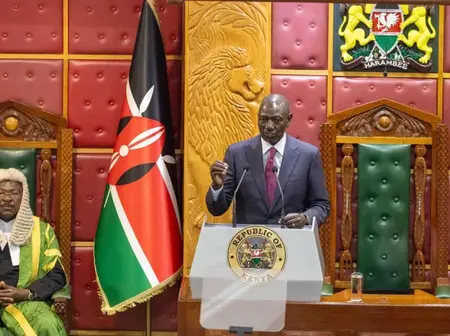
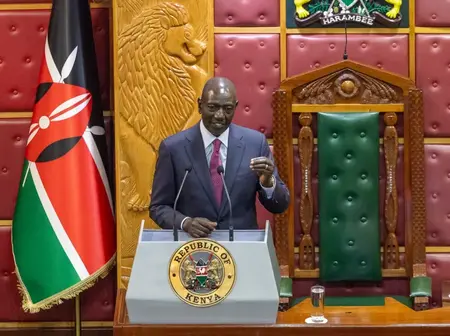
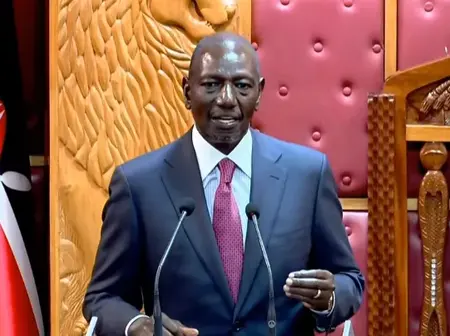
    President William Ruto was welcomed with chants of “Tutam” and “Usawa ni sawa” from lawmakers as he took to the podium to deliver his fourth State of the Nation Address before a joint sitting of Parliament on Wednesday.

    The chants, which echoed through the chambers, offered a glimpse of the political mood among legislators as the Head of State prepared to account for his administration's performance and outline priorities for the remaining months of his first term.

    The address, being delivered at Parliament Buildings in Nairobi, is Ruto's fourth annual address since taking office in September 2022 and his last before the August 2027 General Election.

    The “Tutam” chant is associated with political support for Ruto's bid for a second term in the 2027 General Election, while “Usawa ni sawa” is a slogan the President has used to promote his administration's promise of equitable development across the country.

    The chants also recalled scenes during last year's address when MPs interrupted Ruto with “Tutam” chants as he outlined plans to expand the country's road network and extend the Standard Gauge Railway from Naivasha to Kisumu and eventually Malaba.

    Wednesday's address comes less than nine months before Kenyans return to the ballot, placing the President under pressure to demonstrate how far his administration has gone in fulfilling its campaign promises.

    Ruto is expected to defend his economic record, highlight achievements under the Bottom-Up Economic Transformation Agenda and explain how his government intends to finance its ambitious development programmes.

    Among the key issues drawing public attention are the cost of living, taxation, youth unemployment, corruption, healthcare reforms, education funding and the pace of infrastructure development.

    His Sh5 trillion development blueprint, which includes roads, dams, railways, energy projects and affordable housing, is also expected to feature prominently.

    The proposed National Infrastructure Fund and Sovereign Wealth Fund are among the financing mechanisms expected to attract attention as the government seeks alternative ways of funding major projects without relying heavily on public borrowing.

    The President is also expected to address food security, agricultural production, the rollout of the Social Health Authority and national security.

    Under Article 132 of the Constitution, the President is required to address a special sitting of Parliament once every year and report on measures taken and progress made in realising national values and principles of governance.

    The address also provides an opportunity for Parliament to scrutinise the government's performance and assess its progress in meeting constitutional obligations.

  • Inside the Sh5.2 trillion 2027 budget as public submissions continue

    Inside the Sh5.2 trillion 2027 budget as public submissions continue

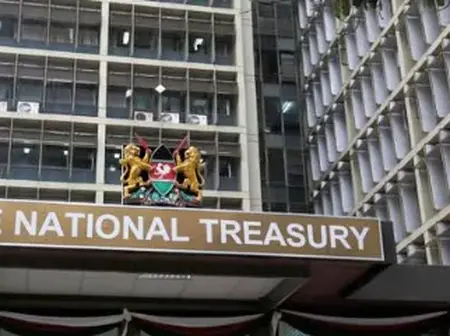
    The National Treasury has trimmed the proposed 2027/28 budget by about Sh180 billion to Sh5.236 trillion, with a sharp reduction in domestic borrowing and increased reliance on external financing as the Government pursues fiscal consolidation.

    Subscription

    Help us continue bringing you unbiased news, in-depth investigations, and diverse perspectives. Your subscription keeps our mission alive and empowers us to provide high-quality, trustworthy journalism. Join us today to make a difference!

  • India proposes six-day quarantine for Kenyans, other travellers without yellow fever vaccination certificates

    India proposes six-day quarantine for Kenyans, other travellers without yellow fever vaccination certificates

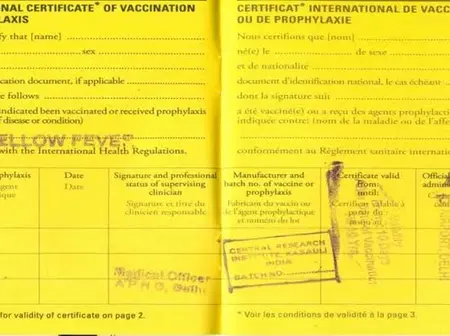
    India has proposed a six-day quarantine for travellers arriving from areas considered at risk of yellow fever transmission if they cannot produce valid vaccination certificates, a move that could have implications for Kenyans travelling to the Asian country.

    The proposal is contained in India's draft Indian Aircraft (Public Health) Rules, 2026, which seek to tighten disease surveillance and public health controls at international airports.

    Under the proposed provisions, travellers arriving from areas where the Indian government has identified a risk of yellow fever transmission would be quarantined until their vaccination certificates become valid or until six days have elapsed from their last possible exposure to the infection, whichever comes first.

    The proposed measure is based on the six-day incubation period of yellow fever, the time between infection and the appearance of the first symptoms.

    The draft, prepared by India's Ministry of Health and Family Welfare, is part of efforts to replace the existing Aircraft (Public Health) Rules of 1954 and strengthen safeguards against infectious diseases entering the country through international air travel.

    Kenya is among the 29 African countries specifically listed by India as having a risk of yellow fever transmission, placing Kenyan travellers within the scope of the proposed health requirements.

    The list, contained in Annexure VI of the draft regulations, also includes Uganda, Ethiopia, Nigeria, Ghana, Burundi and other African countries, as well as 13 other countries in Central and South America.

    The inclusion of Kenya means travellers departing from the country could be required to demonstrate that they have received the yellow fever vaccine before being allowed to enter India without quarantine.

    The draft makes vaccination against yellow fever a condition of entry for travellers leaving areas where the World Health Organisation has identified a risk of transmission.

    It states: "Vaccination against yellow fever shall be required of any traveller leaving an area where WHO has determined that a risk of yellow fever transmission is present."

    However, travellers with valid vaccination certificates would be exempted from being treated as suspected cases, even when arriving from countries considered at risk.

    "A traveller in possession of a valid certificate of vaccination against yellow fever shall not be treated as suspect, even if coming from an area where World Health Organisation has determined that a risk of yellow fever transmission is present," the draft states.

    The regulations further provide that yellow fever vaccines approved by WHO offer protection against infection beginning 10 days after administration.

    The certificate would remain valid throughout the vaccinated person's lifetime, beginning on the 10th day after receiving the jab.

    This means Kenyans planning to travel to India would need to ensure they receive the vaccine at least 10 days before departure and carry the appropriate international vaccination certificate.

    Those who have received the vaccine but whose certificates have not yet become valid could still be allowed to depart, although they may face quarantine upon arrival in India.

    The draft states that a traveller with a certificate that is not yet valid "may be permitted to depart", but could be subjected to quarantine measures upon arrival.

    For those without valid certificates, the proposed rules provide that they "shall be quarantined until the certificate becomes valid, or until a period of not more than six days, reckoned from the date of last possible exposure to infection, has elapsed, whichever occurs first."

    The six-day period is tied to the incubation period of yellow fever, which can make it difficult to identify infected travellers immediately after exposure.

    Yellow fever is a viral disease transmitted through the bite of infected mosquitoes. Symptoms may include fever, headache, muscle pain, nausea and vomiting, while severe cases can lead to jaundice, internal bleeding, organ failure and death.

    The disease remains a public health concern in parts of Africa and South America, with vaccination considered the most effective preventive measure.

    For Kenya, the proposed restrictions underscore the importance of vaccination and proper travel documentation, particularly for people travelling to countries with strict international health requirements.

    India's draft rules go beyond yellow fever, setting out a broader framework for managing public health threats associated with international aviation.

    They provide for medical examinations, laboratory investigations, isolation and quarantine where airport health officials establish reasonable grounds to believe a traveller poses a public health risk.

    The proposed regulations also give airport health officers powers to request health documents and other information from passengers to establish their exposure history and assess possible threats to other travellers.

    The wider framework seeks to strengthen disease surveillance, aircraft sanitation, vector control and reporting of suspected infectious diseases at airports.

    India's Ministry of Health and Family Welfare issued an office memorandum on November 16, 2026, inviting comments and suggestions on the proposed rules.

    The ministry said the existing 1954 regulations needed updating following the enactment of the Bharatiya Vayuyan Adhiniyam, 2024, which replaced the Aircraft Act, 1934.

    The ministry has invited stakeholders, including government agencies and aviation industry players, to submit their views within 30 days.

    After considering the submissions, the draft will be forwarded to the Ministry of Civil Aviation for further action, including publication in the Official Gazette where required.

    The proposed six-day quarantine provision is therefore not yet an operative travel requirement. It will be subject to the required approval and formal adoption process before taking effect.

  • Regina Re charged with helping daughter evade arrest after grandmother’s murder

    Regina Re charged with helping daughter evade arrest after grandmother’s murder

    Former television host and actress Regina Wambui Macharia-Gitao, popularly known as Regina Re, has been charged with allegedly helping her 18-year-old daughter evade arrest following the murder of her grandmother, Dorita Lasinder Macharia.

    Regina Re was arraigned alongside her brother, Alton James Macharia, alias AJ, at the Kibera Chief Magistrate's Court on Wednesday, where they were charged with being accessories after the fact to murder.

    The charge sheet accuses Regina of instructing her daughter to change the clothes she was wearing, which prosecutors allege were soaked in blood following the incident.

    "On the 30th day of October. 2026 at around 2230hrs at Loresho Ridge Estate in Westlands Sub-County within Nairobi County, knowing that Thandie-Malaika Wanjiku Gitao had committed the offence of Murder of Dorita Lasinder Macharia, you instructed her to change her clothes which was soaked in blood to enable her escape lawful arrest," the charge sheet reads.

    Her brother, Alton, was separately accused of cleaning blood stains at the scene in an alleged attempt to help his niece evade arrest.

    According to the second count, Alton allegedly committed the offence on the same date and at the same location, knowing that Thandie had murdered Dorita.

    Both Regina and Alton denied the charges.

    They were released on cash bail of Sh200,000 each.

    Their prosecution comes after Regina's daughter, Thandie, was separately charged with murdering her grandmother before the High Court in Kibera.

    The 18-year-old denied the murder charge before Justice Diana Kavedza, who ordered that she undergo a mental assessment at Kiambu Hospital within 10 days.

    The court also declined a request by her defence to allow her to attend her grandmother's burial in Murang'a. Instead, it directed her father to record videos of the funeral and show them to her while she remained in custody.

    The prosecution had opposed her attendance, citing security concerns and the possibility of interference with witnesses expected to attend the burial.

    The three family members are now facing separate charges before the courts in connection with Dorita's death.

    The charges against Regina and Alton are allegations, and both are presumed innocent until proven guilty.

  • Inside 1,200-Acre EPZ Set to Transform Murang’a’s Industrial Economy [Photos]

    Inside 1,200-Acre EPZ Set to Transform Murang’a’s Industrial Economy [Photos]

    thumbnail

    EPZA 1,200-acre EPZ nearing completion in Murang’a County is set to transform the region’s industrial economy through manufacturing, agro-processing, investment and job creation.A 1,200-acre Export Processing Zone (EPZ) nearing completion in Murang’a County is set to transform the region’s industrial economy through manufacturing, agro-processing, investment and job creation.

  • Green Commandos face title test

    Green Commandos face title test

    Defending champions Green Commandos will launch their title defence against Kerongo FC when the 16th edition of the Chris Oguso Football Tournament enters the quarter-final stage on November 29.

    The Hamisi-based side will be seeking to retain the crown they won last year after edging Madioli FC 1-0 in the final at Mahanga Sports Ground.

    The quarter-final line-up was confirmed following the conclusion of the sub-county finals on November 15, setting up an exciting knockout phase in both the men’s and women’s competitions.

    All quarter-final matches will be staged at Mahanga, with Vihiga 1 representatives Bodaboda FC taking on Sabatia 1’s Ingidi FC in the opening men’s fixture on November 29.

    Vihiga 2’s Gunners FC will face Israel Scud of Luanda 1 on December 6, while Kerongo FC from Vihiga 3 take on Emuhaya’s Umoja FC on December 13. Green Commandos will complete the men’s quarter-final programme against Kerongo FC of Vihiga 4 on December 20.

    In the women’s competition, Gunners FC of Vihiga 1 will face Ruga Ruga of Sabatia 1 in the opening quarter-final on November 29.

    Inavi Ladies take on Tear Gas Queens on December 6, while defending champions Young Ladies, who beat Nice Ladies 2-1 in last year’s final, face Umoja Ladies on December 13. The final women’s quarter-final will see Kerongo Ladies battle Green Blades on December 20.

    Green Blades’ Millicent Musimbi welcomed the opportunity to compete in the tournament, saying regular matches would help the team gain valuable competitive experience.

    “If we get more of these games, it will do us more good. We are ready to proceed and ready for more. We are grateful for this opportunity and ready for more,” said Musimbi.

    Coach Dalton Amejeva said his team would intensify preparations ahead of the knockout stage, where there will be little room for mistakes.

    “We are preparing for a tougher stage of the competition. Our focus is to improve our performance, work on the areas that need attention and ensure the players approach the next match with the right mentality,” he said.

    The quarter-finalists emerged from a series of sub-county finals that produced competitive encounters across the five constituencies.

    Chavavo defeated Red Bees 2-0 in Vihiga, Green Commandos beat Gavudunyi 2-1 in Hamisi, Israel Scud overcame Super Stars 5-2 in Luanda, Ingidi edged Dallas 2-1 in Sabatia, while Umoja saw off Rubani 1-0 in Emuhaya.

    Lens player Imari Kanguha said his team was determined to recover from the disappointment of their defeat. “We have lost, but we are hopeful of recovering from the loss,” said Kanguha.

    Lens coach Andrew Kibisu also challenged his players to raise their performance in subsequent matches. “We will put in more effort. We have done our best, but in the upcoming matches we will work harder and encourage our players to give their best,” he said.

    The semi-finals will be played on December 22 and 23, with winners of the first and third quarter-finals meeting in the opening semi-final. The second semi-final will feature winners of the second and fourth quarter-finals. The third-place play-offs are scheduled for December 24, ahead of the men’s and women’s finals on December 27 at Mahanga.