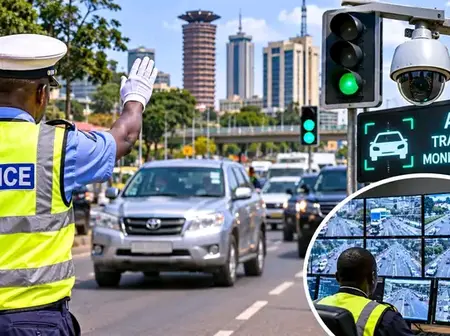
For decades, the daily rhythm of Nairobi traffic has depended heavily on whistle-blowing officers overriding malfunctioning lights at busy roundabouts. By shifting control to a centralised Traffic Management Centre, authorities are fundamentally changing who holds leverage on the tarmac. Algorithms will now calculate vehicle density in real time, automatically adjusting signal timings to clear bottlenecks without human intervention.
Behind the scenes, this technological pivot disrupts long-standing operational habits within the transport sector. Transport analysts suggest that replacing manual junction control with automated electronic enforcement could significantly curb informal roadside negotiations. At the same time, public service vehicle operators and private motorists face a much stricter compliance regime where violations are captured instantly without a warning wave.
For the everyday commuter, the promise is simple: less time trapped in exhausting bumper-to-bumper jams and lower fuel bills. Traffic congestion currently drains billions of shillings from the local economy annually through wasted man-hours and burned fuel. If the smart network delivers smoother transit along major arteries, Wanjiku could finally enjoy predictable matatu fares and faster evening commutes home.
However, rolling out a three-phase project of this magnitude comes with steep financial and operational hurdles. The initial phase alone consumes nearly Sh7.9 billion to upgrade 25 junctions and construct the main control hub. As expansion stretches across another 185 intersections in subsequent phases, taxpayers will closely scrutinise whether the multi-billion-shilling price tag translates into visible relief on the ground.
Infrastructure observers also point out that smart cameras and automated ticketing systems require reliable power, seamless internet connectivity, and disciplined road culture to succeed. Without strict backend accountability, digital fines and automated surveillance could easily spark fresh public pushback from cash-strapped drivers already navigating tough economic times.
Will this Sh44.8 billion AI system finally cure Nairobi's traffic madness, or will Kenyan drivers find a way around the cameras? Share your thoughts below!
Leave a Reply