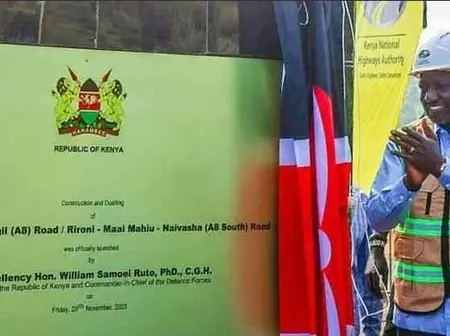
Plans to expand the Rironi-Mau Summit highway into a dual carriageway have come under scrutiny following concerns that the project could leave thousands of residents struggling to access essential services and sustain their livelihoods.
Lawyers representing more than 1,200 traders and farmers have raised the alarm, warning that the proposed road design could cut off an entire community from vital facilities, including schools, hospitals, markets and police stations. They argue that the anticipated benefits of the multibillion-shilling infrastructure project could be overshadowed by the social and economic challenges facing residents along the route.
The affected traders and farmers fear that restricted access to their businesses and farms could disrupt economic activities, reduce customer traffic and increase the cost of transporting goods. Farmers, in particular, could face difficulties delivering their produce to markets, potentially resulting in losses and reduced household incomes.
The legal team has questioned whether the interests of local communities have been adequately considered in the planning and implementation of the project. They are urging the government to ensure that the highway's design incorporates sufficient access roads, pedestrian crossings and alternative routes to prevent residents from being cut off from essential services.
The concerns present a challenge for President William Ruto's administration, which has identified major road infrastructure investments as a key pillar of its economic development agenda.
While the dualling of the Rironi-Mau Summit highway is expected to improve connectivity, reduce travel time and facilitate the movement of goods and people, affected communities insist that development should be inclusive.
They want the government and project contractors to reconsider aspects of the design and engage directly with residents to find practical solutions.
For the more than 1,200 traders and farmers represented by the lawyers, the issue goes beyond road construction. It is about protecting their businesses, preserving access to public services and ensuring that infrastructure development does not leave ordinary citizens behind.
Source: https://www.facebook.com/share/1Codr3aUoe/
Leave a Reply