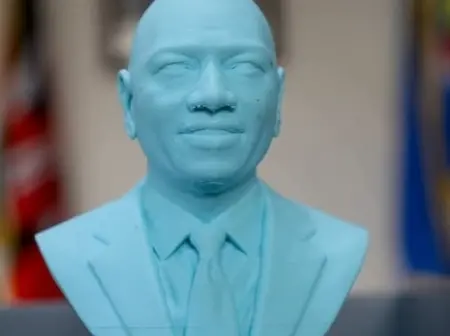
A creative educational innovation featuring a 3D model of President William Ruto, inscribed in Braille, has drawn attention for its unique approach to promoting inclusive learning and making information accessible to visually impaired learners.
Unlike conventional learning materials that depend heavily on pictures, videos and written descriptions, the 3D model offers learners an opportunity to use their sense of touch. This approach can make education more engaging, particularly for students who face difficulties accessing ordinary visual learning resources.
The inclusion of President Ruto's model also demonstrates how familiar public figures can be incorporated into educational materials. Such representations can help learners understand people and objects that they might otherwise only encounter through verbal descriptions.
More importantly, the innovation highlights the importance of designing educational resources that consider the needs of every learner. Visually impaired students deserve opportunities to participate fully in classroom activities without feeling excluded because of their disabilities.
Braille remains an important communication system for people who are blind or have severe visual impairments. When combined with three-dimensional objects, it can provide additional opportunities for learning, exploration and independent discovery.
The initiative also raises an important conversation about the accessibility of education in Kenya. Although the country has made progress in promoting inclusive education, many learners with disabilities still face challenges involving learning materials, specialised equipment and suitable classroom facilities.
The broader lesson is that disability should never be a barrier to knowledge. With proper planning, creativity and investment, education can become more inclusive and accessible to everyone.
The 3D model is a reminder that learning does not have to depend entirely on sight. Sometimes, the opportunity to touch, feel and explore can open an entirely new world of understanding.
What are your thoughts on this innovative approach to making education more inclusive for visually impaired learners? Share your views in the comments.
https://www.facebook.com/100040319114203/posts/pfbid0d2X9Qr4PAJPTHNvwHxFd59Bf8B5EpR8bQkcwwkpCWpABVgJ1Rga1Tgyr9qU5cn8Tl/?mibextid=Nif5oz
Leave a Reply