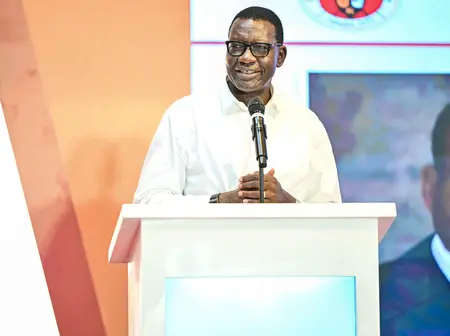
Addressing delegates during the 33rd Institution of Engineers of Kenya (IEK) International Convention in Mombasa on Wednesday, November 25, 2026, Chirchir said the government is shifting away from traditional manual operations toward data-driven urban mobility.
Under the three-phase Intelligent Transport Systems (ITS) programme implemented through the Kenya Urban Roads Authority (KURA), the ministry plans to install smart traffic sensors, automated signal controllers, and real-time surveillance cameras across 230 major junctions in the capital.
For decades, Nairobi motorists have endured gridlock at busy roundabouts and intersections where manual control by traffic police officers often overrides standard signal timings during peak hours.
By deploying adaptive sensors that measure real-time vehicle volume and automatically adjust signal phases, the Ksh 44.8 billion system is engineered to manage traffic flows dynamically without needing officers stationed physically in the middle of junctions.
Chirchir explained that the first phase of the rollout, valued at Ksh 7.8 billion, focuses on constructing a modern central Traffic Management Centre alongside installing intelligent sensor infrastructure at a minimum of 25 critical Nairobi intersections.
Once fully operational, the central command hub will monitor live camera feeds, detect accidents or stalled vehicles instantly, enforce traffic rules automatically, and synchronize green-light corridors to ease commuter delays.
Speaking to engineers in Mombasa, the Cabinet Secretary emphasized that Kenya’s infrastructure ambitions must look beyond simply laying tarmac and instead harness modern engineering, predictive analytics, and smart sensors to maximize road efficiency.
Alongside Nairobi’s junction automation, Chirchir also announced that the Kenya Roads Board is acquiring a specialized Traffic Speed Deflectometer to scan road surfaces at highway speeds and detect pavement wear early.
SOURCE
Leave a Reply