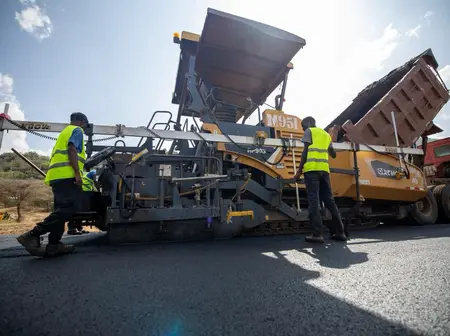
Motorists and communities across Kenya could soon experience faster, more resilient highway construction as the Kenya National Highways Authority (KeNHA) pivots toward alternative road-building technologies. The strategic shift comes in response to severe global bitumen supply disruptions that have driven local import prices up by more than 140 percent and slowed critical infrastructure projects nationwide.
Established under the Kenya Roads Act of 2007 to manage, develop, rehabilitate, and maintain the national trunk road network, KeNHA has historically relied on imported petroleum-based bitumen. However, geopolitical tensions and maritime shipping backlogs in the Middle East have severely constrained supply chains into the Port of Mombasa, inflating project costs and testing contractor timelines.
To safeguard taxpayer value and keep economic corridors moving, the Authority—working alongside the State Department for Roads—is accelerating the adoption of modern engineering solutions. Key among these are advanced geosynthetic systems, cold-mix asphalt technologies utilizing bitumen emulsions and foamed bitumen, and cement-stabilized road bases. By reinforcing roadbeds with high-strength polymers and recycling existing pavement materials, engineers can significantly reduce dependence on conventional hot-mix bitumen while enhancing road durability against heavy axle loads and extreme weather.
"Our mandate is to deliver safe, reliable, and cost-effective highways for every Kenyan, regardless of external market shocks," KeNHA noted in its updated technical framework, which aligns with the 2025 Kenyan Road Design Manuals and Specifications.
For everyday commuters, farmers, and regional traders, this technological transition promises fewer construction delays, lower long-term maintenance costs, and smoother journeys along vital trade arteries—proving that innovation can turn a global supply crisis into lasting national progress.
https://www.facebook.com/share/p/18pQ4VmtJJ/
Leave a Reply