(Photo courtesy)
The Kenya Union of Post Primary Education Teachers (KUPPET) has rejected President William Ruto’s Comprehensive School Model, renewing calls for Junior Secondary Schools (JSS) to operate independently under separate administrations.
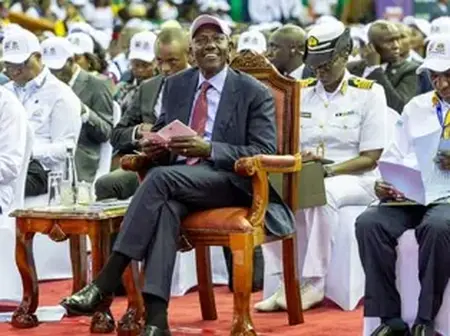
Speaking during the union’s 2026 annual conference in Diani, KUPPET Secretary General Akelo Misori and Chairman Mboko Milemba opposed the proposed arrangement, arguing that placing Grades 7, 8 and 9 under primary school headteachers would undermine the identity and administration of junior secondary education.
The union wants junior secondary schools to have their own substantive principals and deputy principals with relevant secondary school management experience, instead of being managed by primary school headteachers.
President Ruto’s Comprehensive School Model seeks to bring pre-primary, primary and junior secondary education under one administration to improve coordination and reduce duplication of management structures.
On November 11, 2026, the President directed the Ministry of Education to prepare proposals for amendments to the Basic Education Act within 90 days to provide a legal framework for the governance, staffing and financing of comprehensive schools.
The proposed arrangement also seeks to consolidate primary and junior school capitation funding under a common financing framework, with funds expected to be released before the beginning of school terms from 2027.
However, KUPPET maintains that sharing school compounds should not mean merging administrations or erasing the distinct identity of junior secondary schools.
Chairman Mboko Milemba argued that the model is unfair to teachers, warning that learners would ultimately bear the greatest consequences of the proposed changes.
The union also raised concerns that the arrangement could limit promotion opportunities for post-primary teachers and complicate their movement between junior and senior secondary schools.
KUPPET further questioned the legal validity of the comprehensive school arrangement, arguing that existing education laws do not recognise such institutions and that constitutional concerns surrounding the model remain unresolved.
On teacher shortages, the union demanded the recruitment of at least 116,000 additional teachers next year to address staffing gaps in schools.
The demand comes as 24,000 teachers have already secured permanent and pensionable employment, with another 20,000 expected to be recruited.
KUPPET's position differs from that of the Kenya National Union of Teachers (KNUT), which supports President Ruto's proposal, arguing that unified school administration would improve coordination and reduce duplication of management structures.
https://www.kenyans.co.ke/news/129587-kuppet-intensifies-push-break-jss-primary-school-administration
Leave a Reply