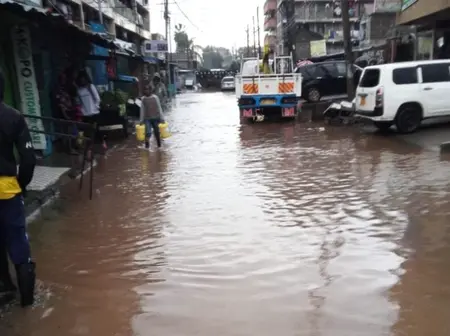
Kenya’s November rains present a challenge that is easy to underestimate: a forecast of above-average rainfall does not tell farmers when to plant, motorists when roads may become impassable or households when flooding could threaten their homes.
As the October-December 2026 short-rain season progresses, the difference between predicting a season and preparing for its daily realities is becoming increasingly important.
The Kenya Meteorological Department’s November 2026 outlook projected above-average rainfall in 43 counties, while temperatures were expected to remain warmer than average nationally. This means communities could experience different weather conditions even within the same period.
The danger lies in treating a seasonal forecast as a promise of when, where and how rain will fall, rather than as an early indication of possible conditions.
Rainfall observations from October show why local conditions matter.
Karatina University in Nyeri County recorded 207.6 millimetres of rain over seven days between October 5, 2026 and October 11, 2026. Marsabit Meteorological Station recorded 133.3 millimetres within 24 hours on October 10, 2026.
Between October 26 and November 1, the National Youth Service Witu weather station in Lamu County recorded 188 millimetres over seven days, while Makaaya Rainfall Station in Kitui County received 115.1 millimetres within 24 hours on October 29, 2026.
These observations illustrate how rainfall can vary in amount and timing across the country. They do not, on their own, establish what conditions will be like in a particular location in the days ahead.
That distinction matters because seasonal outlooks describe broad patterns, while shorter-range forecasts provide more relevant guidance for immediate decisions.
For farmers, acting on the expectation of rain without checking updated local forecasts can complicate planting decisions. Rain arriving later than expected may affect crop establishment, while intense downpours can cause waterlogging, erosion and damage to crops.
For households and businesses, the concern is different. Heavy rainfall over a short period can create localised flooding, disrupt transport and damage property, even when neighbouring areas receive much less rain.
County authorities therefore need to combine seasonal outlooks with current forecasts and local risk information. Drainage maintenance, emergency planning and public warnings are more effective when they reflect the conditions expected in specific areas.
Kenya’s meteorological services provide forecasts and warnings, but their value depends on how well the information reaches the people who need it.
Farmers need timely guidance suited to their locations and crops. Residents in flood-prone areas need clear warnings about dangerous conditions, while motorists need reliable information about affected roads.
The public should also distinguish between above-average seasonal rainfall, a forecast of heavy rain over a particular period and an actual flood warning. These describe different conditions and should not be treated as interchangeable.
As the short-rains season continues, the important question is not simply whether Kenya will receive more rain than usual. It is whether households, farmers and authorities can translate changing weather information into decisions that protect lives and livelihoods.
The difference between a forecast and preparedness may ultimately determine whether the rains bring relief or avoidable losses.
Leave a Reply