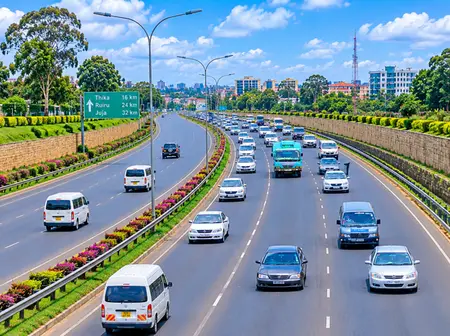
Motorists using the Nairobi–Thika highway could face a new financial burden under the Government’s proposed tolling plan, even as they continue paying taxes and levies intended to finance road construction and maintenance. The proposal has reignited debate over whether Kenyans should pay separately to use roads that are already supported by public funds.
For thousands of commuters travelling daily between Nairobi, Thika, Juja and surrounding towns, the prospect of paying toll charges introduces a new dimension to the rising cost of transport.
The concern is not simply about the introduction of another fee. It is about whether motorists are being asked to pay twice for the same public infrastructure, first through existing fuel taxes and then directly at toll collection points.
According to the National Treasury’s infrastructure proposals, the approximately Ksh100 billion highway project is expected to be implemented through a Public-Private Partnership (PPP) arrangement, with a private investor financing upgrades, operating and maintaining the road before recovering the investment through toll collections.
At the centre of the controversy is the Road Maintenance Levy Fund (RMLF), a government fund financed through a charge on every litre of petrol and diesel purchased in Kenya.
The levy is collected at the fuel pump and is intended to support the maintenance, rehabilitation and preservation of the country’s road network.
This means motorists contribute towards road infrastructure even when they are not directly using a tolled highway. Every time they refuel their vehicles, part of the cost goes towards financing road maintenance.
The proposed tolling arrangement would introduce another payment, this time linked directly to the use of a particular road.
For motorists who regularly travel along Thika Road, this creates the possibility of paying through two different channels: the fuel levy whenever they purchase fuel and a separate toll fee whenever they use the highway.
The concern has already featured in government policy discussions. In its 2026 Budget Policy Statement, the Treasury acknowledged concerns that tolling roads while maintaining the Road Maintenance Levy paid at fuel stations could amount to double taxation.
The government also explained that part of the fuel levy is distributed to road agencies, including the Kenya National Highways Authority (KeNHA), Kenya Urban Roads Authority (KURA) and Kenya Wildlife Service (KWS).
The debate, therefore, is about whether motorists should continue financing road maintenance through a general fuel levy while being required to pay an additional charge to access selected highways.
The Government’s position is that Kenya needs additional financing to construct, upgrade and maintain its expanding road network.
The Roads Ministry has previously argued that the existing fuel levy is insufficient to meet the country’s growing infrastructure requirements.
According to the Draft National Tolling Policy 2025, annual road maintenance requirements were estimated at Ksh253.5 billion, against projected Road Maintenance Levy Fund collections of approximately Ksh100 billion in the 2024/2025 financial year.
The policy also identified a maintenance backlog estimated at Ksh500 billion, highlighting the funding challenges facing the roads sector.
The government argues that tolling provides a way of mobilising additional resources without depending entirely on the national budget.
Under this arrangement, motorists using a designated toll road contribute directly towards the cost of financing and maintaining that particular infrastructure.
The Roads Ministry has also maintained that fuel taxes and toll charges serve different purposes, arguing that fuel levies are general contributions while tolls are direct charges imposed on users of designated infrastructure.
However, critics argue that the distinction does little to ease the financial burden on motorists who already contribute to road financing through fuel purchases.
Unlike occasional motorists who use a highway once in a while, daily commuters face repeated transport expenses that accumulate over time.
Thika Road serves thousands of people travelling between Nairobi and residential and commercial centres such as Kasarani, Ruiru, Juja and Thika.
For private motorists, a toll charge would mean an additional expense on top of fuel, insurance, vehicle maintenance and other statutory costs.
Public service vehicle operators could also face higher operating expenses if their vehicles are subjected to toll charges.
This could eventually affect passengers through increased matatu fares, although the actual impact will depend on the rates adopted and whether operators absorb some of the additional costs.
Small businesses and traders transporting goods along the corridor could also face higher distribution expenses, potentially affecting the prices of goods and services.
The burden could be particularly significant for workers who have little choice but to travel between Nairobi and neighbouring towns every day.
A toll fee that appears relatively small for a single journey could become a substantial monthly expense for someone who uses the highway twice daily.
The government faces genuine challenges in financing the construction and maintenance of roads, particularly as infrastructure demands continue to grow.
Private-sector investment offers one way of mobilising capital for major projects, but the model also introduces questions about affordability, accountability and the distribution of infrastructure costs.
For motorists, the issue is not necessarily whether private investors should participate in road development. It is whether the additional charges are justified when road users already contribute to public infrastructure financing through fuel levies and other taxes.
Until the government explains how toll collections will complement existing road financing mechanisms, the proposed arrangement risks being viewed as another financial burden on people already struggling with the cost of transport.
And for thousands of Kenyans who depend on Thika Road every day, the central question remains: Why should they pay again to use a road when they are already contributing towards its maintenance every time they buy fuel?
Rono is a digital journalist with a proven track record in newsroom leadership and content creation. Currently a Digital Writer for People Daily Digital, Emmanuel’s career is rooted in a lifelong passion for storytelling. Let's talk here: emmanuel.rono@mediamax.ke or ronoemmanuel685@gmail.com
Leave a Reply