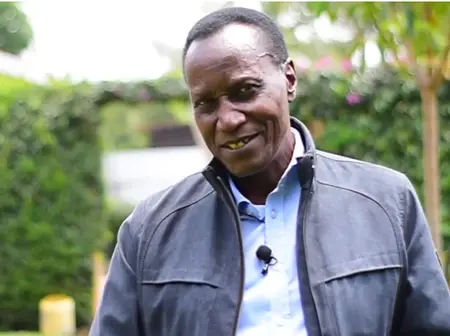
Former Education Cabinet Secretary (CS) Jacob Kaimenyi has called on the government to simplify and improve the university funding model, warning that financial barriers should not prevent deserving students from accessing higher education.
Speaking during a graduation ceremony at Moi University in Kesses, Uasin Gishu County, on Saturday, November 21, 2026, Kaimenyi said ongoing reforms in the higher education sector must address funding gaps and ensure that students from financially disadvantaged backgrounds are not left behind.
He urged lawmakers to ensure that the proposed legislation on higher education reforms provides a lasting solution to challenges facing students seeking government support.
“We are reforming the university education or higher education sector in this country. That Bill which is in Parliament should be able to address that so that there is no child who will miss education for want of funds,” Kaimenyi said.
The former Education CS described the current higher education financing system as complex, calling for improvements to make it easier for students to access financial assistance.
He appealed to the government to review the funding mechanisms used across universities and other institutions of higher learning, saying students should not be forced to discontinue their studies because they cannot afford the cost.
“When you look at the funding model of higher education lending, it’s a bit complex, and I’m calling upon the government on behalf of all the students who are in our various institutions of learning that funding models must be improved,” he said.
His remarks come amid continued debate over the implementation of the student-centred funding model introduced in 2023, which combines government scholarships and loans based on students’ assessed financial needs.
The call for reforms comes as projections for the 2026/2027 financial year indicate a significant gap between scholarship requirements and available government allocations.
Figures reported in October 2026 showed that scholarship requirements were projected at Ksh47 billion against an allocation of Ksh30.1 billion, leaving a shortfall of Ksh16.9 billion.
The projected deficit has raised concerns about whether available resources will adequately support the growing number of students seeking government assistance.
The Universities Fund projected that scholarship beneficiaries would increase to approximately 608,879 in the 2026/2027 financial year, placing additional pressure on public finances.
The funding debate also comes as public universities grapple with mounting financial obligations that threaten their operations.
Reported government figures placed public universities’ pending bills at Ksh100.3 billion as of January 31, 2026, including unpaid salaries, statutory deductions and supplier bills.
The institutions must also meet operational costs, maintain infrastructure and support teaching and research activities.
Kaimenyi’s remarks underscore the need for reforms that match the government’s commitment to widening access to higher education with adequate financial resources.
For students and their families, the effectiveness of the funding system will be measured by whether financial assistance reaches those who need it most and enables them to complete their studies without avoidable interruptions.
Leave a Reply