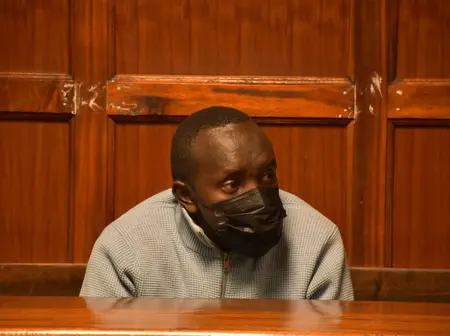
According to the Office of the Director of Public Prosecutions (ODPP), British investigators have charged Kiplagat with four counts of fraud by false representation alongside murder, manslaughter, and two counts of perverting the course of justice.
Prosecutors told the Milimani Law Courts that shortly after Kilonzi was fatally assaulted inside her South London apartment in January 2025, Kiplagat initiated a series of unauthorised financial transactions.
Specifically, extradition records indicate that the suspect made illegal electronic money transfers directly from Kilonzi's personal bank accounts into accounts held under his own name.
In addition to siphoning cash through direct bank transfers, British authorities accuse Kiplagat of unlawfully using Kilonzi's credit card to make transactions without her consent.
Investigators further revealed that Kiplagat allegedly took Kilonzi's smartphone from her Woolwich residence along Argyll Road.
Prosecutors contend that seizing the device served a dual purpose: cutting off communication with her worried relatives and banking colleagues while allowing him to access banking applications and conceal financial records.
The digital paper trail left behind by these banking transactions and credit card activities ultimately became a crucial pillar of the prosecution's case.
London Metropolitan Police investigators combined the financial transaction records with mobile phone location data, forensic fingerprints, and CCTV footage to place Kiplagat at the crime scene around the time of the killing.
Marianne Kilonzi, a 43-year-old Kenyan national who served as Vice President for Trade and Working Capital Sales at Citibank in London, was found dead with severe blunt-force head injuries on January 17, 2025, after failing to report to work.
Extradition filings show that the two first connected on WhatsApp in January 2024 before Kiplagat moved into her riverside apartment in September of the same year.
After carrying out the alleged bank transfers and placing scented laundry beads on her body to mask decomposition odours, Kiplagat fled Britain and returned to Kenya.
He was eventually tracked down by security officers and arrested at the Namanga border crossing between Kenya and Tanzania.
On Thursday, November 19, 2026, Milimani Principal Magistrate Carolyne Mugo ruled that the prosecution had established sufficient grounds to surrender Kiplagat to British authorities.
The court committed him to custody pending extradition and gave him 15 days to file an appeal, paving the way for him to answer both the murder and bank fraud charges in a London courtroom.
SOURCE
Leave a Reply