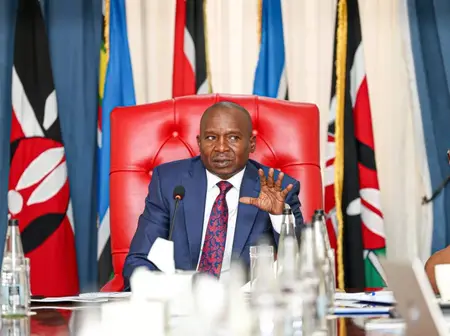
Deputy President Kithure Kindiki has announced plans to introduce tougher penalties against manufacturers, distributors and sellers of illicit alcohol and drugs, including asset forfeiture and increased fines, as the government intensifies its nationwide crackdown.
Kindiki said the government was reviewing the Alcoholic Drinks Control Act of 2010 to introduce more punitive measures against individuals and businesses involved in the illegal trade, while ensuring proceeds recovered from seized assets support rehabilitation programmes for victims of substance abuse.
He spoke on Wednesday at the Official Residence in Karen, Nairobi, where he received the Charter for the National Steering Committee on Combating Illicit Alcohol and Drugs, a framework intended to strengthen coordination among government agencies and other stakeholders.
The Deputy President said the proposed legal changes would ensure those responsible for the manufacture and distribution of illicit substances face severe financial consequences.
“We are reviewing comprehensively the Alcoholic Drinks Control Act of 2010 to make it extremely punitive for people who are perpetuating this criminal activity, to ensure forfeiture of their assets, and to ensure that proceeds of such forfeiture are used for rehabilitation of the victims of their crime directly,” Kindiki said.
The proposed measures will also include increasing fines imposed on offenders, requiring them to pay several times the market value of ethanol diverted for illegal purposes.
The government is also considering changes to the existing legal framework to ensure that money recovered through enforcement operations can directly support rehabilitation initiatives across the country.
Kindiki further announced plans to tighten taxation in the alcoholic drinks industry, warning that some licensed manufacturers were failing to meet their statutory tax obligations.
He said the government had identified significant compliance gaps within the sector, which could undermine efforts to eliminate illicit alcohol and drug distribution.
“We are going to strengthen taxation in this industry to ensure that all people in this sector adhere to their tax obligations because we have discovered only a few licensed manufacturers are honouring their tax obligations,” he said.
The Deputy President described the newly adopted Charter as a significant addition to the ongoing multi-agency crackdown, providing clear responsibilities and accountability mechanisms for institutions involved in the campaign.
It outlines the roles of national and county governments, private sector actors, civil society organisations and communities in combating substance abuse.
The framework also provides for intelligence-led operations, legislative interventions and administrative measures intended to sustain the crackdown beyond the ongoing enforcement operations.
The campaign will operate under the theme Okoa Jamii, Jenga Taifa, reflecting the government's stated commitment to protecting communities from the effects of alcohol and drug abuse.
Kindiki urged enforcement agencies to maintain professionalism and intensify their efforts, saying the arrests and seizures recorded so far needed to translate into lasting results.
He commended law enforcement agencies for supporting the National Authority for the Campaign Against Alcohol and Drug Abuse (NACADA) and other institutions in the fight against illicit substances.
“I call upon those teams to continue exercising professionalism in the exercise and continue to take this matter with the seriousness it deserves,” he said.
The meeting was attended by Attorney General Dorcas Oduor, Inspector General of Police Douglas Kanja, Director of Public Prosecutions Renson Igonga, Principal Secretaries and other senior government officials.
Leave a Reply