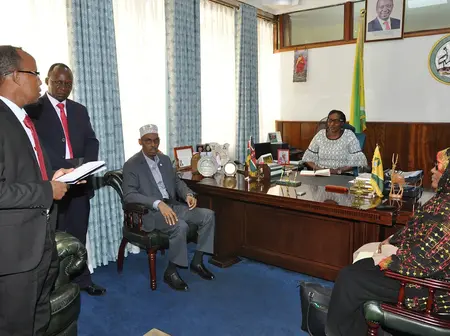
Dagoretti North MP Beatrice Elachi wants school meals written into law, not left to the goodwill of each budget cycle.
Speaking in Nairobi at the Third Global Parliamentary Summit Against Hunger and Malnutrition, Elachi called on legislatures to pass laws that secure steady funding for school feeding programmes and make those who run them answerable.
Her argument rests on a gap she sees in the Constitution. Article 43 guarantees every person the right to food of acceptable quality, and Article 53 provides for every child’s right to basic nutrition and free and compulsory basic education. Neither provision, in her reading, expressly promises a learner a meal at school, and neither sets aside dedicated money for the programme.
The law she is pushing would make school meals a legal entitlement rather than a policy favour. It would also create a more predictable financing framework, so that funding does not collapse mid-term and leave millions of learners without food.
Beyond the money, Elachi urged Parliament to guarantee adequate budgetary allocations, tighten oversight, and introduce regular monitoring and independent audits. The aim, she said, is accountability in how school feeding funds are managed.
Kenya’s school feeding effort is not new. It traces back to 1980, when the government and the World Food Programme teamed up to serve meals to about 240,000 learners. By August 2022, the programme had grown to reach more than 1.5 million learners. The government now targets 10 million beneficiaries by 2030.
Nairobi County runs its own version, serving roughly 316,000 learners. It uses a digital payment and monitoring system that lets parents check whether their children actually received meals, and it encourages schools to buy food from nearby suppliers, putting money back into local farming.
The programmes have persistent problems. Funding is often inadequate, logistics are difficult, storage facilities are limited, and questions keep coming up over food safety and nutritional quality.
Elachi’s proposal is still at the advocacy stage. It has not been formally introduced in Parliament, and no timeline has been given for passing it.
Leave a Reply