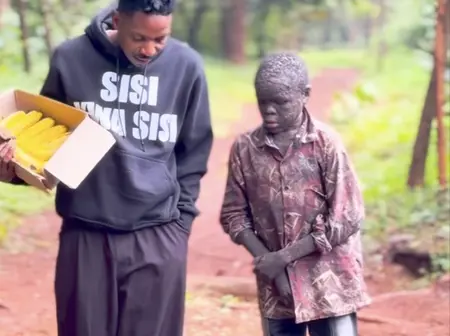
Kenya's growing culture of social media philanthropy has come under fresh scrutiny following a government warning against sharing vulnerable children's photographs, videos and personal stories to attract donations.
The warning, issued by the State Department for Children Services on November 17, 2026, has reignited an important debate about the relationship between charitable work, online influence and the protection of children's rights.Principal Secretary Carren Ageng'o warned that although some fundraising initiatives may be motivated by genuine compassion, exposing children's identities and personal circumstances could subject them to stigma, discrimination, bullying and exploitation.
The department emphasised that children should receive assistance without having their private lives unnecessarily exposed to the public.It also made an important clarification: parental or guardian consent does not automatically justify publishing a child's photograph or personal information if doing so could compromise their safety and best interests.
Notably, the government did not mention Eric Omondi or any specific fundraising campaign in its advisory.However, the timing has drawn attention because of the comedian's recent high-profile fundraising activities involving vulnerable children.It comes days after comedian Eric Omondi mobilised Kenyans to raise millions of shillings for 17-year-old Bryson Makokha, a teenager from Bungoma living with a rare skin condition.
Through his Sisi Kwa Sisi initiative, Omondi reportedly helped raise more than KSh10 million to support Bryson's medical treatment and improve his family's living conditions.
While the fundraising campaign attracted widespread support, the government's latest advisory has brought attention to a difficult question: Should vulnerable children's personal struggles be shared publicly to generate financial assistance?
Bryson Makokha's story attracted national attention after a video showed the teenager selling bananas by the roadside in Bungoma County.The teenager explained how his skin condition had affected his ability to earn money, with some customers reportedly avoiding his products because of his appearance.
His circumstances attracted sympathy from Kenyans, prompting content creators and other well-wishers to highlight his situation online.
Eric Omondi subsequently took up the matter through his Sisi Kwa Sisi initiative, appealing to Kenyans to contribute towards the teenager's treatment and the welfare of his family.
The campaign attracted millions of shillings in contributions.
Omondi also outlined plans to improve the family's living conditions, support Bryson's education and establish sustainable sources of income.The initiative demonstrated how social media can mobilise financial assistance within a short period.
However, it has also brought attention to the ethical questions surrounding the use of vulnerable people's images and personal experiences in online fundraising.
The issue is not necessarily whether people should help those in need, but whether that assistance should require exposing their most private struggles to millions of strangers.
The debate extends beyond one fundraising campaign.
Across social media platforms, influencers increasingly document visits to struggling families, children living with medical conditions and people experiencing extreme poverty.
Such videos often attract thousands of reactions, comments and shares.
In some cases, the exposure helps beneficiaries receive medical assistance, school fees, food, housing and other forms of support.
Supporters of this approach argue that documenting people's circumstances helps the public understand the urgency of their needs. They also point out that many families who previously struggled to access assistance have benefited from online fundraising.
However, critics question whether the people receiving assistance are always protected from unnecessary exposure.
A child whose medical condition, emotional distress or difficult family circumstances are displayed online may have little understanding of the long-term implications.
Once photographs and videos circulate across social media, they can be downloaded, reposted and used outside the original fundraising campaign.
The child may eventually recover, return to school or improve their living conditions, but the digital record of their most difficult moments may remain accessible.
This raises questions about consent, dignity, accountability and the possible commercial interests surrounding online philanthropy.
Leave a Reply