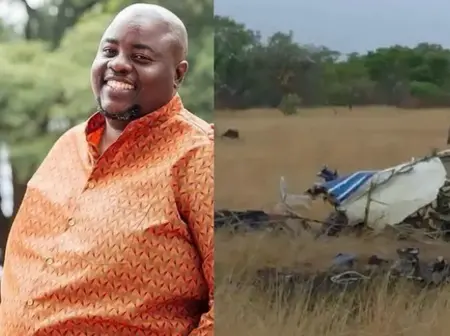
The 14-page report provides fresh details about the aircraft's final moments, including the weather conditions, the pilot's experience and the events leading up to the fatal impact.
However, the absence of the cockpit voice recorder has left investigators with unanswered questions about exactly what happened inside the helicopter before it crashed.
Chivayo died on September 30, 2026, alongside his wife, Lucy Muteke, a bodyguard and two pilots when their Bell 430 helicopter crashed in rural Marondera, approximately an hour's drive from Zimbabwe's capital, Harare.
The businessman was known for his controversial business dealings and connections with several prominent African political leaders.
How Chivayo's helicopter encountered trouble
According to the preliminary report released by Zimbabwe's Ministry of Transport, two helicopters, a Bell 407 and a Bell 430, departed Gandami Village at approximately 4:20 pm.
The aircraft were travelling towards Marondera when weather conditions began deteriorating about 10 minutes into the journey.
Cloud cover was building from the eastern direction, creating increasingly difficult flying conditions.
The Bell 407 turned west to avoid the unfavourable weather, while the Bell 430 continued northeast after its crew apparently believed the route ahead was clear.
However, the decision proved disastrous as the Bell 430 encountered thick cloud cover.
The report indicates that the helicopter's final radio transmission suggested it had entered a cloud layer. There was no subsequent communication confirming that it had emerged safely.
Witnesses reported hearing a helicopter overhead but said they could not see it because of thick fog and light drizzle.
Moments later, they heard a heavy impact, prompting concerns that an aircraft had crashed in the area.
Police subsequently confirmed the accident, which killed all five people aboard the helicopter.
Investigators explain what happened during the impact
The preliminary findings indicate that there was no evidence of an explosion while the helicopter was airborne or that the aircraft broke apart before reaching the ground.
Instead, the Bell 430 reportedly remained intact until it struck the ground.
The helicopter then broke apart and caught fire following the impact.
This finding provides an important distinction between an aircraft experiencing an in-flight structural failure and one crashing after encountering difficult flying conditions.
Investigators have not established evidence of foul play in the preliminary findings.
What investigators discovered about the pilot and helicopter
The report also examined the pilot's qualifications and the aircraft's maintenance history to establish whether mechanical or human-related factors contributed to the accident.
The 44-year-old Zimbabwean pilot held a Commercial Pilot Licence and had accumulated 2,756 flying hours.
Of those hours, 614 were reportedly spent flying the Bell 430, the same helicopter involved in the fatal accident.
He also held a valid medical certificate, with investigators finding no evidence that he had suffered a medical emergency before the crash.
The helicopter was manufactured in 2004 and had undergone its last inspection on August 25, 2026.
Its Certificate of Airworthiness was valid until May 2027, according to the report.
The preliminary findings therefore point towards deteriorating weather and loss of visibility as significant factors in the accident rather than an established mechanical failure.
Missing black box raises fresh questions
Despite the findings, one important piece of evidence remains unavailable: the helicopter's cockpit voice recorder.
The recording could have provided investigators with crucial information about conversations between the pilots, their assessment of the weather and the decisions made moments before the crash.
Its absence has complicated efforts to reconstruct the final moments of the flight.
Investigators reportedly believe the recorder could have been destroyed during the impact, although its absence means some questions about the crew's final actions remain unanswered.
The findings offer insight into how the helicopter encountered deteriorating weather before crashing, but they do not necessarily answer every question surrounding the tragedy.
Source
Leave a Reply