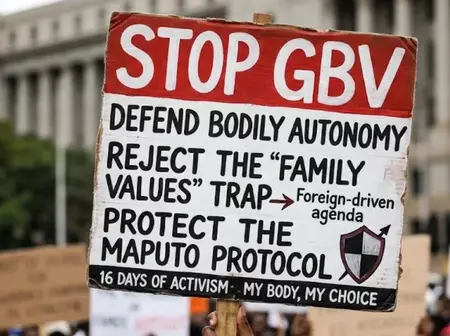
In the lead up to the annual 16 Days of Activism against Gender Based Violence, the global community prepares to unite under a familiar call to action: end physical abuse, dismantle systemic inequality, and protect the vulnerable. Yet, inside our legislative chambers, a much more silent, sophisticated form of violence is taking root. It does not carry a weapon, but it has the potential to cause unimaginable harm to millions of African women and girls.
For over two decades, the Maputo Protocol has stood as a progressive shield for the continent, explicitly recognzing safe abortion under specific conditions as a human right and guaranteeing bodily autonomy. Today, this fundamental shield is being systematically targeted by a well funded, foreign driven legislative push disguised as the Draft African Charter on Family, Sovereignty and Values. Under the alluring banner of protecting indigenous traditions, this document seeks to rewrite the rules of survival for African women.
To truly address gender based violence, we must look past physical battery and recognize that denying healthcare is itself an act of violence. True safety is impossible when a woman does not control her own body. Stripping away sexual and reproductive health rights is an institutional assault that forces women into cycles of forced pregnancy, unsafe backstreet abortions, and permanent economic dependency. It traps survivors of domestic abuse in toxic, dangerous environments by stripping them of their health choices and financial independence.
A close Inspection of this proposed charter reveals a devastating collision with basic human rights. Proponents of the draft advocate for provisions that position a fetus as entirely superior to the life and survival of the mother. It seeks to dismantle sexual and reproductive health access by framing basic medical care as a threat to national sovereignty. Furthermore, by restricting comprehensive sexuality education, the document blocks young people from receiving vital information on consent, safety, and reporting abuse. This effectively weaponizes the domestic sphere against vulnerable children.
The tragic Irony is that while the public faces of this movement claim to defend historic African heritage, the structural engineering behind the document is entirely foreign. The charter is spearheaded by European and American anti abortion organizations, heavily financed by matching funds from conservative donors thousands of miles away. This is a coordinated attack on African legal autonomy, utilizing local lawmakers as proxies to establish a regional policy that directly mirrors right wing strategies like the Geneva Consensus Declaration.
With legislators from nearly thirty African states already engaging with early drafts, the threat to domestic health policies is immediate and dangerous. We cannot remain quiet while foreign dollars dictate the boundaries of our healthcare systems and human rights frameworks. Ahead of this year’s 16 Days of Activism, our advocacy must challenge both immediate physical violence and institutional restrictions on bodily freedom. We must urgently sensitize our parliamentarians, engage our ministries, and demand that our leadership rejects this dangerous ideological trap. Guarding the Maputo Protocol is not just about defending a legal document; it is about protecting the absolute dignity, survival, and rights of every African woman.
Leave a Reply