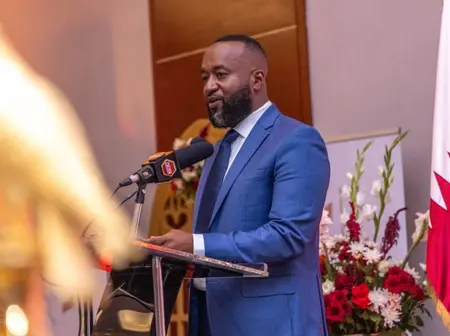
Mining Cabinet Secretary Hassan Joho has explained why he believes he would have scored an A instead of a D in his Form Four examinations had he studied under President William Ruto’s education system.
Speaking on Thursday, November 12, 2026, during the Kenya Comprehensive School Heads Association National Annual General Meeting in Mombasa, Joho said a learner’s academic performance should be judged by their ability rather than their family’s financial circumstances.
Joho recalled completing secondary school with a D grade, insisting that the result did not reflect his intelligence or potential.
“Because growing up, mimi mwenyewe, your Excellency, nilitoka kidato cha nne kama mwanafunzi wa D. Kama mwanafunzi wa D. Na sio ati nilikuwa mpumbavu. Hata wewe ukininiangalia unajua mimi nilikuwa mwerevu. Hata ukitathmini unaniona hapa unajua huyu ni mjanja,” Joho said.
The Cabinet Secretary said he was excited about the concept of Usawa, which he linked to fairness in development and equal treatment of people.
He argued that children should have equal opportunities to succeed regardless of their parents’ financial standing, suggesting that access to educational opportunities can influence academic outcomes.
Joho said he would have performed differently if he had grown up under a system where students were assessed according to their ability rather than their family’s financial circumstances.
“If I grew up at the time of President William Ruto, where a student ama mwanafunzi hapimwi kwa mfuko wake ama mfuko wa mama yake na babake, ni akili yake, I would definitely be an A student,” he said.
His remarks placed the spotlight on the relationship between household income, access to educational opportunities and learners’ performance, with the CS arguing that a student’s financial background should not determine their prospects.
Joho’s remarks come amid the government’s efforts to expand education funding and improve access to learning.
In November 2025, President William Ruto said Kenya had increased education funding by nearly Ksh129 billion to ensure every child had an opportunity to access basic education.
The President also highlighted curriculum reforms under the Competency-Based Curriculum and the recruitment of more teachers to address staffing shortages.
Ruto has called on stakeholders to invest in education, saying it should help eradicate poverty, promote inclusion and equip learners with skills for employment and innovation.
Joho’s comments add to the debate on educational equality and whether learners’ potential can be fully realised when their family circumstances affect their access to opportunities.
Leave a Reply